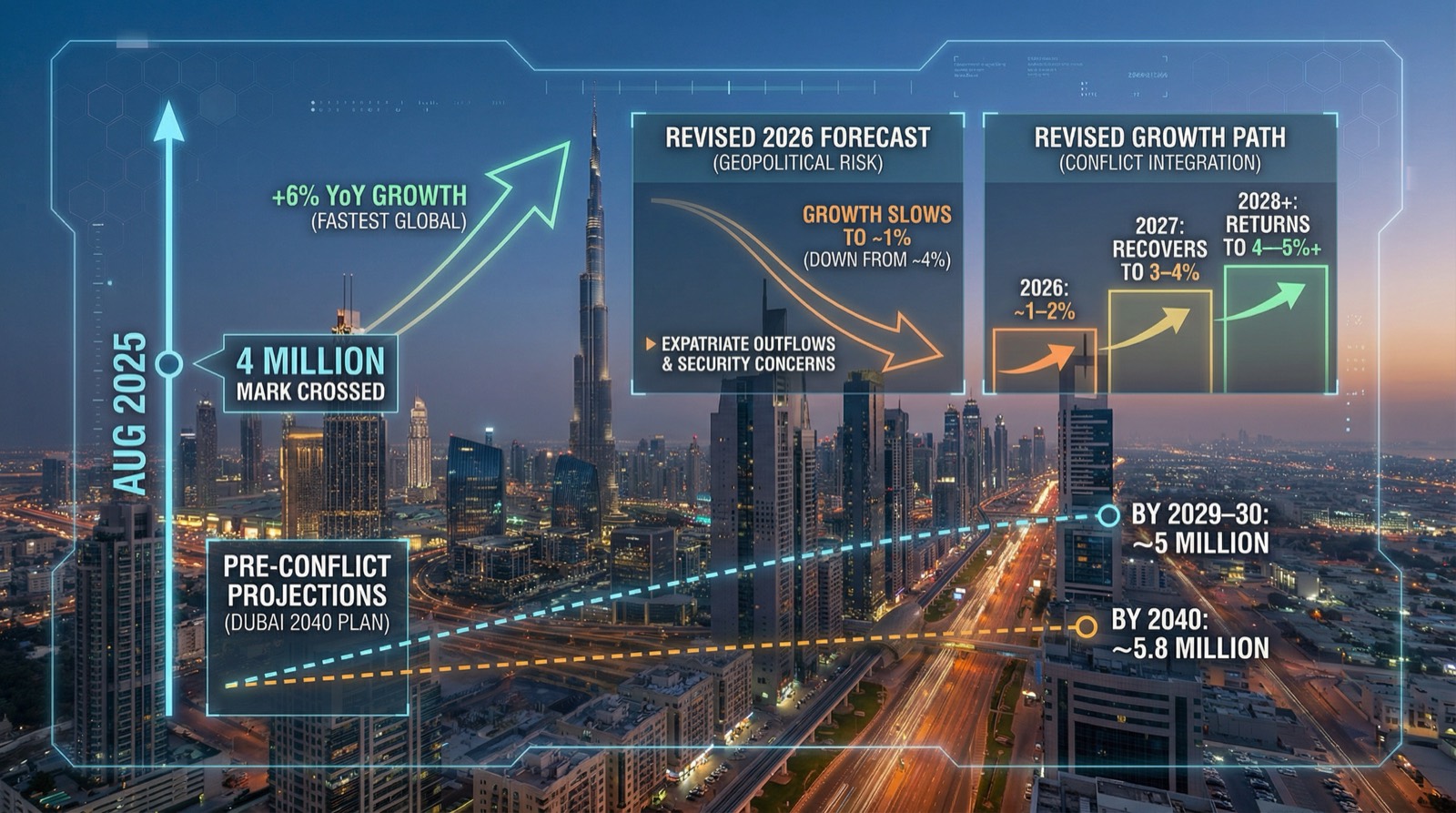
Three Federal Reserve officials voted to raise rates on 29 July, the most hawkish dissent since 2016. September hike odds moved above 57% the same day, the 30-year Treasury yield hit a 19-year high at 5.21%, and the dirham peg ensures the UAE absorbs the outcome in full. The question for Dubai underwriting is no longer when rates fall. It is whether they rise.
The property data arrived the same week and ran in three directions at once. Dubai office rents rose 13% year-on-year against occupancy near 94%. Residential rents fell 6.2% on the quarter as the first half delivered 24,800 completed homes, the largest handover wave in years. Across the emirate border, Abu Dhabi residential values climbed 21.6%.
These are not variations on one theme. They are separate markets at separate points in their cycles, now being stress-tested by a financing environment that just became less forgiving.
If you're weighing entry points while this market reprices, I can show you where the risk-adjusted opportunities are emerging. Click here to speak with me directly.
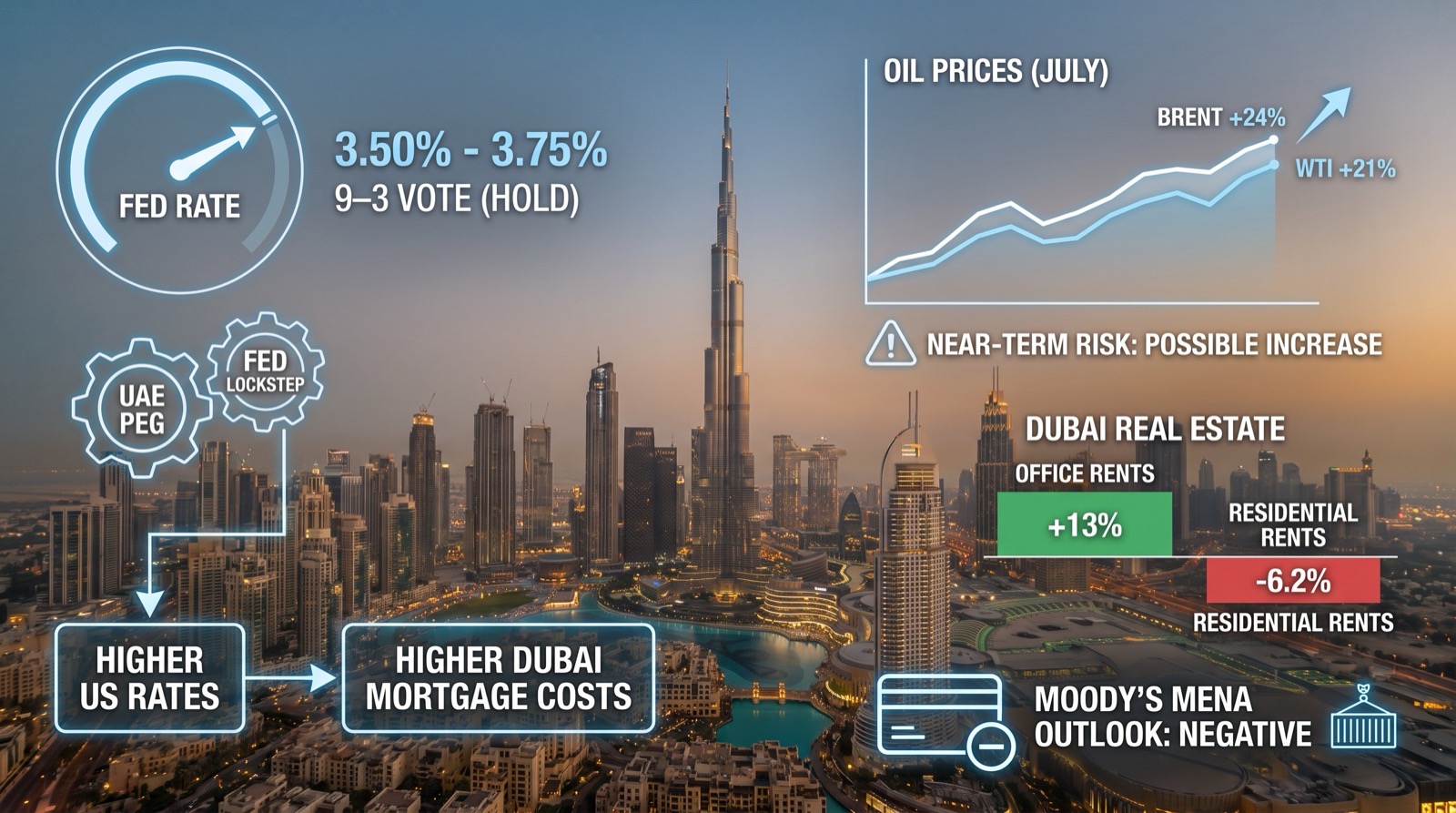
The Federal Open Market Committee voted 9–3 on 29 July to hold the federal funds rate at 3.50% to 3.75%, the fifth consecutive meeting without a move. Cleveland's Beth Hammack, Minneapolis's Neel Kashkari and Dallas's Lorie Logan each preferred a quarter-point increase — the first time since September 2016 that three policymakers dissented in the same hawkish direction.
Markets repriced the same day. September hike odds moved above 57%. The 30-year Treasury yield reached 5.21%, a 19-year high. The 10-year rose to 4.657%.
Fed Chairman Kevin Warsh described the internal disagreement as a "good family fight" and declined to indicate where rates are heading, consistent with his preference against forward guidance.
The dirham’s peg to the dollar means the UAE Central Bank moves in lockstep with the Fed. There is no independent rate lever. The near-term risk has shifted: it is no longer simply a delayed cut, but the possibility of an increase.
Any underwriting model that depends on lower financing costs must now not only wait longer — it must also withstand a potential rate rise into a cooling property market.
The practical implications are clear. Stress-test debt service against a hike rather than a hold. Treat leverage as the variable most exposed to movement before year-end. Assume no meaningful EIBOR relief before 2027.
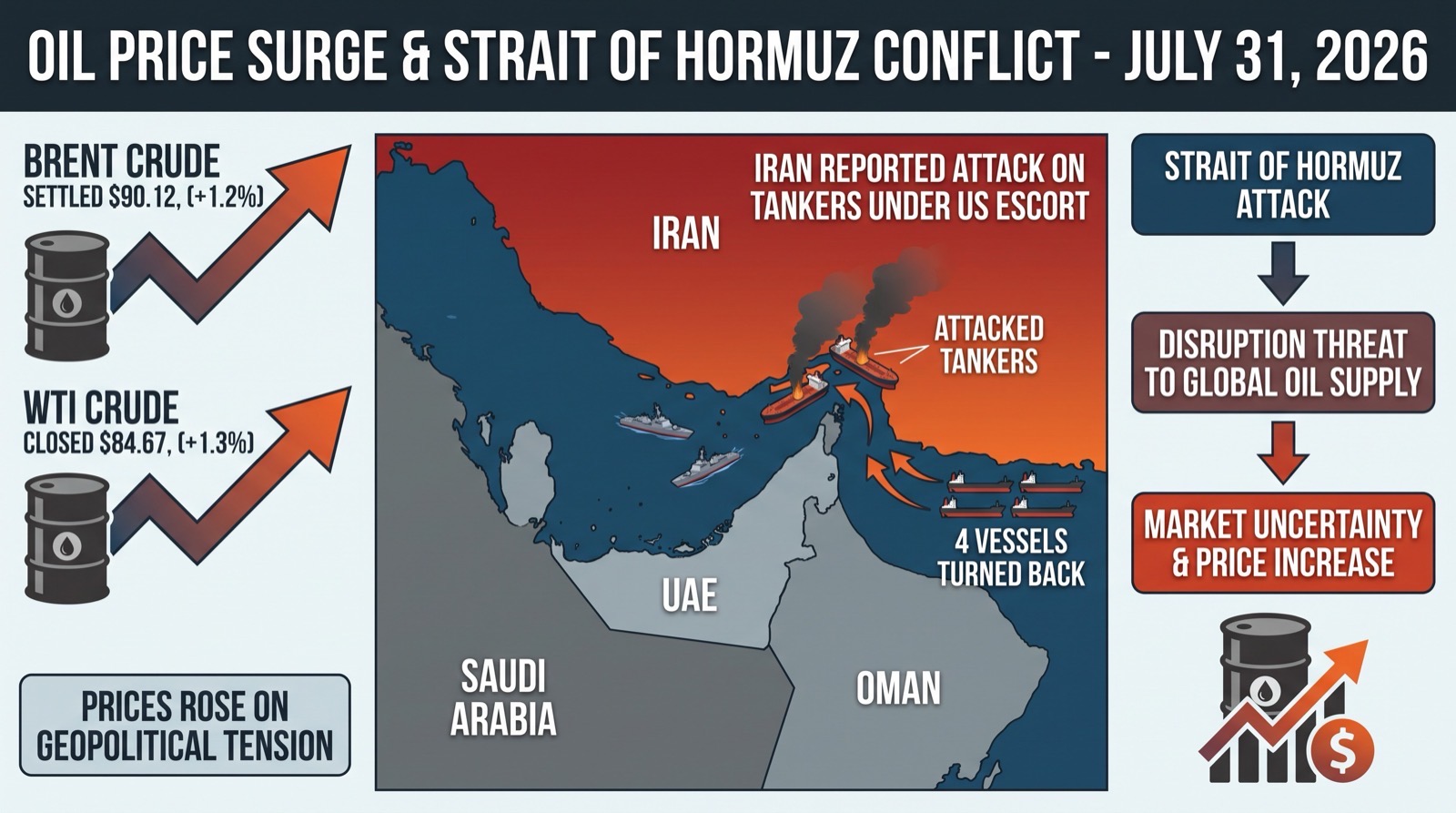
Brent settled at USD 90.12 on 31 July, up 1.2% on the day, while WTI closed at USD 84.67. The move came after Iran reported attacking two tankers attempting to transit the Strait of Hormuz under US military escort. Four other vessels turned back.
For July as a whole, Brent gained 24%, and WTI rose 21% — the largest monthly gain for either benchmark since March.
The week itself was volatile without being directional. WTI swung through a range of more than USD 8 before settling near the upper end. Traffic through the strait is running at roughly a third of pre-conflict levels.
For property, oil matters as a debt-service input rather than a measure of regional confidence. Sustained crude above USD 90 adds upward pressure to US inflation, which strengthens the case for tightening at the FOMC.
Higher rates in Washington become higher mortgage costs in Dubai the same quarter, with no buffer in between.
Section 03
Moody's Cuts MENA Outlook to Negative and Names UAE as Best Placed to Weather the Disruption
Moody's revised its MENA sovereign credit outlook to negative, citing conflict-driven disruption to shipping and trade. The UAE was named among the Gulf economies best positioned to absorb near-term disruption.
Moody’s bases this assessment on the UAE’s large financial reserves, economic diversification, and alternative export infrastructure—most notably the Fujairah pipeline, which bypasses the Strait of Hormuz.
The bond market delivered the same verdict in cash. UAE sovereigns and companies sold a combined USD 30.3 billion of dollar- and euro-denominated bonds through 28 July — up roughly a third year-on-year and USD 3.7 billion above the previous record for the period. Regional GCC issuance reached a record USD 112 billion.
When international lenders buy a record volume of a country's debt during an active conflict, they are not making a sentiment call. They are pricing the credit, committing their own capital, and accepting the risk. That USD 30.3 billion verdict settles one question for a Dubai property investor: the UAE's sovereign foundation is not where the risk in this market sits.
The supply pipeline running through 2027, a rate environment now tilting toward a hike, and the choice between asset classes moving in opposite directions — those are the variables that need stress-testing.
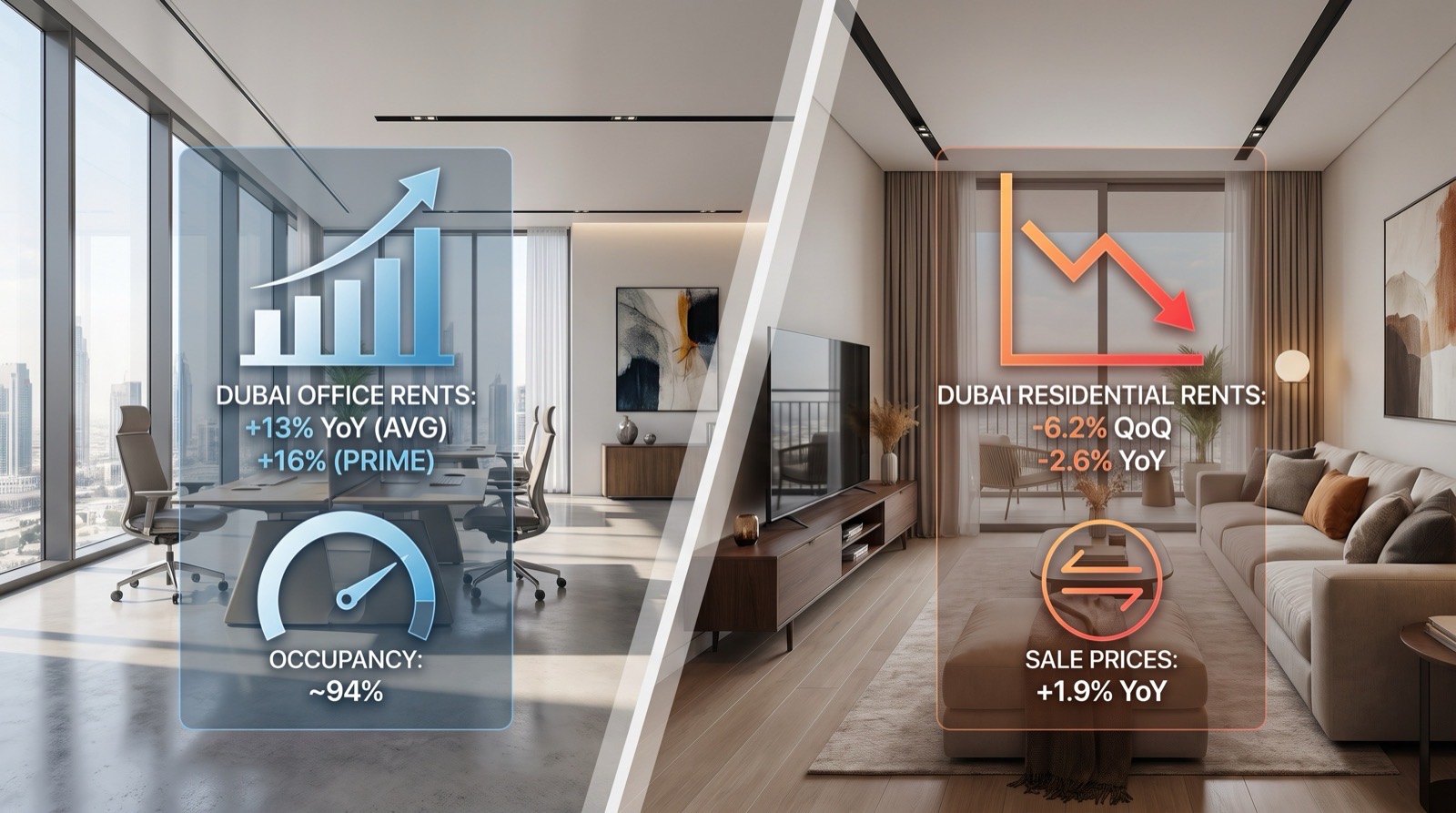
CBRE's Q2 2026 UAE review quantified the divergence. Dubai average office rents rose 13% year-on-year, with prime rents up 16% and occupancy at approximately 94%.
Abu Dhabi office rents rose nearly 16%, with occupancy near 96%. Less than 300,000 square metres of new office space is expected between 2026 and 2027, so the supply shortage persists into the medium term.
Dubai residential rents fell 6.2% quarter-on-quarter and 2.6% year-on-year, while sale prices held 1.9% above year-earlier levels. The two figures are not interchangeable: the 6.2% measures one quarter, not twelve months. Transaction volumes fell 29% year-on-year, with fewer than 37,000 residential sales recorded in Q2 against more than 51,000 a year earlier.
Abu Dhabi moved in the opposite direction. Residential values rose 21.6% year-on-year, driven by apartment price growth of 24.4%. Sales values reached AED 32 billion, up 150% on Q2 2025, with transaction volumes up roughly 80%. Off-plan accounted for approximately 83% of transactions and 85% of sales value.
| UAE real estate, Q2 2026 (CBRE) | Data |
| Dubai average office rents (YoY) | +13% (prime +16%) |
| Dubai office occupancy | ~94% |
| Abu Dhabi office rents (YoY) | ~+16%; occupancy ~96% |
| Dubai residential rents | −6.2% QoQ; −2.6% YoY |
| Dubai residential sale prices (YoY) | +1.9% |
| Dubai residential transaction volumes (YoY) | −29% (fewer than 37,000 sales) |
| Abu Dhabi residential values (YoY) | +21.6% (apartments +24.4%) |
| Abu Dhabi residential sales value | AED 32bn (+150% YoY) |
Grade A Dubai office, Dubai residential and Abu Dhabi residential are three different assets with three different supply positions, demand drivers and price trajectories. A portfolio that treats them as one market will misprice all three.
That assessment finds support outside CBRE's data. Knight Frank's Faisal Durrani, speaking to CNBC on 1 August, said investors can exit UAE property at a profit despite the conflict, describing the market as stabilising as speculative activity recedes.
Dubai added 24,800 residential units in H1 2026, up 37.6% year-on-year and 12.1% on H2 2025, according to Cavendish Maxwell. Apartments accounted for roughly 18,900 completions, up 43% year-on-year. Villas and townhouses added 5,900, up 22.6%.
CBRE puts H1 Dubai completions closer to 18,000. The two consultancies use different counting methods, and neither is wrong. The directional finding is identical across both. Cavendish Maxwell's figure is used here because their report is a dedicated delivery study.
New launches tell a different story about what is coming. Developers launched 28,000 units across 124 projects in H1, against 102,000 units across 410 launches a year earlier — a 73% decline in volume. The slowdown began in Q1, before regional tensions escalated.
For H2, 47,000 units are scheduled for completion. Cavendish Maxwell expects actual handovers of between 14,000 and 23,500, based on historical delivery rates.
The pipeline beyond H2 stands at 162,500 units in 2027 and 128,200 in 2028.
Supply arriving through 2027 was committed in 2024 and 2025. It cannot be recalled. Supply arriving from 2028 onward has been cut by nearly three-quarters. Where an asset sits relative to that inflection point is the most consequential variable in any Dubai residential underwriting today.
Still reading
Need expert help on this subject?
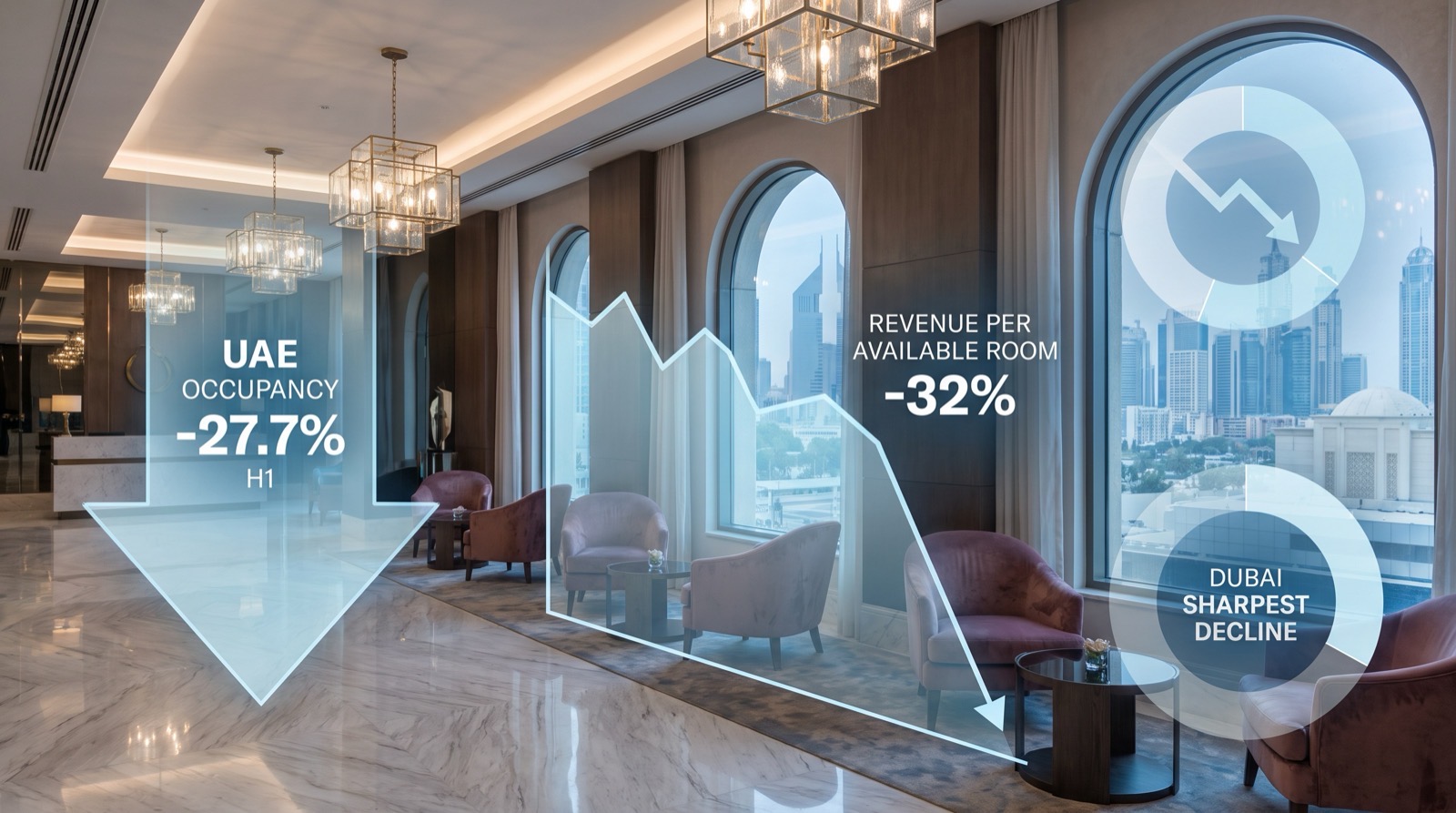
UAE hotel occupancy fell approximately 27.7 percentage points year-on-year across H1, with revenue per available room down close to 32%, according to CBRE analysis of CoStar data. Dubai recorded the sharpest decline among the emirates.
The drop is conflict-driven, not structural. Regional tensions suppressed inbound international travel. Operators are responding with domestic tourism campaigns, staycation offers and refurbishment programmes. Dubai mall occupancy held near 98% through the same period, placing the demand shock specifically in international arrivals rather than in broader consumer activity.
For anyone with short-let residential exposure, the read is direct. A portion of Dubai apartment demand in tourist-facing communities is priced on holiday-let yields.
When hotel occupancy falls 27.7 points, and RevPAR drops 32%, yield assumptions built on peak travel demand are no longer defensible. It is now crucial to stress-test those assumptions before committing to any unit in a tourism-reliant community.
Emaar Development and Abu Dhabi Commercial Bank have launched a financing programme for eligible buyers of Emaar off-plan and ready properties. Pre-approval covers up to 50% of a property’s value. The initial twelve-month approval renews annually and remains valid throughout construction until handover.
ADCB is offering rates starting from 3.49% per annum, fixed for three years. Processing and valuation fees are waived for a limited period. A three-year fix at 3.49%, announced the same week three Fed officials voted to hike, shows a large developer and a major bank absorbing rate risk on behalf of buyers. Both institutions are doing so because they expect demand will need support through a period of elevated and potentially rising financing costs.
ADGM’s Registration Authority activated its Broker Classification Framework on 31 July, ranking brokers within ADGM by transaction activity, professional development and customer feedback. The framework runs across five tiers — General, Bronze, Silver, Gold and Platinum.
ADGM is the financial free zone on Al Maryah Island. The framework covers its jurisdiction only, not mainland Abu Dhabi — a distinction that matters before citing this as an emirate-wide development.
Modon Holding reported H1 net profit of AED 2.2 billion on record revenue of AED 9.2 billion, up 40% year-on-year. Real estate sales reached AED 26 billion — 2.6 times the H1 2025 figure — including AED 23 billion in Abu Dhabi. A single launch, Hudayriyat Golf Estates, generated AED 13 billion in sales within days, the highest figure recorded for a single residential project launch in the UAE.
Revenue backlog reached AED 65.4 billion, doubling year-on-year and rising 42% since the end of 2025. Recurring revenues rose 22% to AED 3.5 billion, representing 38% of group revenue, with occupancy across owned properties at 96%.
A developer generating 38% of revenue from recurring income carries a materially different risk profile from one dependent on launch activity. If Abu Dhabi’s residential cycle cools, Modon’s contracted leasing and hospitality income absorbs more of the impact.
The AED 65.4 billion backlog is a mix of pre-sold development income and recurring contracted revenue. Reading it as a single number without that distinction overstates its sensitivity to any residential slowdown.
In closing
Final View for Dubai Property Investors
The rate question changed this week. It is no longer about when rates will fall. Until 29 July, most people expected EIBOR to drop eventually. Three hawkish Fed votes and September hike odds above 57% mean a rate rise is now the scenario to plan for, not ignore. For anyone using a loan, this risk is immediate because of the currency peg.
This change has a clear message for where to put money. Grade A Dubai offices are delivering 13% rental growth with almost no new supply until 2028. Dubai residential, by contrast, is absorbing 24,800 new units and faces another 162,500 in 2027. These two markets are moving in opposite directions and will continue to do so for at least the next 18 months.
Commercial property looks stronger than residential on a risk-adjusted basis right now. That advantage will last until at least 2028, when residential supply starts to ease, and the rate outlook may be clearer.
This does not mean avoid residential completely. It means be realistic about what residential needs today: more equity and less debt, patience for a two-year absorption period, and a purchase price that already factors in the 2027 supply peak.
Anyone who needs a large loan to make a residential deal work is taking on three risks at once — higher rates, heavy new supply, and harder exits — at the exact time all three are working against them.
The Emaar-ADCB 3.49% three-year fix is worth reading as a signal, not just a product. A major developer and a major bank are jointly absorbing rate risk to sustain demand. Institutions do not do that unless they expect the unaided market to soften.
Next step
Let’s Talk
If you’d like to unpack where the most resilient opportunities are emerging — in stabilised residential areas or income-generating commercial zones — I’d be happy to share a focused, data-driven shortlist based on your investment goals.
📞 No pressure, no sales pitch—just a focused, informed conversation about your investment goals.
Published 3 August 2026 by Stephen James Mitchell MBA. Market figures quoted reflect the data available at that date.