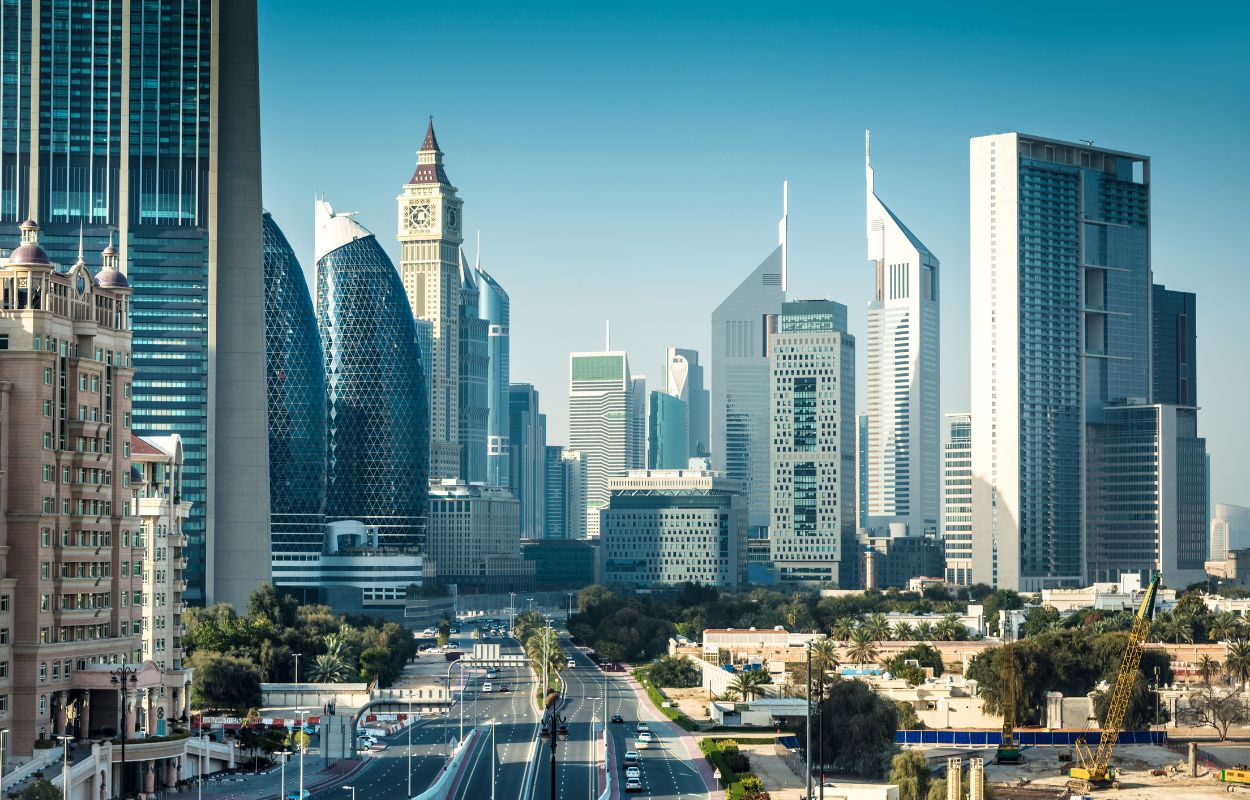
Commercial property valuation in Dubai—whether for retail, office, or mixed-use assets—is a critical process that underpins mortgage lending, investment decisions, and resale strategy. Unlike residential property, where valuations often rely on comparable sales, commercial real estate is primarily assessed based on income generation potential. This guide explains how this works, with a particular focus on capitalisation rates (cap rates) and their use in key Dubai areas.
A capitalisation rate, or cap rate, is a percentage that represents the return an investor would expect to earn on a property, based on the property’s net operating income (NOI) and current market value.
Cap rate = Market Value / Net Operating Income (NOI)
To understand more about how the capitalisation rate is calculated, check here.
Cap rates vary depending on market dynamics, perceived risk, location desirability, tenant strength, lease terms, and asset condition. In Dubai, they serve as a foundation for valuers, particularly those accredited under RICS (Royal Institution of Chartered Surveyors), to establish fair market value.
RICS provides the global valuation standards widely adopted in Dubai through what is known as the “Red Book.” All RERA-approved valuation firms and banks in the UAE rely on these standards for consistency, transparency, and professionalism.
For commercial properties, RICS mandates the use of the Income Approach where appropriate—most commonly the capitalisation method or, for more complex cases, discounted cash flow (DCF) analysis.
To calculate a valuation using the cap rate, the following inputs are needed:
1. Net Operating Income (NOI)
This is the total income a property generates from tenants after deducting all operating expenses (maintenance, management, service charges, etc.), but before mortgage interest and taxes.
NOI = Gross Annual Rent − Operating Expenses
2. Market Cap Rate
This is derived from sales of comparable commercial properties in the same area and adjusted for:
- Property location
- Quality of construction
- Tenant strength (e.g. multinational brand vs. SME)
- Remaining lease term
- Market conditions
Cap rates are not published officially by RERA or DLD but are regularly reported by valuation firms and professional surveyors using transactional data.

Here’s a breakdown of cap rate guidance across key commercial and retail hotspots as of May 2025:
| Area | Estimated Cap Rate Range | Market Insight |
|---|---|---|
| Business Bay | 5.5% – 9.9% | A prime mixed-use district with high demand for retail spaces, especially those with canal views and metro access. Premium properties command lower cap rates due to strong tenant profiles. |
| Jumeirah Lake Towers (JLT) | 6.5% – 8.5% | A mature, mixed-use community with stable foot traffic and a diverse tenant base. Retail spaces here yield stable returns with strong occupancy. |
| Jumeirah Village Circle (JVC) | 7.0% – 9.0% | A fast-growing residential zone with high rental demand for convenience retail. Cap rates reflect a slightly higher risk-return profile due to ongoing development. |
| Motor City | 7.0% – 8.0% | A low-rise, community-centric area with consistent demand for retail serving local residents. Lower tenant churn helps maintain stable income. |
| Dubai Marina | 6.0% – 8.0% | A vibrant waterfront destination popular with residents and tourists. Premium buildings along Marina Walk offer excellent visibility and footfall, keeping yields competitive. |
| Downtown Dubai | 6.0% – 9.0% | Home to global attractions like Burj Khalifa and Dubai Mall, Downtown commands strong demand for retail, especially near high-traffic zones. Cap rates vary widely based on positioning. |
| Al Barsha Heights (Tecom) | 7.0% – 8.5% | A well-located commercial hub attracting SMEs and F&B tenants. Improved access and growing population make this an emerging hotspot for small retail investments. |
| Palm Jumeirah | 5.5% – 7.5% | As Dubai’s leading luxury destination, Palm retail units (especially on the trunk and crescent) offer prestige and premium pricing, leading to lower cap rates but strong capital appreciation potential. |
These ranges serve as indicative guidance based on current leasing and sales activity, tenant risk profiles, and comparable property transactions. Actual valuation will always depend on specific asset characteristics, lease terms, tenant covenants, and condition of the property.

When a commercial property is being financed through a mortgage, the lender (typically a bank) will commission a formal valuation by a certified firm. Here’s how the cap rate fits into that process:
Step-by-Step Valuation for Lending:
NOI Assessment: The valuer analyses the lease(s) and operating expenses to determine the accurate net operating income.
Cap Rate Selection: A cap rate is chosen based on:
- Comparable market transactions
- Property-specific factors
- Risk profile of the tenant(s)
- Lease expiry dates and rent escalation clauses
Valuation Calculation:
Valuation=NOICap Rate\text{Valuation} = \frac{\text{NOI}}{\text{Cap Rate}}
Example:If the annual NOI is AED 600,000 and the cap rate is 7%:
Value=600,0000.07=AED 8,571,429\text{Value} = \frac{600,000}{0.07} = \text{AED 8,571,429}
- Loan-to-Value (LTV): The bank applies a standard LTV (typically 50–65% for commercial assets) to the valuation to determine how much they’re willing to lend.
- Risk Adjustment: Some banks may apply a stress-tested valuation using a more conservative cap rate (e.g., 7.5% instead of 7%) to assess downside risk.
Still reading
Need expert help on this subject?
While the method is clear in theory, the real-world application involves several practical challenges:
- Inconsistent Lease Structures: Rent-free periods, turnover rent, or short-term leases may affect the sustainability of NOI.
- High Service Charges: In some mixed-use buildings, high common area costs reduce net returns, lowering valuations.
- Vacancy Risk: Higher risk of turnover in secondary locations (like some parts of JVC) pushes up cap rates and lowers asset value.
- Inflated Asking Rents: Valuers only consider actual contracted rents or sustainable market rent—not wishful projections.
- Retail Asset Liquidity: While cap rates may be attractive, liquidity (ease of sale) can be lower compared to residential properties.
If you’re evaluating or purchasing commercial property in Dubai, keep these key points in mind:
✅ Stabilised NOI: Buy when the income is proven—not speculative.
✅ Reputable Tenants: Multinational brands or long-term anchor tenants reduce risk.
✅ Long Lease Terms: Prefer units with leases exceeding 3 years with built-in escalations.
✅ Exit Strategy: Prime retail in places like Business Bay or JLT is easier to resell.
✅ Cap Rate Spread: Compare cap rates with borrowing costs. A wider spread = better cash flow.
Capitalisation rate–based valuations are one of the most objective ways to value commercial property in Dubai. However, the quality of inputs—particularly the NOI and the selected cap rate—determine the reliability of the result.
For retail assets in Dubai, especially in fast-evolving areas like JVC or mixed-use zones like JLT and Business Bay, understanding the true risk-return profile is key. Whether you’re seeking to finance through a bank or simply want to appraise a unit for resale or acquisition, always insist on an independent RICS-based valuation.

In closing
Summary Table: Cap Rates Across Dubai
| Area | Cap Rate Range |
| Business Bay | 5.5% – 9.9% |
| Jumeirah Lake Towers (JLT) | 6.5% – 8.5% |
| Jumeirah Village Circle | 7.0% – 9.0% |
| Motor City | 7.0% – 8.0% |
| Dubai Marina | 6.0% – 8.0% |
| Downtown Dubai | 6.0% – 9.0% |
| Al Barsha Heights (Tecom) | 7.0% – 8.5% |
| Palm Jumeirah | 5.5% – 7.5% |
Next step
Speak With Me Directly – Let’s Maximise Your Commercial Property Investment in Dubai
I'm Stephen James Mitchell, Managing Director of Global Investments and a RERA-licensed broker (BRN 68593).
With over 25 years in global finance—and over 19 years living and working in the UAE—I’ve helped investors unlock the full potential of Dubai’s commercial real estate market by focusing on data-driven strategy, optimal structuring, and smart negotiation.
I specialize in helping clients navigate the commercial sector by:
✔ Sourcing high-yield retail and office properties in key freehold zones
✔ Identifying undervalued units with strong tenant covenants and sustainable NOI
✔ Negotiating better terms with developers and resellers, including price reductions, extended payment plans, and fit-out incentives
✔ Ensuring smooth, secure closings fully aligned with Dubai Land Department regulations
Whether you're exploring your first commercial purchase or scaling a multi-asset portfolio, my advice is independent, experienced, and ROI-focused—not sales-driven.
🟢 Visit this link for insights, opportunities, and live listings.
📞 Or message me directly to discuss your goals and get help negotiating the best deal on your next acquisition.
No pressure—just smart, informed decisions.
Published 7 May 2025 by Stephen James Mitchell MBA. Market figures quoted reflect the data available at that date.