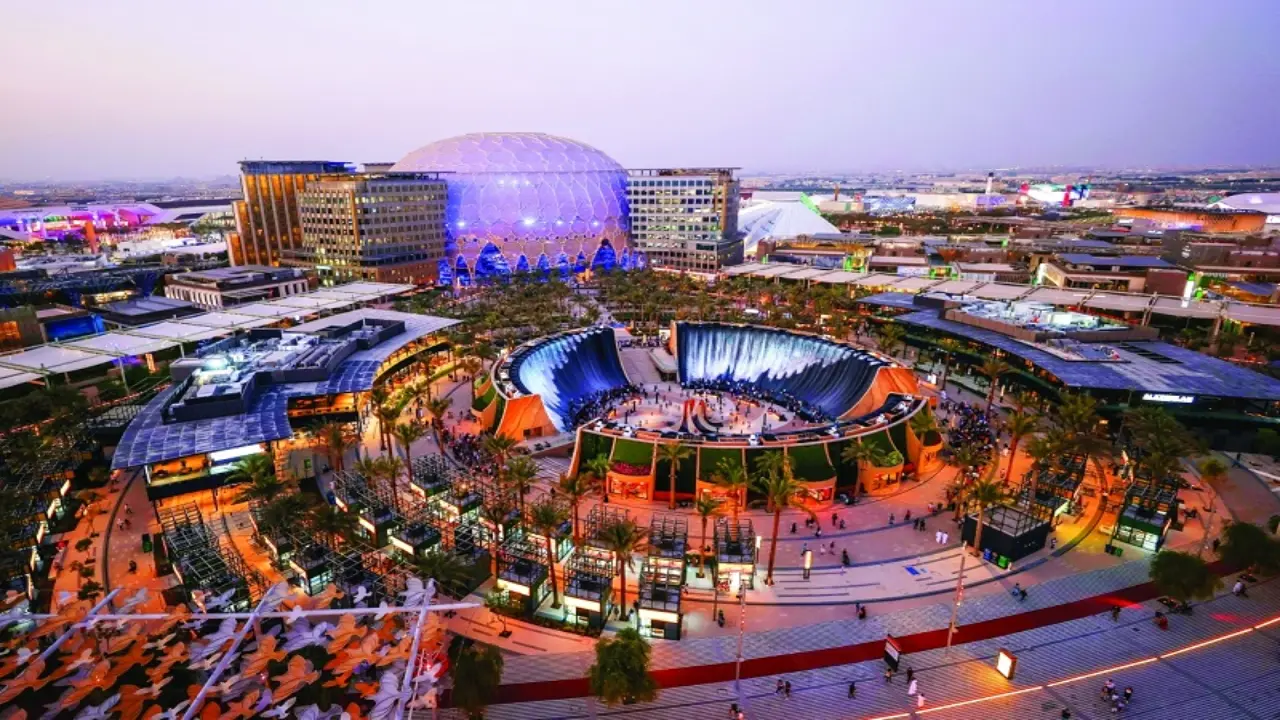
EXPO CITY DUBAI: GOVERNMENT-BACKED SMART CITY MASTERPLAN
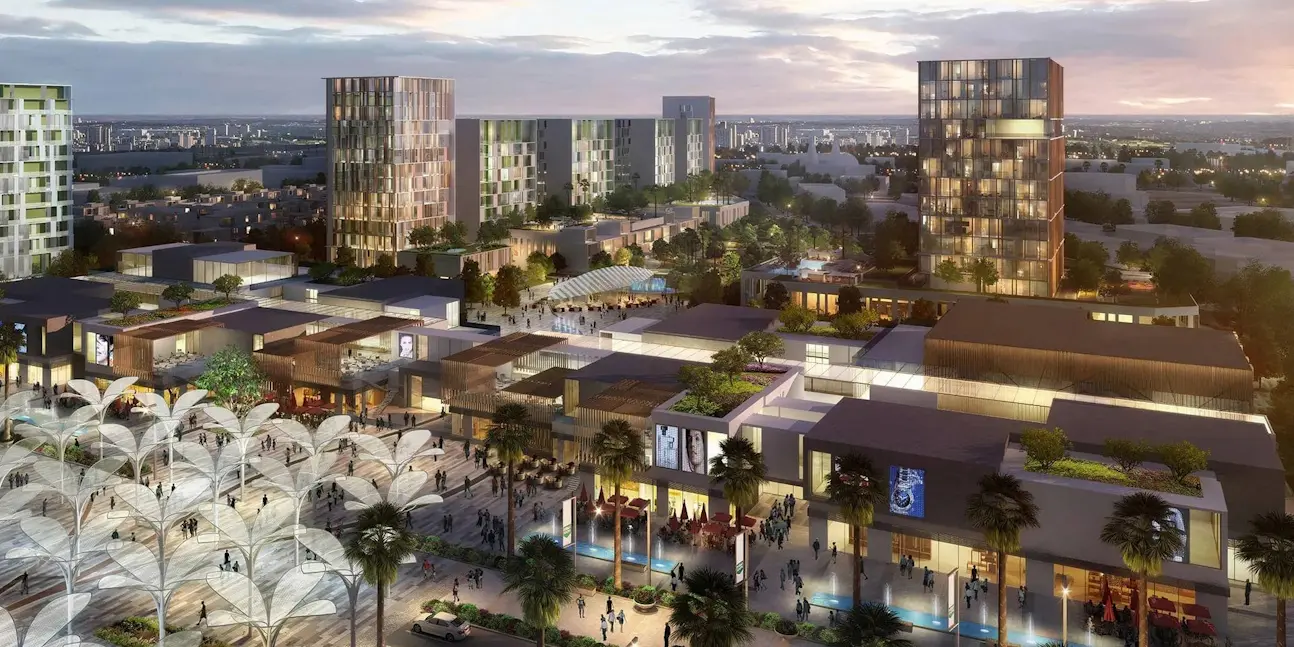
Construction began in 2016 and the World Expo ran from 1 October 2021 to 31 March 2022, attracting more than 24 million visitors. Expo City Dubai reopened to the public on 1 October 2022 as a permanent mixed-use community. The masterplanning architect was HOK Canada and Parsons International, with Orascom Construction and Belhasa Six Construct as main contractors. The site comprises a 2 square kilometre gated expo area surrounded by residential, hospitality and logistics zones.
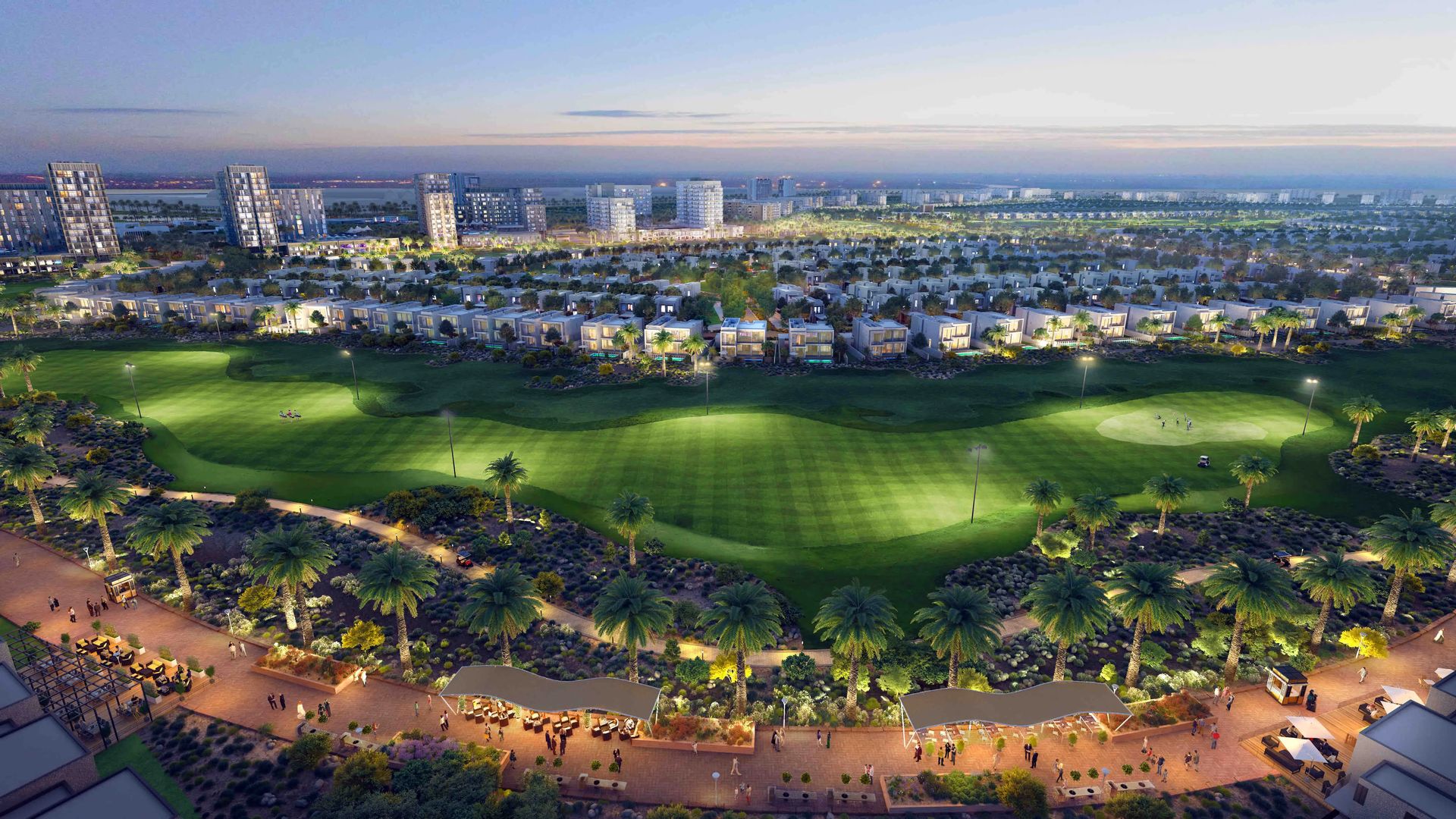
The masterplan tracks 24 sub-communities. Five are complete: Expo Village, Jubilee Expo 2020 District, Mobility District, Opportunity District and Sustainability District. Under active development are Al Waha with approximately 280 apartments and lofts launched in January 2025, Sidr Residences launched in November 2024 with Q1 2028 handover, Mangrove Residences, Expo Central, Expo Valley, Expo Valley 2, Dana, Maha Villas, Shamsa 1 through 3, Shamsa Townhouses and Yasmina Villas. Expo Valley Views is planned. The primary residential clusters are Expo Valley (low-density villas and townhouses), Expo Central (mid-rise apartments) and Expo Village (completed stock).
For investors, the honest framing is that Expo City Dubai is a Tier 3 growth and emerging play. The area is classified as off-plan and no consolidated ROI dataset exists. The limited completed stock in Expo Village generates rental income — 12-month aggregated data shows average asking rents of AED 79,000 on 1-beds, AED 98,000 on 2-beds and AED 143,000 on 3-beds — but the wider residential pipeline is predominantly off-plan with handover dates ranging from Q1 2026 through Q4 2029. The investment thesis rests on government-backed infrastructure under the Dubai 2040 Urban Master Plan, metro connectivity via the Route 2020 extension, sustainability credentials with LEED Platinum and WELL Community pre-certifications, and the structural bet that Expo 2020's legacy infrastructure creates a genuine residential demand anchor in southern Dubai.
Location places Expo City Dubai in Jebel Ali south of the E311 Sheikh Mohammed Bin Zayed Road, approximately halfway between Dubai and Abu Dhabi. Route 2020 metro connectivity — a structural advantage over most Tier 3 communities — provides direct rail access to central Dubai. The masterplan is 5G-covered and car-free within the core expo district. Major retained attractions include Al Wasl Plaza, the Garden in the Sky observation tower, Surreal water feature, the Alif Mobility Pavilion, Terra Sustainability Pavilion, the Expo 2020 Dubai Museum, retained country pavilions from the UAE, Saudi Arabia, India, Pakistan and others, and the Dubai Exhibition Centre which hosted COP28 in 2023. A free zone operates within Expo City Dubai offering various business license types. Nearby anchors include Al Maktoum International Airport, Jebel Ali Port, Dubai Parks and Resorts and the wider Dubai South logistics and aviation corridor.
Classified as Tier 3 — Growth & Emerging, Expo City Dubai serves investors prioritising government-backed infrastructure thesis, sustainability credentials and long-duration capital growth. This guide covers the acquisition strategy for patient-capital and off-plan allocators, the due diligence framework across Expo Valley villas, Expo Central apartments and Expo Village completed stock, the rental yield dynamics supported by free-zone and Dubai South employment demand, and the portfolio construction role of this community as a Tier 3 growth satellite within a balanced Dubai residential portfolio. Careful cluster and handover-timing selection is central to return optimisation given the five-year staggered delivery schedule. Long-term holders with 7 to 10 year horizons will find Expo City Dubai one of the more structurally defensible emerging-community positions in Dubai given its metro and government anchors.
EXPO CITY DUBAI: MARKET ANALYSIS AND INVESTMENT DYNAMICS
INFRASTRUCTURE AND CONNECTIVITY
Expo City Dubai is connected by metro via the Route 2020 extension, with the Expo 2020 metro station providing direct rail access — a material advantage over most emerging Dubai communities. The site sits in Jebel Ali south of the E311 Sheikh Mohammed Bin Zayed Road. The masterplan retains Expo 2020's major attractions: Al Wasl Plaza, the Garden in the Sky observation tower, Surreal water feature, Alif Mobility Pavilion, Terra Sustainability Pavilion and the Expo 2020 Dubai Museum. Retained country pavilions include the UAE, Saudi Arabia, Luxembourg, India and others. The Dubai Exhibition Centre operates as a major events venue and hosted COP28 in 2023. The city is 5G-covered and car-free within the core district. The masterplan achieved LEED Platinum and WELL Community pre-certifications in 2025 and holds GSTC-level sustainability certification — the first in MENA. A free zone offers various business license types. Nearby anchors include Al Maktoum International Airport, Jebel Ali Port, Dubai Parks and Resorts, Dubai South and the Jebel Ali Free Zone.
RENTAL MARKET AND TENANT PROFILE
The completed residential stock is limited to Expo Village (Residences 1 through 4). Twelve-month listing data shows average asking rents of AED 79,000 for 1-bedroom apartments, AED 98,000 for 2-bedroom apartments and AED 143,000 for 3-bedroom apartments. The area is classified as off-plan and no consolidated ROI dataset is published. Average asking sales prices are AED 1,658,000 for 1-beds, AED 2,238,000 for 2-beds and AED 4,036,000 for 3-beds, though these are heavily influenced by off-plan pricing. The tenant profile is emerging: early occupants include professionals working within the Expo City free zone, Dubai South logistics and aviation workers, sustainability and innovation sector employees, and event-related staff supporting the Dubai Exhibition Centre. As Sidr Residences, Expo Valley Views and other clusters hand over, the tenant base will broaden.
SUPPLY DYNAMICS AND PORTFOLIO POSITIONING
Recent February 2026 DLD activity inside Expo City Dubai reveals active off-plan pre-registration trading under the master project Dubai World Central: Expo Valley Views 08 3-bed at AED 2,045 per sqft, Expo Valley Views 08 2-bed at AED 1,930 per sqft, Terra Gardens Building 2 2-bed at AED 2,181 per sqft, Mangrove Residences 2 2-bed at AED 1,924 per sqft, and Expo Valley Views 08 1-bed at AED 1,945 per sqft. Off-plan PSF pricing ranges from AED 1,924 to AED 2,181 across this dataset, suggesting developer pricing discipline. Villa and townhouse pricing is materially higher: Yasmina Villas (5-bed) around AED 8.4 million and Shamsa Townhouses (3-bed) around AED 4.5 to 4.7 million with Q1 2026 handover. Sidr Residences shows Q1 2028 handover; Expo Valley Views and Dana show Q4 2029 handover. Within a Dubai portfolio, Expo City Dubai sits in the Tier 3 growth bucket — government-backed, infrastructure-rich, but predominantly off-plan with no stabilised rental dataset. It should not carry more than 10 to 15 per cent of a diversified Dubai allocation unless the investor has explicit tolerance for long-duration holds and limited near-term cash flow.
EXPO CITY DUBAI: INVESTMENT STRATEGY AND ENTRY POINTS
The first strategic question is whether the investor has a genuine long-duration horizon and believes in the government infrastructure thesis. Expo City Dubai is not a buy-and-rent play today. The completed residential stock is limited to Expo Village, and the wider pipeline spans handover dates from Q1 2026 through Q4 2029 across 24 sub-communities. Capital deployed in off-plan tranches such as Sidr Residences, Mangrove Residences, Expo Valley Views, Terra Gardens and Al Waha earns zero rental income until handover plus a stabilisation window. The thesis rests on three pillars: the Dubai 2040 Urban Master Plan designating this as a strategic growth node, the metro connectivity that most Tier 3 communities lack, and the Expo 2020 legacy infrastructure that creates a genuine destination anchor rather than the generic amenity package of a typical new-build community.
The second strategic question is format and cluster selection. Expo Valley, covering Yasmina Villas, Shamsa Townhouses, Expo Valley Views and Dana, is the low-density residential play with Q1 2026 handover on the earliest stock and Q4 2029 on the latest. Expo Central, covering Mangrove Residences, Sidr Residences, Sky Residences and Al Waha, is the mid-rise apartment play with higher unit counts and a denser tenant-demand model. Off-plan PSF pricing across the February 2026 dataset ranges from AED 1,924 to AED 2,181 per square foot for apartments — a relatively tight band suggesting developer pricing discipline. Villa and townhouse pricing is materially higher, with Yasmina Villas around AED 8.4 million for a 5-bed and Shamsa Townhouses around AED 4.5 to 4.7 million for a 3-bed. For yield-oriented investors, the apartment formats in Expo Central are the more relevant allocation — once completed, the metro proximity and free zone tenant demand should underpin rental absorption.
The third strategic question is portfolio weighting. Expo City Dubai should sit as a satellite growth allocation inside a diversified Dubai portfolio, not as a core holding. A sensible cap is 10 to 15 per cent of total Dubai real estate allocation. The remainder should anchor in Tier 1 capital-preservation communities such as Downtown Dubai, Palm Jumeirah and Emaar Beachfront with stabilised rental datasets and proven secondary-market liquidity, with Tier 2 yield positions in The Greens, Jumeirah Park or The Views complementing the portfolio. Stress-test the Expo City allocation against an 18-month infrastructure delay scenario and a scenario where the free zone fails to attract sufficient commercial tenants to sustain residential demand at scale.
The risk framework is explicit. No ROI dataset exists — the area is classified as off-plan. DLD transactions are entirely off-plan pre-registration, meaning pricing is developer-set and secondary-market price discovery has not yet begun at scale. The 46.3 million square foot masterplan with 24 sub-communities requires massive absorption; if delivery outpaces demand, rental yields on early-handover stock could compress. Location in Jebel Ali is a permanent geographic constraint that metro mitigates but does not eliminate. The government-backed thesis carries execution dependency: any shift in Dubai 2040 priorities affects the pace of infrastructure delivery. Completed Expo Village stock provides a rental data point but not a trend. Meaningful portfolio exposure to Expo City Dubai typically requires AED 2 million and above of committed capital across multiple off-plan tranches.
SUPPLY DYNAMICS
Dubai South and Dubai Holding joint masterplan, 24 sub-communities, predominantly off-plan supply
TENANT PROFILE
Free zone professionals, Dubai South workers, sustainability employees, exhibition centre staff
KEY RISK FACTORS
Predominantly off-plan, no ROI dataset, thin completed stock, long handover horizons, location
KEY INFRASTRUCTURE
Expo City Dubai sits in Jebel Ali south of Sheikh Mohammed Bin Zayed Road (E311), with direct Route 2020 metro access via the Expo 2020 metro station — a structural advantage over most Tier 3 Dubai communities. The masterplan is internally anchored by Al Wasl Plaza, the Garden in the Sky observation tower, the Surreal water feature, Alif Mobility Pavilion, Terra Sustainability Pavilion, the Expo 2020 Dubai Museum, retained country pavilions from UAE, Saudi Arabia, India, Pakistan, Luxembourg, Australia, Morocco and Egypt, and the Dubai Exhibition Centre which hosted COP28. Nearby external anchors include Dubai South, Al Maktoum International Airport, Jebel Ali Port, Jebel Ali Free Zone, Dubai Parks and Resorts, Motiongate and the wider Dubai South logistics and aviation corridor. Adjacent communities include Dubai South, Dubai Investments Park and the Jebel Ali residential belt, reinforcing Expo City Dubai's positioning as Dubai's flagship sustainability-anchored government-backed smart city.
Area fundamentals
- ASSET PROFILE
- Government-backed emerging smart city masterplan
- INVESTOR PROFILE
- Patient-capital growth investor + off-plan allocator
- TIER
- Tier 3 – Growth & Emerging
- MARKET TYPE
- Emerging government-backed mixed-use masterplan
- EST. POPULATION
- ~5,000–10,000 (projected)
- LAND SIZE
- ~46.3m sq ft
Next step
Request a briefing
You will get Expo City Dubai as a brief: the buildings on this page, the register readings behind them, and our view on each.