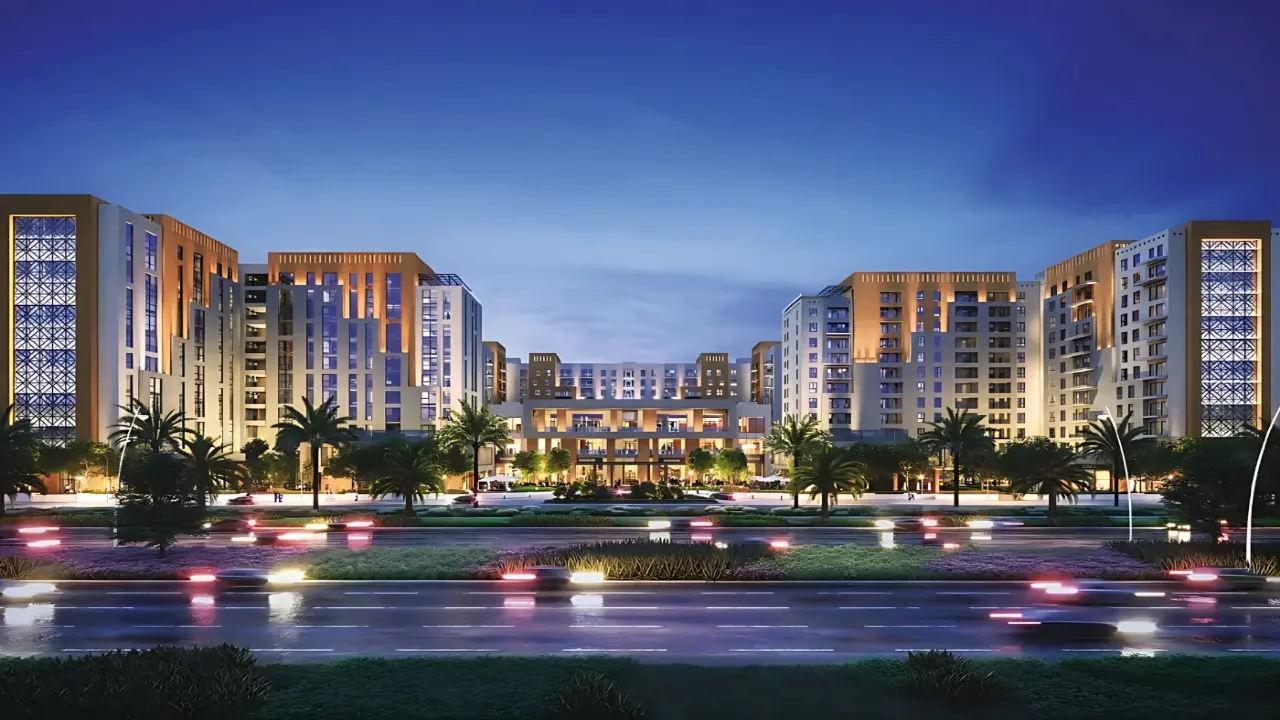
LIWAN: BUDGET APARTMENT YIELD COMMUNITY NEAR ACADEMIC CITY
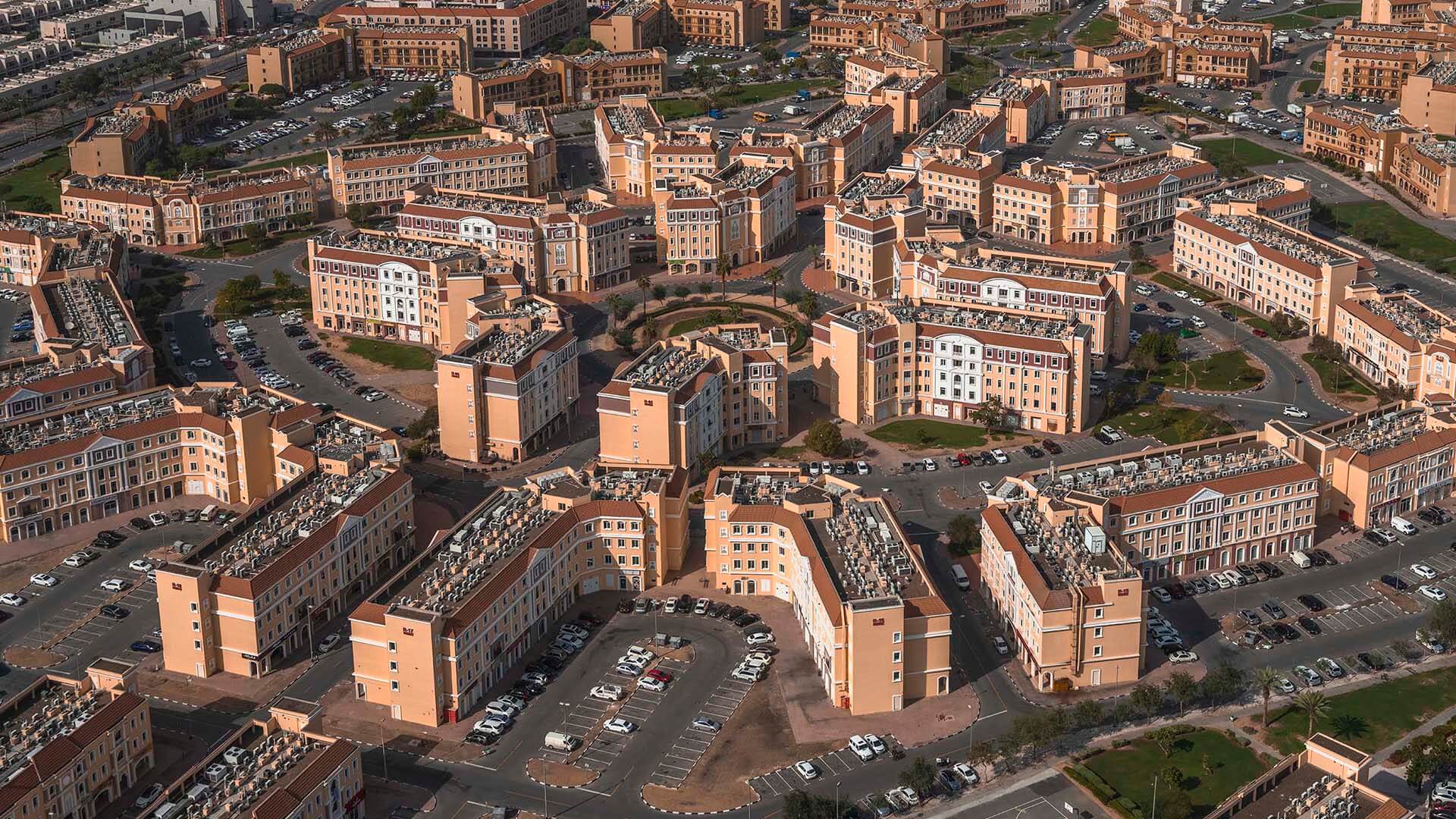
The community comprises over 5,000 apartments organised into two main sub-clusters — Queue Point and Mazaya — supporting an estimated population of 20,000 to 30,000 residents. Its positioning along Dubai-Al Ain Road and proximity to Dubai Academic City creates a specific demand anchor tied to the student and academic tenant base that distinguishes it from other budget apartment communities in Dubai. The community's accessibility, proximity to higher education infrastructure and budget pricing create a specific investor thesis within Dubai's diversified apartment market.
For yield-focused investors, Liwan offers entry-level pricing at AED 280 to 480 per square foot launch, generating gross yields in the 6 to 8 per cent range that are competitive with the highest-yielding apartment communities in the city. The investment case is built on the combination of ultra-affordable acquisition costs and consistent tenant demand from the Academic City student population, international university faculty and budget-conscious professionals seeking accessible Dubai apartment rentals. Unit sizes range from studios to two-bedroom apartments, with the majority of demand concentrated in studio and one-bedroom formats at AED 350,000 to 650,000 entry pricing.
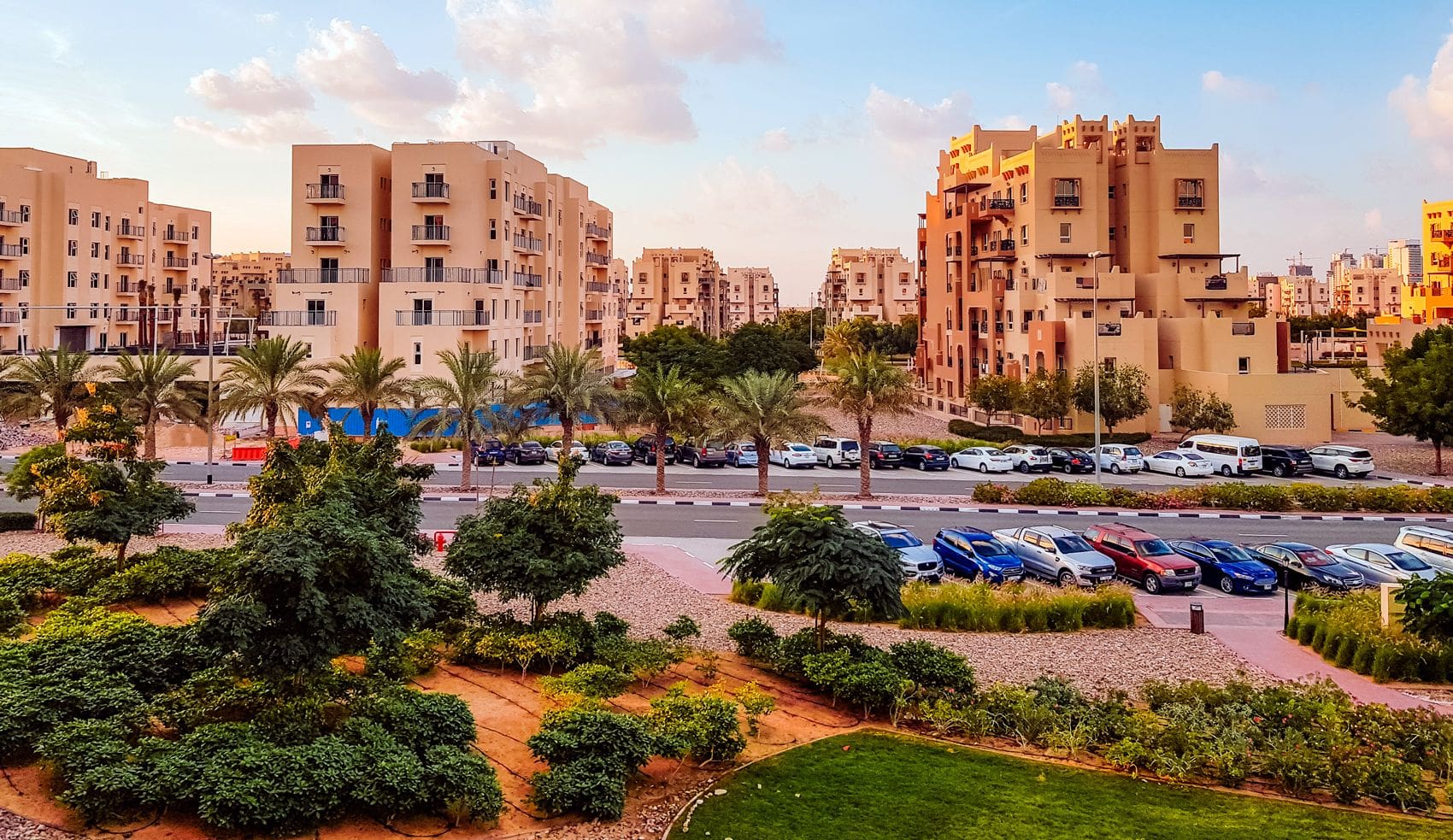
The community's infrastructure is practical rather than premium, with community pools, gyms, small parks, supermarkets and ground-floor retail within buildings creating a functional living environment that meets most daily needs within the community. Dubai Academic City is the primary external anchor, providing employment and student population that supports Liwan's rental demand. The community's southern Dubailand location places it close to Dubai Silicon Oasis, International City and Dubai Outlet Mall, with the broader Dubailand leisure cluster — Global Village, IMG Worlds of Adventure — within a short drive for weekend entertainment options.
Classified as Tier 2 – Yield & Volume, Liwan serves a specific portfolio function as a budget yield contributor. Investors who approach the community with realistic expectations about capital appreciation and a focus on cash-on-cash returns will find it a useful income generator within a diversified Dubai real estate portfolio. This guide covers the acquisition strategy for budget yield investors, the due diligence framework for multi-sub-developer quality assessment, the rental yield dynamics supported by Academic City tenant demand, and the portfolio construction role of this community as a high-yield budget contributor. The investor archetype is the yield-focused buyer with tolerance for peripheral location and aging stock in exchange for among the most accessible freehold apartment pricing in Dubai. Academic City's continued expansion across Heriot-Watt, University of Dubai and University of Birmingham Dubai provides a structurally renewable student and faculty tenant base that few other budget communities enjoy. Buyers with tolerance for academic-cycle seasonality and aging stock will find Liwan among the highest cash-on-cash positions in the southern-Dubai apartment segment.
LIWAN: MARKET ANALYSIS AND INVESTMENT DYNAMICS
INFRASTRUCTURE AND CONNECTIVITY
Liwan delivers gross rental yields in the range of 6 to 8 per cent, reflecting its entry-level pricing and the consistent tenant demand from Dubai Academic City's student and faculty population. The yield performance is driven by ultra-affordable acquisition costs — typically AED 350,000 to 650,000 for studios and one-bedroom apartments — and rental rates calibrated to student and budget-professional budgets. Net yield calculations should account for service charge variability across the community's multiple sub-developer buildings, as charges and management standards vary meaningfully between Queue Point and Mazaya clusters and between individual buildings within each cluster. No metro connectivity exists within the community, which is a structural limitation for tenants without private vehicles but is partially offset by the Academic City proximity for the community's core student tenant base.
RENTAL MARKET AND TENANT PROFILE
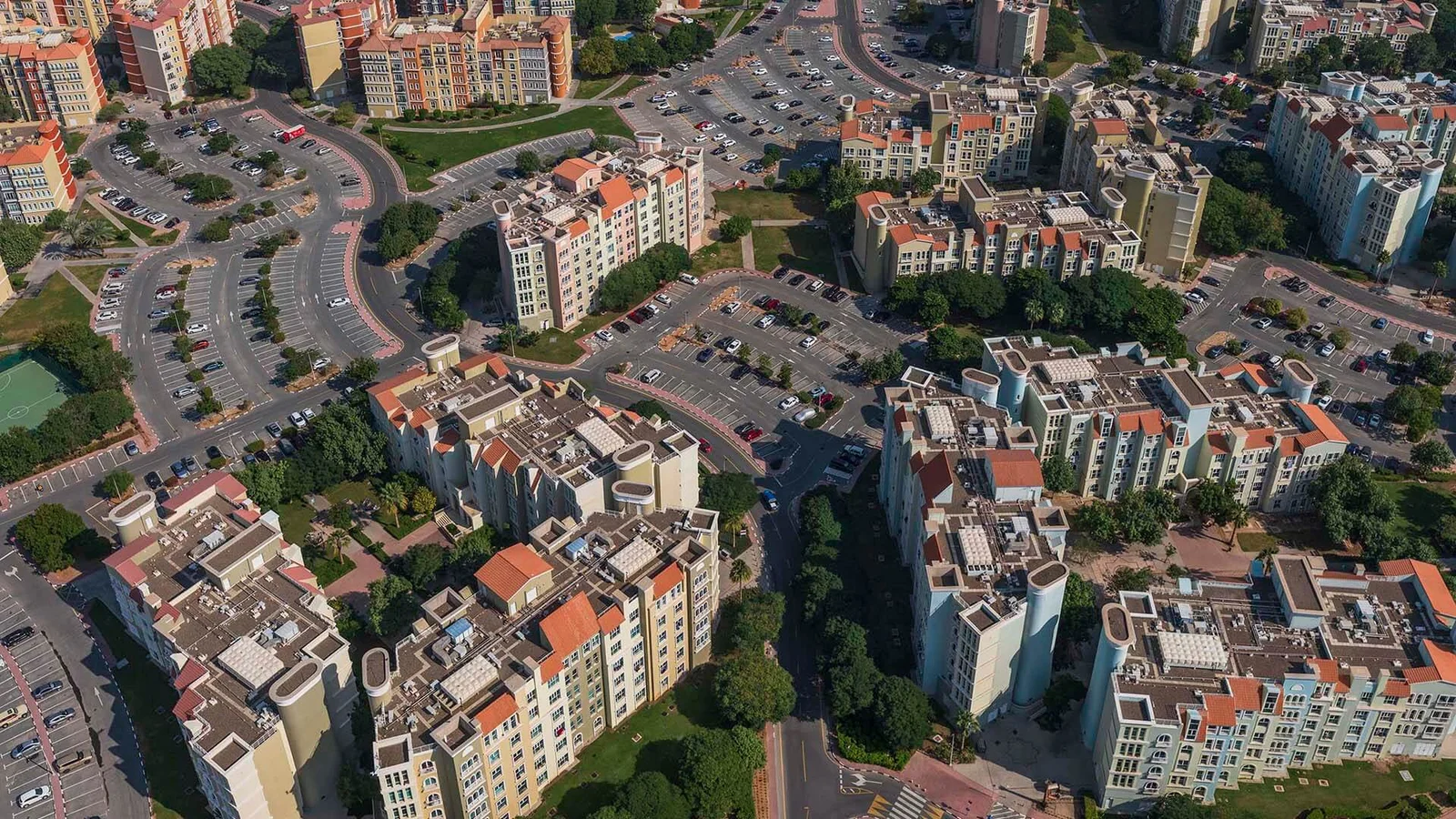
As a largely delivered community with a mixed sub-developer base, Liwan benefits from a fragmented ownership structure that provides abundant secondary market liquidity. New residential pipeline is limited, which protects existing unit holders from supply dilution. The competitive position of the community is anchored by Academic City proximity, which generates a genuine and renewable tenant base that is largely absent in competing budget communities like International City or Discovery Gardens. The primary competitive risk comes from newer budget communities such as Jumeirah Village Circle or DAMAC Hills 2, which offer more modern stock at similar or slightly higher price points. Building-level quality and service charge discipline vary significantly across Liwan's sub-developer ecosystem.
SUPPLY DYNAMICS AND PORTFOLIO POSITIONING
The tenant profile at Liwan centres on Dubai Academic City students and international university faculty, supplemented by young professionals and budget-conscious singles seeking affordable rental options in southern Dubai. This demographic is characterised by strong academic-cycle seasonality, with tenant turnover spikes aligned to university semester breaks. Multi-year leases are less common than in other budget communities, as the student tenant base typically holds 12-month leases tied to academic years. The community's facilities are functional rather than premium, reflecting the budget positioning and matching tenant expectations at this price point. Investors should view Liwan's tenant demand as structurally supported by Academic City's continued growth and Dubai's ongoing expansion of higher education infrastructure in the southern corridor.
LIWAN: INVESTMENT STRATEGY AND ENTRY POINTS
The investment strategy for Liwan is budget yield maximisation with an Academic City tenant focus. Investors must conduct sub-developer-level due diligence before any acquisition, assessing build quality, service charge history, occupancy rates and management standards for specific buildings rather than relying on community-level averages. Studios and one-bedroom apartments in well-maintained Queue Point or Mazaya buildings closest to Academic City represent the optimal target at AED 350,000 to 650,000 entry pricing, as they align with peak tenant demand from the student and young-professional demographic. The yield range of 6 to 8 per cent gross supports a buy-and-hold approach focused on cash flow generation over 5 to 10 year hold periods. Direct visits to candidate buildings are essential before any acquisition given the significant quality variability across the community.
Due diligence should emphasise building-level characteristics over community-level generalisations. Liwan's multiple sub-developer structure means that build quality, service charges and management standards vary meaningfully across the community's building stock. Investors should visit candidate buildings in person, review recent service charge statements, assess common-area maintenance levels and evaluate tenant turnover patterns before committing capital. The Academic City tenant base brings academic-cycle seasonality that investors must factor into cash flow projections, with summer vacancy periods between semester changes being a material consideration for single-unit investors.
For portfolio construction, Liwan serves as a budget yield contributor with Academic City demand differentiation. Its specific tenant-demand anchor distinguishes it from other budget communities like International City or Discovery Gardens, providing a portfolio diversification dimension within the Tier 2 sleeve. Pairing Liwan with ultra-affordable International City and metro-connected Discovery Gardens creates a diversified budget yield portfolio, while Tier 3 growth positions in Jumeirah Garden City or Dubai Creek Harbour add the growth-and-appreciation dimension that budget yield alone cannot provide. Position sizing is typically two to four units given the AED 350,000 to 650,000 ticket range, providing meaningful cash flow exposure without concentration risk on any single building or sub-developer. Investors seeking Academic City-anchored budget yield will find Liwan structurally defensible at this price tier within Dubai's apartment market. Holding two to three units across different Liwan sub-clusters provides a natural diversification and yield-capture approach for budget investors.
SUPPLY DYNAMICS
Multiple sub-developers, fragmented ownership, mature secondary market with limited new pipeline
TENANT PROFILE
Students, academics, budget tenants, young professionals seeking affordable Dubailand living
KEY RISK FACTORS
Aging stock, limited amenities, limited capital growth potential, car-dependent commuting
KEY INFRASTRUCTURE
Liwan sits in southern Dubailand along Dubai-Al Ain Road (E66) with Emirates Road (E611) providing arterial access. The community is organised into two main sub-clusters — Queue Point and Mazaya — each with its own mid-rise apartment buildings, community retail strips and landscaped streetscape. Internal amenities include community pools, gyms, small parks, supermarkets and ground-floor retail within buildings. Nearby anchors include Dubai Academic City — home to multiple international universities generating a significant student tenant base — Dubai Silicon Oasis, International City, Dubai Outlet Mall, Global Village and the wider Dubailand leisure cluster. Al Khail Road and Ras Al Khor Road provide secondary connectivity to the rest of Dubai. The community sits alongside Al Barari and the emerging Dubai Sustainable City, reinforcing the broader southern Dubai residential cluster. No direct metro connectivity; primarily car-dependent for external commuting.
Area fundamentals
- ASSET PROFILE
- Budget apartment yield community in Dubailand
- INVESTOR PROFILE
- Yield investor (budget apartment rentals)
- TIER
- Tier 2 – Yield & Volume
- MARKET TYPE
- Budget, apartments, yield, Dubailand, student-anchored
- EST. POPULATION
- ~20,000–30,000
- LAND SIZE
- ~19.4m sq ft
Next step
Request a briefing
You will get Liwan as a brief: the buildings on this page, the register readings behind them, and our view on each.