
Al Shatha Tower is a freehold commercial high-rise within the Dubai Internet City (DIC) free zone, one of the TECOM-managed technology districts along the Sheikh Zayed Road corridor. Completed as part of TECOM's initial DIC infrastructure rollout, the building occupies a prominent position within the free zone master plan and serves the submarket's established base of technology companies, IT services firms, and regional corporate headquarters. freehold ownership in DIC is available to eligible purchasers under the free zone framework. Standard TECOM leasehold conditions and DIC licensing requirements apply to all occupying tenants, shaping an occupier profile consistent with the technology and knowledge-economy cluster.
Completed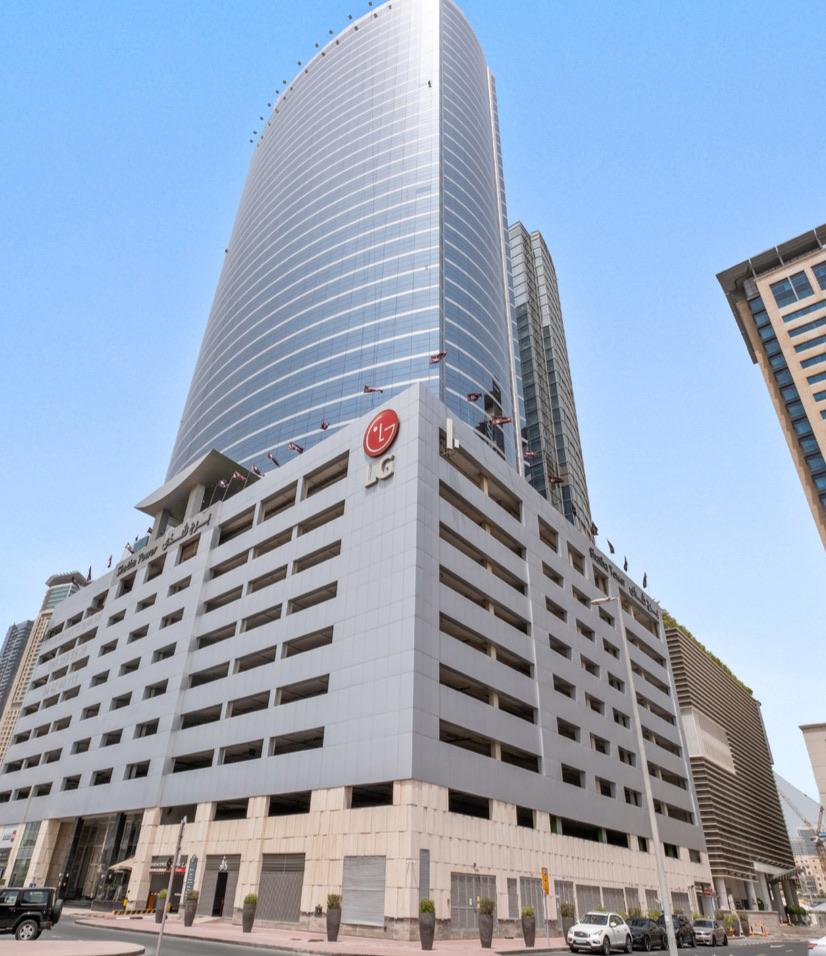
Dubai Internet City
Al Shatha Tower
Freehold office units in the DIC free zone for tech tenants and owner-occupiers.
Commercial Building
Overview
Office stock
Al Shatha Tower comprises freehold office floors with unit sizes catering to owner-occupiers and investors seeking leasehold income. Typical floor plates suit mid-size occupiers, with smaller subdivided units available for startups and SMEs within the TECOM free zone framework. Gross floor area is estimated at approximately 30,000 to 35,000 square metres, though individual unit sizes vary according to strata subdivision history. The tenant profile is consistent with the DIC ecosystem: technology companies, IT consultancies, software vendors, and regional offices of global technology multinationals. The freehold ownership structure introduces occupier fragmentation typical of multi-owner DIC product, with unit owners responsible for their own lease and fit-out decisions.
Rental rates
Quoted asking rents in Al Shatha Tower align broadly with the DIC strata submarket range, typically between approximately AED 90 and AED 130 per square foot per annum, depending on floor level, fit-out condition, and lease duration. The DIC submarket has experienced firming rental sentiment, underpinned by constrained new supply and sustained demand from technology-sector occupiers for whom TECOM free zone licensing is a prerequisite. The TECOM cluster effect — whereby proximity to peer technology occupiers supports occupier retention — provides structural insulation against demand fluctuations. Service charges in freehold building vary by unit depending on owner recovery structures and should be evaluated carefully at heads-of-terms stage.
Sales prices
As a freehold asset, individual office units in Al Shatha Tower are transactable on the open market, attracting owner-occupiers seeking permanent DIC tenure and investors targeting technology-sector leasehold income. Transaction volumes in DIC freehold tower are modest relative to Business Bay or JLT, reflecting the specialised occupier base and the requirement for buyers to satisfy TECOM free zone eligibility criteria. Gross investment yields are broadly consistent with wider Dubai commercial strata norms, typically in the range of five to seven percent, subject to unit size and current occupancy. Due diligence on service charge obligations, owners' committee governance, and TECOM regulatory compliance is essential prior to acquisition.
Location and access
Al Shatha Tower benefits from DIC's position between Sheikh Zayed Road and Al Khail Road, providing dual highway connectivity to central Dubai, Dubai Marina, and the wider emirate. The Dubai Internet City Metro Station on the Red Line is within approximately 500 metres, supporting staff commuting. Dubai Media City and Al Barsha Heights adjoin the DIC free zone, creating a contiguous TECOM technology and media corridor that reinforces the cluster's appeal to knowledge-economy occupiers. Dubai Marina and Jumeirah Beach Residence are accessible within approximately ten minutes by road. Retail and food and beverage provision within the DIC common areas is supplemented by Ibn Battuta Mall nearby.
Risks
freehold ownership in DIC introduces management complexity, particularly where building-wide capital expenditure requires majority owner approval. TECOM regulatory requirements govern sublet and assignment activity, and prospective tenants must meet DIC free zone eligibility criteria, restricting the addressable occupier pool relative to non-free zone buildings. Fragmented ownership can create inconsistency in common area upkeep if the owners' committee is not actively governed. Occupiers and investors should review service charge histories and assess the owners' committee track record prior to committing. Change-of-use or significant refurbishment requires TECOM Authority approval. Building vintage relative to newer DIC peers is a relevant medium-term competitive consideration.
Perspective
Al Shatha Tower occupies a defensible position within one of Dubai's most established technology free zones, serving the core segment of small and mid-size technology businesses requiring TECOM licensing within an established cluster. For investors, strata liquidity and a structurally supported technology-sector occupier base present a reasonable risk-return profile, albeit with management complexity above that of single-ownership buildings. Owner-occupiers benefit from a recognised DIC address and free zone operating status adjacent to Dubai Media City and Al Barsha Heights. Medium-term demand is supported by continued technology-sector concentration in the TECOM corridor, though competitive pressure from newer product will require ongoing attention to building presentation and service charge efficiency.
Location
Al Shatha Tower — Dubai Internet City, Dubai