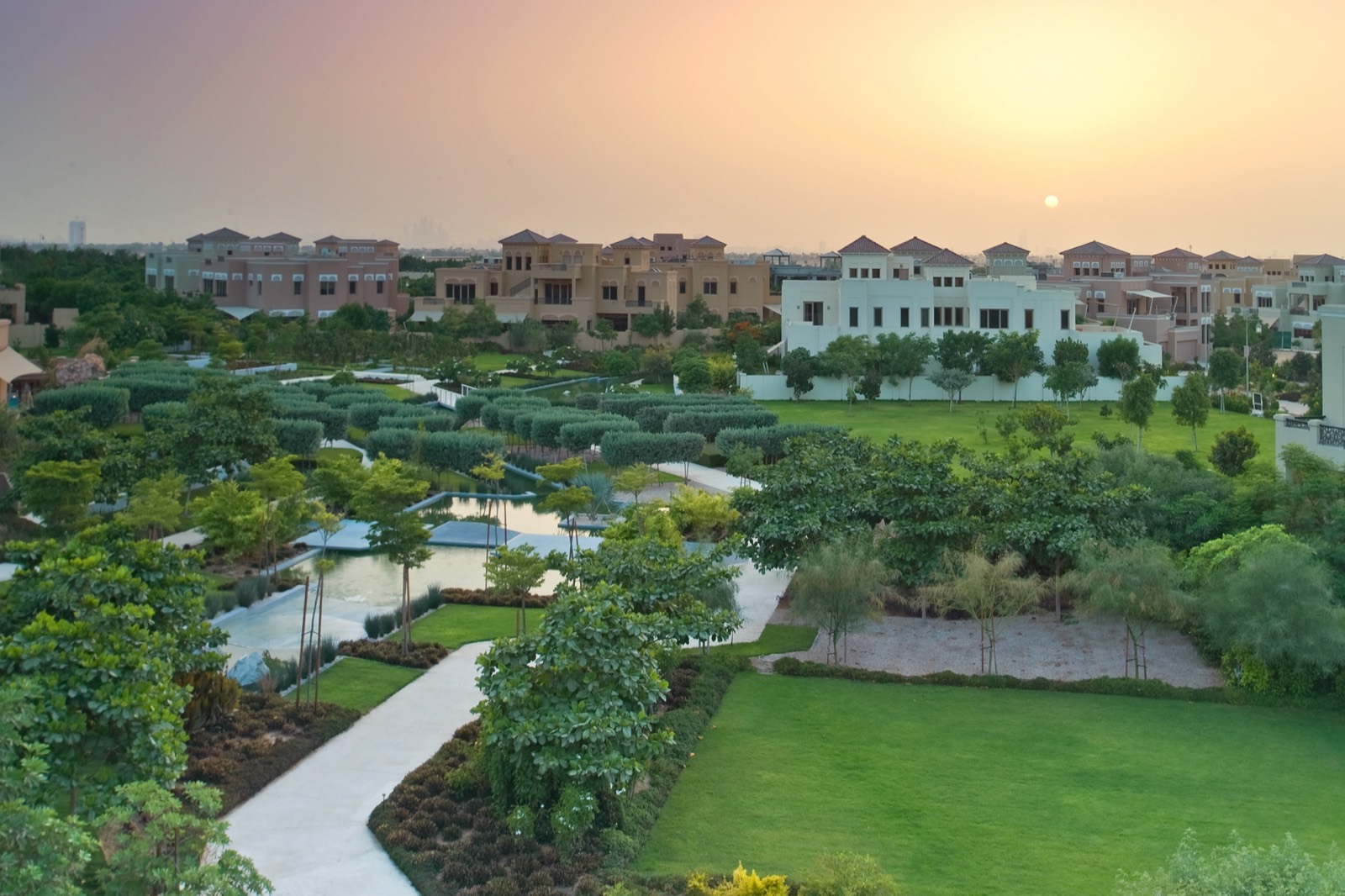
AL BARARI: ZAAL FAMILY ECO-LUXURY BOTANICAL ENCLAVE
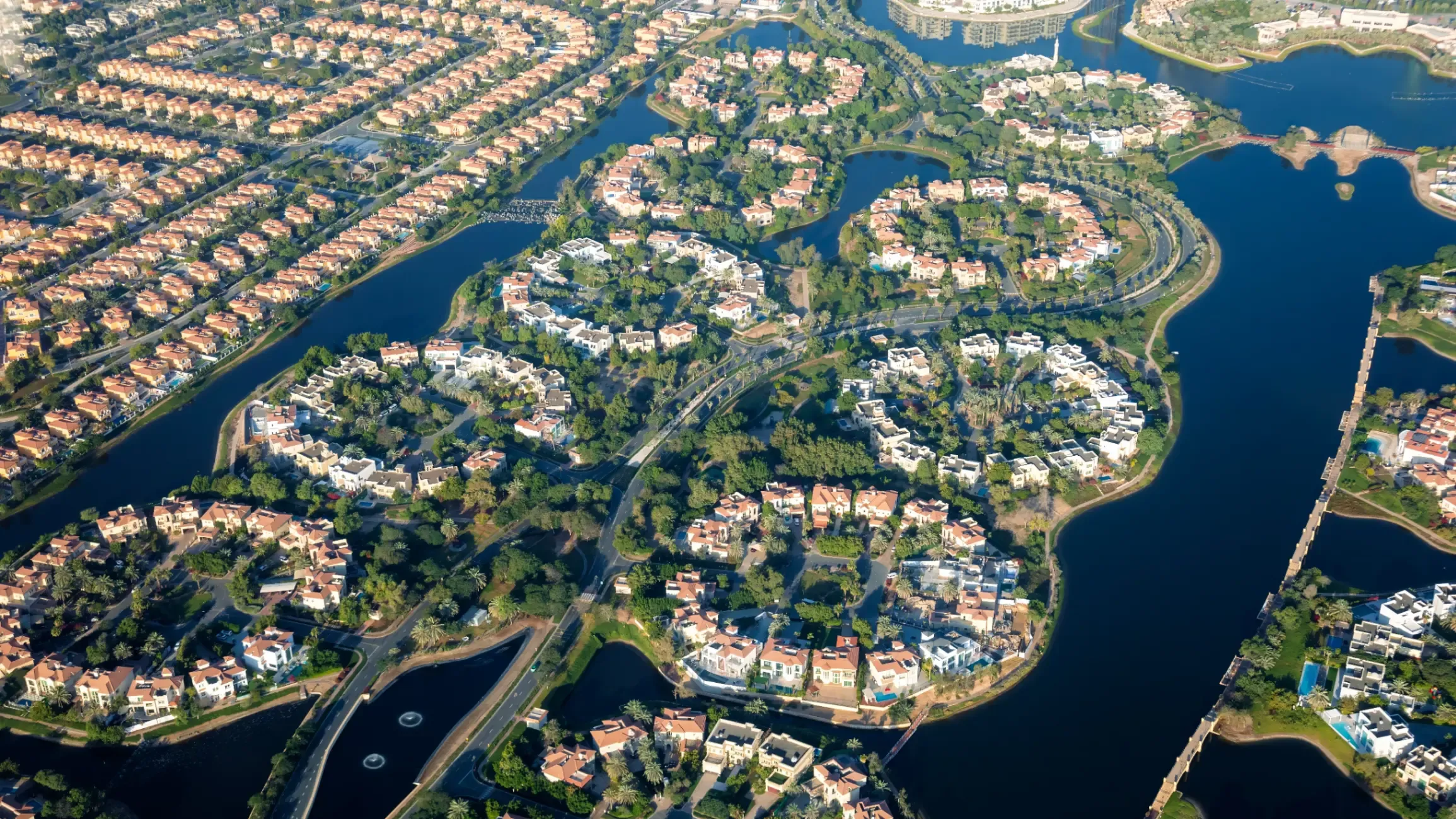
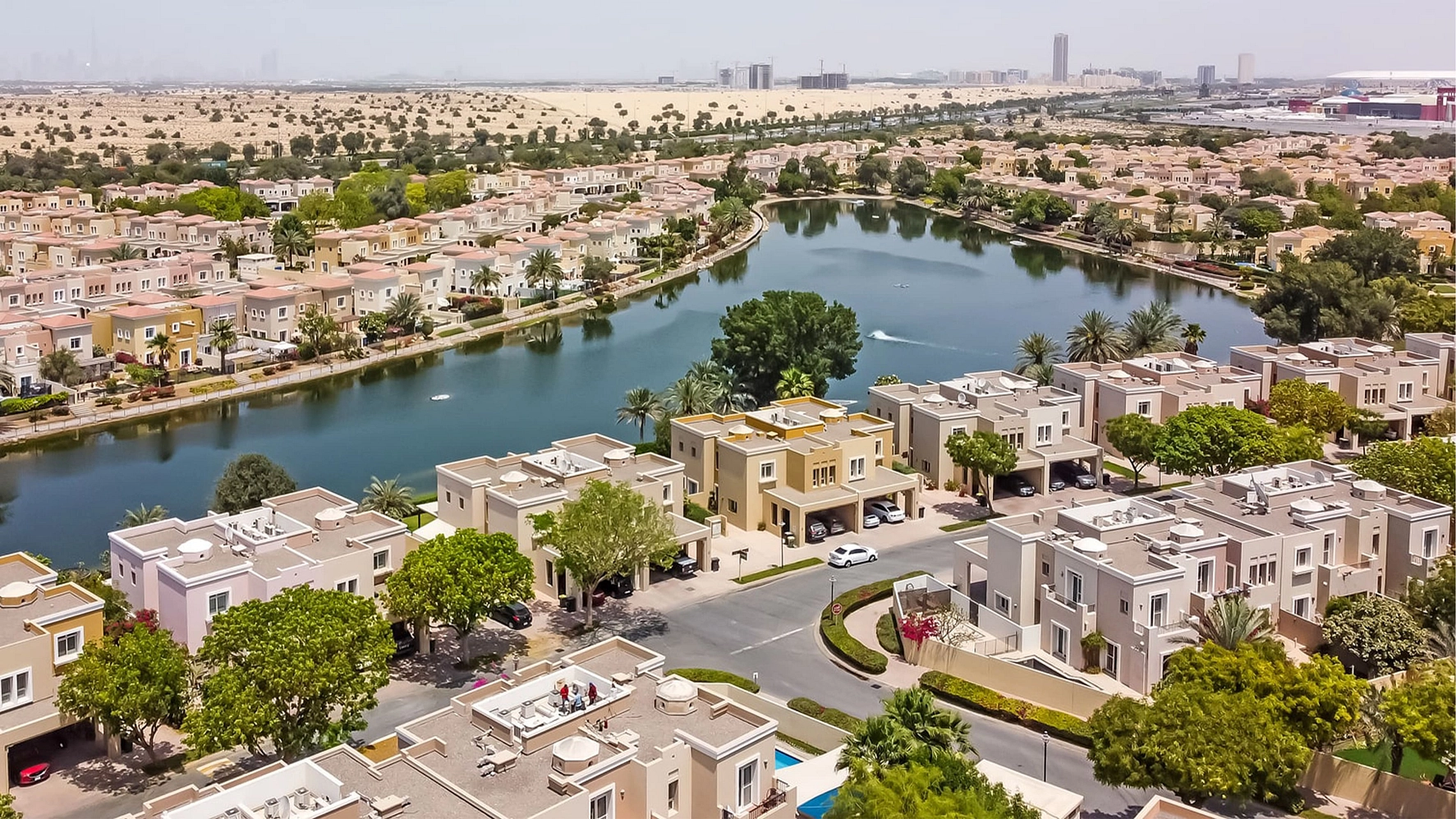
The community is developed by Al Barari Developers, a family-owned business founded by Zaal Mohammed Zaal, who continues to live on the estate with family members overseeing the gardens, amenity maintenance and ongoing expansion. Al Barari is set in the Nad Al Sheba pocket along Sheikh Mohammed Bin Zayed Road, and covers approximately 18 million square feet of land, which is roughly 1.67 million square metres or 413 acres.
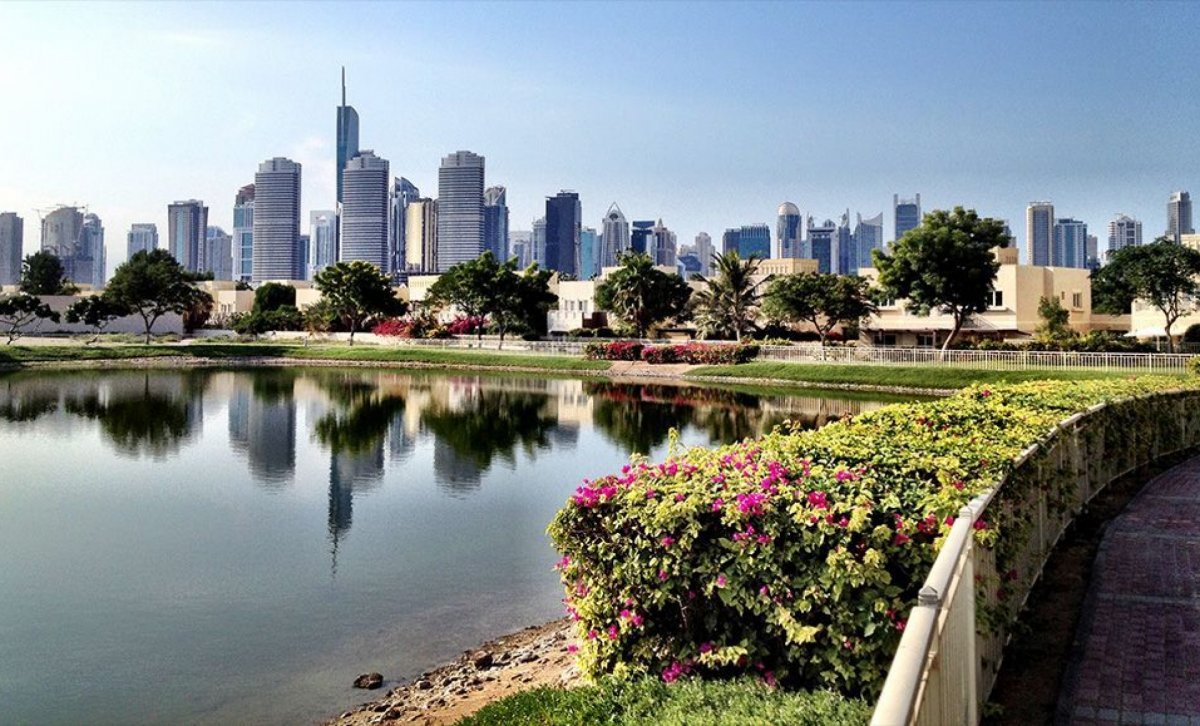
The density and design philosophy of Al Barari is what sets it apart from every other Dubai master plan. Approximately 60 per cent of the site is composed of green space — landscaped gardens, natural lakes and freshwater streams — and the developer reserves 80 per cent of the plot for themed gardens and botanic hideaways. The name itself means wilderness in Arabic, and the execution lives up to that framing. Phase I delivered the established villa and apartment clusters of The Nest, Ashjar, Seventh Heaven, The Residences, The Reserve, Chorisia 1, Chorisia 2, Ixora Homes, The Neighbourhood, Les 8 and Lunaria, with core construction completed in February 2012 after a first trace and construction start in April 2007. Phase II introduces a resort hotel, a business school, medical facilities and a retail precinct, alongside new residential launches including The Cape scheduled for Q4 2028 handover on a 50/50 payment plan, Fountain Drive under development and Scaramanga at envisioned stage. The developer valued the project at AED 3.8 billion (approximately USD 1 billion) at launch.
The on-site amenity base is a core part of the investment case rather than a marketing flourish. The Farm restaurant, Heart & Soul Spa and Body Language gym and health club are operated as community facilities, and the landscaped boulevards thread through freshwater streams, themed botanical gardens and private walking trails. A typical Al Barari resident can walk from a five-bedroom Chorisia villa to a spa treatment, a wellness gym session and a restaurant meal without leaving the community, and that lifestyle self-containment is exactly what underwrites the rental demand and the tenant stickiness in the Phase I clusters.
The investment case for Al Barari sits on a counter-intuitive observation: despite the ultra-luxury positioning, twelve-month data shows the community delivering some of the strongest apartment and villa yields in the Tier 1 core capital sleeve. Apartment yields run at 6.48 per cent for one-bedrooms, 6.27 per cent for two-bedrooms and 4.96 per cent for three-bedrooms, while villa yields run at a standout 9.85 per cent on four-bedroom stock (driven by the newly handed-over Ixora inventory), 6.16 per cent on five-bedrooms and 4.23 per cent on six-bedrooms. That is a radically different yield picture from what a generic ultra-luxury villa community label would suggest, and it is why disciplined clients should be looking at Al Barari on yield fundamentals rather than pure capital-preservation rhetoric.
Classified as Tier 1 — Core Capital, Al Barari serves investors prioritising lifestyle-anchored capital preservation, UHNW tenant quality and Zaal family stewardship. This guide covers the acquisition strategy for UHNW family legacy and capital preservation buyers, the due diligence framework across Phase I delivered clusters and Phase II off-plan product, the rental yield dynamics supported by UHNW tenant demand, and the portfolio construction role of this community as a Tier 1 eco-luxury anchor within a balanced UHNW Dubai residential portfolio. Careful cluster and plot selection is central to return optimisation given the variation across Phase I and Phase II stock. Long-term holders with 7 to 10 year horizons will find Al Barari one of the most structurally defensible ultra-luxury positions in Dubai.
AL BARARI: MARKET ANALYSIS AND INVESTMENT DYNAMICS
INFRASTRUCTURE AND CONNECTIVITY
Al Barari sits in the Nad Al Sheba pocket along Sheikh Mohammed Bin Zayed Road (E311), with neighbouring communities Majan and Living Legends providing nearby retail and schooling support. The community has no direct metro station, though the UHNW demographic is overwhelmingly car-based and does not treat metro as a determining factor. Internally, the community is anchored by the landscaped common areas, The Farm restaurant, Heart & Soul Spa and Body Language gym, with freshwater streams, themed gardens and walking trails. Phase II introduces a resort hotel, business school, medical facilities and retail precinct. The lifestyle density is the structural reason tenant renewals remain elevated relative to comparable ultra-luxury communities.
RENTAL MARKET AND TENANT PROFILE
Twelve-month rental averages place four-bedroom villas at AED 689,000 per annum, five-bedroom villas at AED 960,000 and six-bedroom villas at AED 1,635,000, while twelve-month apartment sales averages sit at AED 3,452,000 for one-beds, AED 6,320,000 for two-beds and AED 11,064,000 for three-beds. Reported yields are the key takeaway: apartments run at 6.48 per cent for one-beds, 6.27 per cent for two-beds and 4.96 per cent for three-beds, while villas run at a standout 9.85 per cent for four-beds, 6.16 per cent for five-beds and 4.23 per cent for six-beds. The four-bedroom villa yield is driven almost entirely by Ixora Homes, which handed over in Q2 2024 on a 40/60 payment plan with brand-new four-bedroom stock renting between AED 450,000 and AED 700,000 per year. The tenant profile is dominated by UHNW families, second-home owners, GCC seasonal residents and expatriate executives relocating to Dubai for tax and regulatory reasons, with a smaller pool of Phase II apartment tenants in Ixora, The Neighbourhood and The Cape.
SUPPLY DYNAMICS AND PORTFOLIO POSITIONING
Supply dynamics are defined by a mature Phase I base plus a slow, disciplined off-plan pipeline. Phase I villas and apartments in The Nest, Ashjar, Seventh Heaven, The Residences, The Reserve, Chorisia 1, Chorisia 2, Ixora Homes, The Neighbourhood, Les 8 and Lunaria are delivered. The active off-plan pipeline is anchored by The Cape (Q4 2028 handover on a 50/50 payment plan), with Fountain Drive under development and Scaramanga at envisioned stage. DLD transactions in March and April 2026 include a Jasmine Leaf 7 six-bedroom villa at AED 35M, The Cape three-beds at AED 7.1 to 7.5M, and The Neighbourhood one-beds at AED 2 to 2.95M. A Chorisia 1 villa land plot closed at AED 16.5M in February 2026, alongside a record April 2025 custom seven-bedroom villa sale at AED 121.2M. For portfolio positioning, Al Barari should sit in the Tier 1 core capital sleeve at around 10 to 15 per cent of total residential capital, with the balance diversified across waterfront trophy assets and core urban communities to balance lifestyle capital with liquidity.
AL BARARI: INVESTMENT STRATEGY AND ENTRY POINTS
The disciplined entry strategy starts with accepting that Al Barari is primarily a capital preservation and lifestyle asset, and then identifying the specific product types where yields actually reward the commitment. For yield-first investors inside the Tier 1 sleeve, the cleanest entry point today is Ixora Homes four-bedroom villas on the 1,934 to 1,940 square foot layouts, currently renting between AED 450,000 and AED 700,000 per year on fresh tenancies. That rental range against mature Phase I capital values is what generates the reported 9.85 per cent four-bedroom villa yield, and it is the highest yield in the Tier 1 villa universe by a meaningful margin. Ixora stock benefits from the 40/60 payment plan structure on recent handovers, which gives a cost-of-carry advantage versus fully settled Phase I legacy villas, and the brand-new specification supports premium rents against a still-maturing community perception.
For clients prioritising capital preservation and long-hold stewardship over yield, the mature Phase I clusters — Chorisia 1, Chorisia 2, Seventh Heaven, The Residences and The Nest — are the right entry point. Twelve-month sale listings place Chorisia II five-bedroom stock at roughly AED 17.9 million on 6,430 square feet and Chorisia I five-bedroom stock at roughly AED 16.95 million on 6,634 square feet, and the Jasmine Leaf 7 six-bedroom DLD transaction at AED 35 million on 24 March 2026 anchors the top of the large-format villa market. These are not yield plays at 4.23 to 6.16 per cent gross on the five and six-bedroom formats, but they are the core of the community's capital preservation proposition. Due diligence on these villas should focus on plot positioning relative to the central lakes and gardens, proximity to The Farm and Heart & Soul amenity clusters, and the condition and maintenance history of the garden plot, which is where long-term capital value is created or eroded.
For investors willing to carry handover risk in exchange for off-plan pricing leverage, The Cape represents the active off-plan opportunity at a Q4 2028 handover on a 50/50 payment plan. DLD transactions from March 2026 place The Cape three-bedroom apartments at AED 7.1 to 7.5 million and one-bedrooms at roughly AED 3.75 million, which gives a live pricing anchor for client underwriting. The Cape is marketed with a high-yield positioning that lines up credibly with the broader apartment yield band of 4.96 to 6.48 per cent, and the 50/50 payment plan lets clients build exposure to the 2028 pipeline without deploying full capital up front. Fountain Drive and Scaramanga remain watching-brief assets that do not yet warrant client capital but should be monitored for launch pricing and payment plan structure.
Al Barari exposure should be capped at around 10 to 15 per cent of total residential capital inside a diversified UHNW Dubai portfolio, and it belongs in the core capital sleeve alongside the Palm, Emirates Hills and Downtown. Al Barari rewards investors who are disciplined about matching product format to goal, rigorous about plot-level due diligence on the mature villa clusters, patient about 12 to 18 month transaction timelines on exit, and realistic about the service charges that compress net yields. Meaningful portfolio exposure to Al Barari typically requires AED 5 million and above of committed capital.
SUPPLY DYNAMICS
Al Barari single developer, Phase I built out, Phase II active, slow disciplined off-plan
TENANT PROFILE
UHNW families, second-home owners, GCC seasonal residents, expatriate executives, legacy buyers
KEY RISK FACTORS
Ultra-low transaction liquidity, narrow UHNW demand pool, high service charges, no metro access
KEY INFRASTRUCTURE
Al Barari sits in the Nad Al Sheba pocket along Sheikh Mohammed Bin Zayed Road (E311) in the broader Dubailand corridor, with access to Al Ain Road (E66) and Al Khail Road (E44) connecting to Downtown Dubai, DIFC, Dubai Hills Estate and Mohammed Bin Rashid City. The community is internally anchored by The Farm restaurant, Heart & Soul Spa, Body Language gym and health club, landscaped lakes, freshwater streams, walking and cycling trails, themed botanical gardens, and Phase II's resort hotel, business school, medical facilities and retail precinct. Nearby external anchors include Majan, Living Legends, Global Village, IMG Worlds of Adventure, Miracle Garden and Dubai Hills Mall. Adjacent communities include Majan, Living Legends, Nad Al Sheba, Dubai Hills Estate and Mohammed Bin Rashid City, reinforcing Al Barari's positioning as Dubai's most distinctive eco-luxury UHNW enclave. The community is car-dependent with no direct metro connectivity.
Area fundamentals
- ASSET PROFILE
- Zaal family eco-luxury Dubailand UHNW enclave
- INVESTOR PROFILE
- UHNW capital preservation + family legacy buyer
- TIER
- Tier 1 – Core Capital
- MARKET TYPE
- Ultra-luxury low-density eco-residential community
- EST. POPULATION
- ~3,000–5,000
- LAND SIZE
- ~18m sq ft
Next step
Request a briefing
You will get Al Barari as a brief: the buildings on this page, the register readings behind them, and our view on each.