If you have followed the oil market for any length of time, you will know that countries do not casually walk away from OPEC. That is why the UAE's decision to leave OPEC and OPEC+ from 1 May 2026 matters well beyond the energy sector. In my view, this is not just an oil story. It is also a capital flows story, a confidence story, and ultimately a UAE real estate story.
For investors in Dubai and the wider UAE, the key question is not whether this creates drama in headlines for a few weeks. The real question is whether it changes the direction of money, government spending, business confidence, and investor behaviour over the next two to three years.
My reading is that it does, but probably in a more constructive way than many people first assume.
The UAE has spent years investing in upstream capacity through ADNOC, building its ability to produce materially more oil than its old OPEC quota allowed. Analysts have pointed to a capacity of around 4.8 million barrels per day, with ambitions to move towards 5 million barrels per day, which means Abu Dhabi now has both the technical capability and the strategic incentive to act more independently.
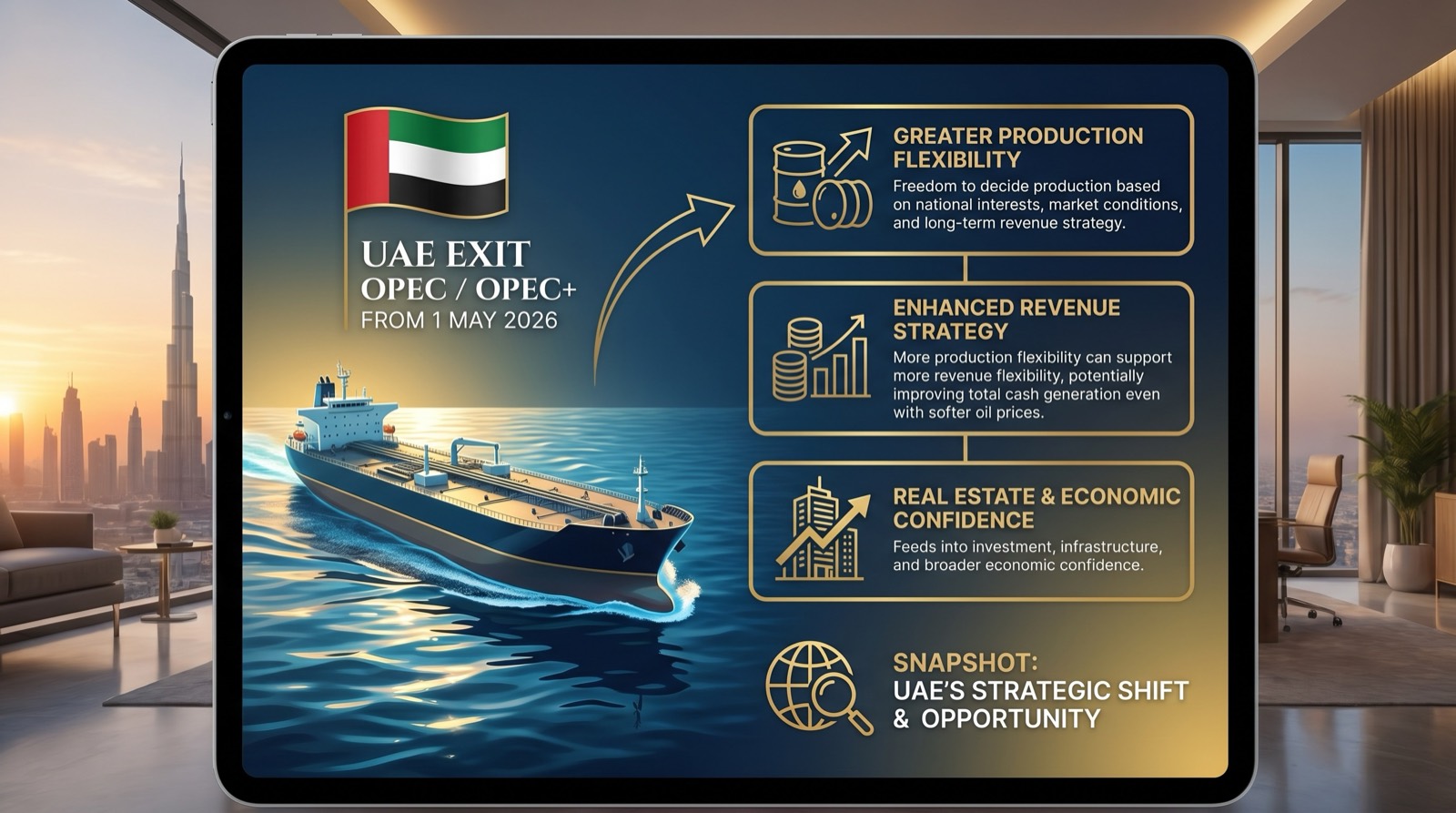
That matters because OPEC quotas are designed to support collective price discipline, not necessarily each member state's individual growth plans. Once the UAE exits that system, it has greater freedom to decide how much to produce based on its own national interests, market conditions, and long-term revenue strategy.
From a real estate perspective, this is important for one simple reason: more production flexibility can support more revenue flexibility. Even if oil prices become a little softer on average, the UAE may still improve total cash generation by selling more barrels, and that can feed through into investment, infrastructure, and broader economic confidence.

When people hear an oil-related headline, they often jump straight to a bearish conclusion for property. I think that is too simplistic. In the UAE's case, the more relevant issue is not whether Brent moves up or down by a few dollars in the short term. It is whether the state increases its strategic room to manoeuvre while preserving healthy overall revenues and investor confidence.
In my view, the UAE OPEC exit real estate link is broadly positive, provided we distinguish between short-term volatility and medium-term capital formation. The move gives the UAE more control over its own oil strategy at a time when it already has strong fiscal buffers, an active infrastructure agenda, and a diversified economy compared with many oil-exporting peers.
That combination matters in property. Dubai does not rely only on oil, of course, but it still benefits from the regional liquidity, confidence, and public spending capacity that stronger UAE energy revenues can help reinforce.
In practice, that can support business expansion, job creation, sovereign and quasi-sovereign investment, and continued demand for commercial and residential real estate.
The first channel is public and quasi-public spending. When fiscal capacity is strong, governments and government-linked entities can continue funding transport links, economic zones, tourism assets, industrial infrastructure, and strategic development programmes. Those projects do not just create headlines. They create occupier demand, contractor activity, employment and surrounding land value support.
The second channel is investor psychology. Markets tend to reward clarity and punish weakness. The UAE's decision has largely been framed by analysts as a move of confidence and strategic independence rather than a distressed policy response. For international capital, that distinction matters because it suggests the UAE is acting from a position of strength, not reacting from a position of vulnerability.
The third channel is regional liquidity. If the UAE can monetise more of its production capacity over time, that strengthens the broader backdrop for sovereign wealth deployment, bank liquidity, and business sentiment. In my experience, those factors often filter into the property market indirectly before they show up directly in the data.
It is worth separating Dubai from Abu Dhabi here. Abu Dhabi is the oil producer, but Dubai is one of the main beneficiaries of how that capital and confidence circulate through the wider UAE economy. Dubai's property market tends to respond not just to local supply and demand, but also to regional wealth creation, corporate expansion, and its role as the Gulf's commercial hub.
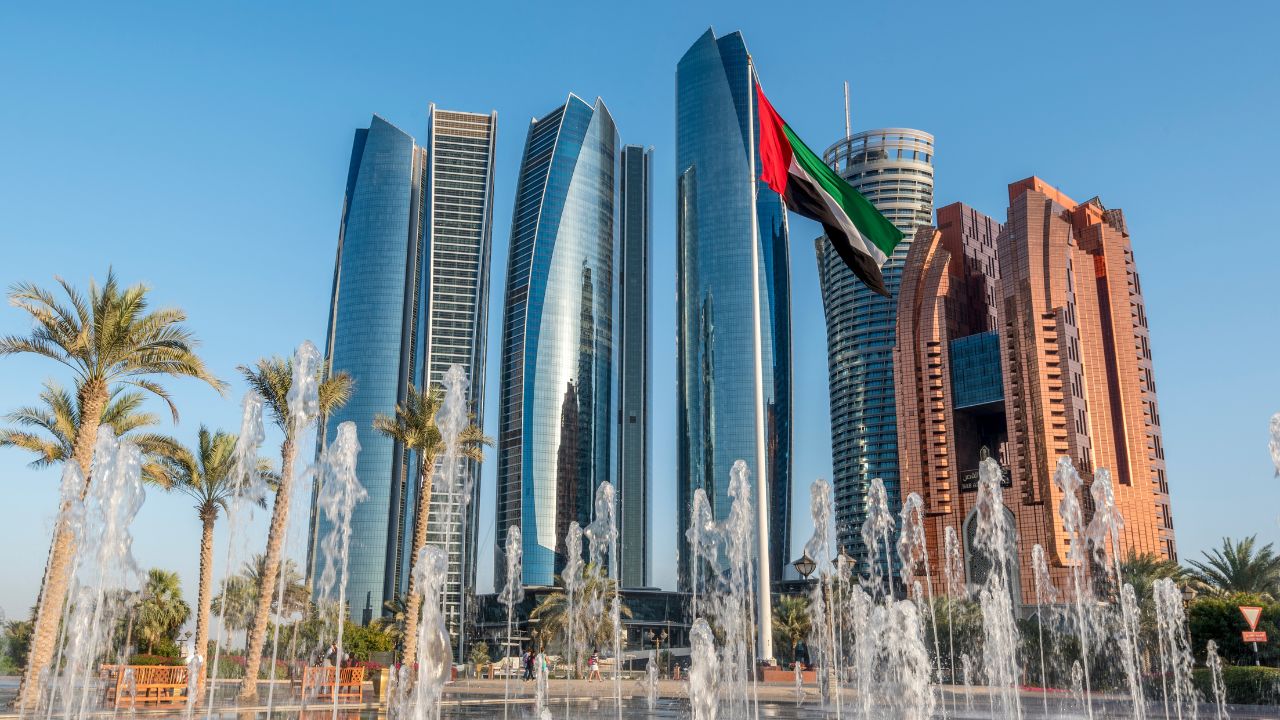
That is why I do not see the UAE's OPEC exit as relevant only to energy analysts. If Abu Dhabi has more freedom to expand production and maintain strong fiscal capacity, Dubai stands to benefit through business activity, inward investment, and safe-haven capital flows. That can be particularly supportive for better-located commercial assets, logistics, premium residential, and projects linked to infrastructure or trade corridors.
Still reading
Need expert help on this subject?
None of this means there is no downside risk. The main macro risk is that a more fragmented OPEC leads to greater oil price volatility, and in a more extreme scenario, that could tip into a price war or a sustained drop in Brent. If oil prices were to fall sharply and stay low for an extended period, GCC liquidity would likely tighten, and that could soften some real estate demand and investment appetite across the region.
That said, I think investors should be careful not to confuse volatility with collapse. The current setup looks less like a crisis signal and more like a strategic reset, with the UAE trying to monetise capacity while it still has strong fundamentals, fiscal buffers, and multiple growth engines outside oil. That is a very different backdrop from a forced retrenchment story.
There is also a geopolitical overlay. Any deterioration in regional security, shipping routes, or the Strait of Hormuz would matter far more in the short term than the simple fact of leaving OPEC. In other words, the real threat to UAE real estate would not be the exit itself, but a broader escalation that damages trade, confidence, or mobility across the Gulf.
From where I sit, the most sensible interpretation is that this development is supportive for UAE real estate over the medium term, but it also reinforces the case for selective investing rather than indiscriminate buying. I would be more interested in assets that benefit from business formation, logistics demand, infrastructure spending and high-quality occupier demand than in purely speculative stock.
For Dubai specifically, I think the more resilient areas remain those with a strong occupational story behind them. Offices and retail spaces, well-positioned logistics assets, selected mixed-use districts and quality completed stock should continue to look more defensible than weaker, over-supplied, or highly speculative segments if macro volatility picks up.
I also think this episode is a reminder that UAE property cannot be analysed in isolation. Oil, geopolitics, sovereign strategy and capital flows still matter, even in a more diversified economy. The investors who usually do best here are the ones who can connect those macro dots early rather than only react once they appear in brokerage headlines.
Final Thoughts
After many years in Dubai, I have learned that big macro shifts rarely hit the property market in a straight line. They move through confidence, liquidity, infrastructure spending, business expansion, and investor positioning first. That is exactly how I would look at the UAE's OPEC exit.
On balance, I see it as a strategic move that strengthens the UAE's long-term flexibility and, by extension, offers more support than harm to the real estate market. There will be volatility, and there may be periods of noisy sentiment, but for serious investors, the bigger takeaway is that the UAE is trying to widen its room to manoeuvre at a time when it already has meaningful economic advantages.
For UAE real estate, that is more likely to be an opportunity than a threat.
Next step
Talk to Mitchells
Tell us what you are weighing up — a building, a project, an area, or a rule you need to get right — and we will come back with the specifics that apply to it.

Stephen James Mitchell is a licensed real estate broker with over 25 years of experience across finance, investment strategy, and real estate, including more than 19 years operating in Dubai. He specialises in advising investors on acquiring and optimising high-performing assets, with a focus on commercial and investment-grade real estate, combining strong financial expertise with deep, on-the-ground market knowledge of the UAE.
To connect directly with Stephen James Mitchell, please click here.
Published 30 April 2026 by Stephen James Mitchell MBA. Market figures quoted reflect the data available at that date.