Dubai’s commercial real estate market is undergoing a structural transformation in 2026. Far from overheating, the sector is being reshaped by severe office space shortages, surging institutional capital, and the increasing financialization of property assets. At the same time, shifts in governance, ESG mandates, and smart infrastructure are defining a new paradigm: one where the commercial property landscape is no longer speculative — it’s strategic.
For investors, this is not a boom to chase but a scarcity cycle to understand. What follows is a data-backed breakdown of the most consequential developments, structured by strategic relevance.
If you’re looking to navigate this new phase strategically — whether through high-demand office stock, institutional-grade retail assets, or off-plan commercial launches — reach out now. I can share a curated shortlist of high-conviction, data-driven opportunities aligned with your 2026 investment objectives. Click here to speak with me directly.
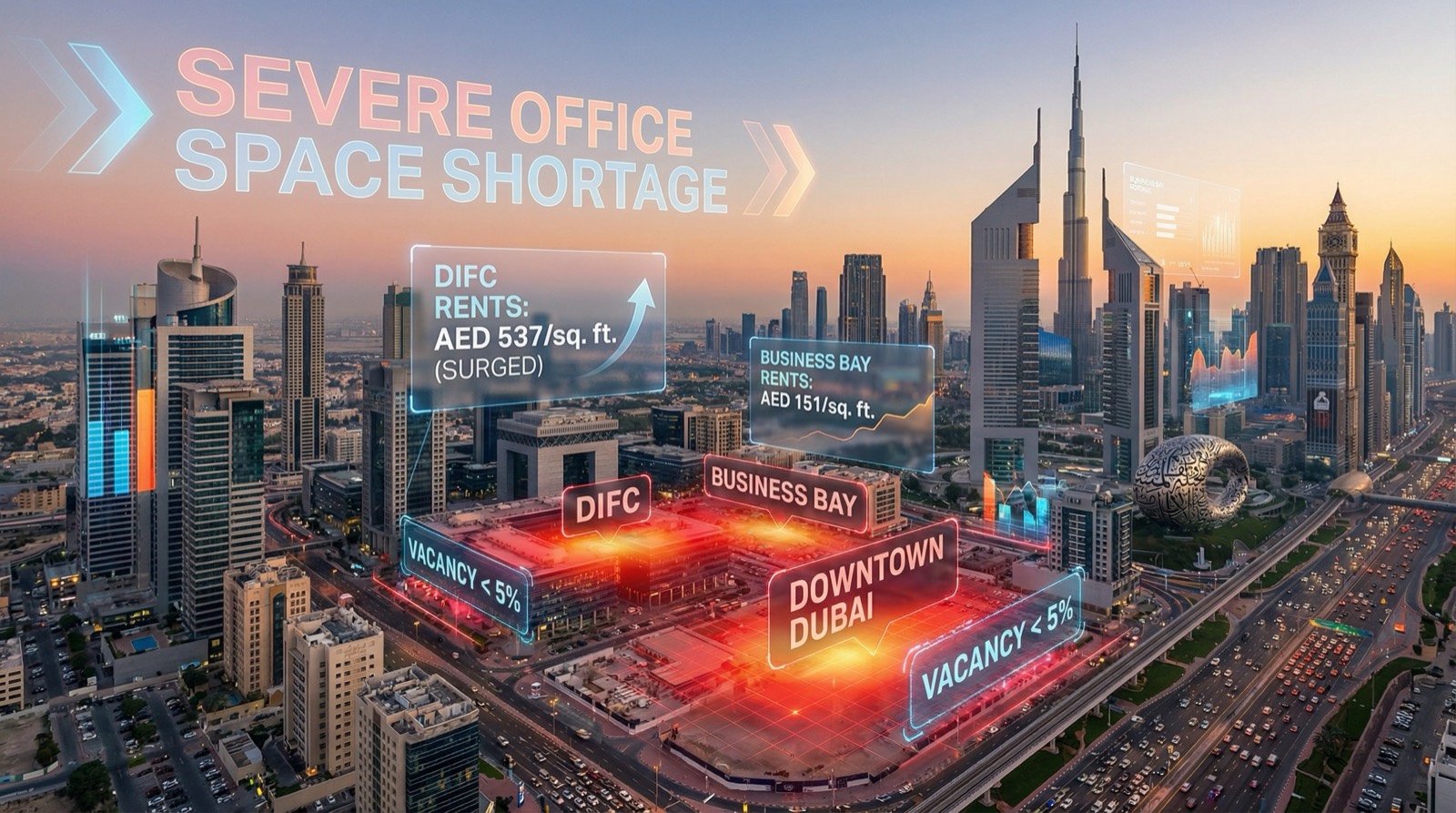
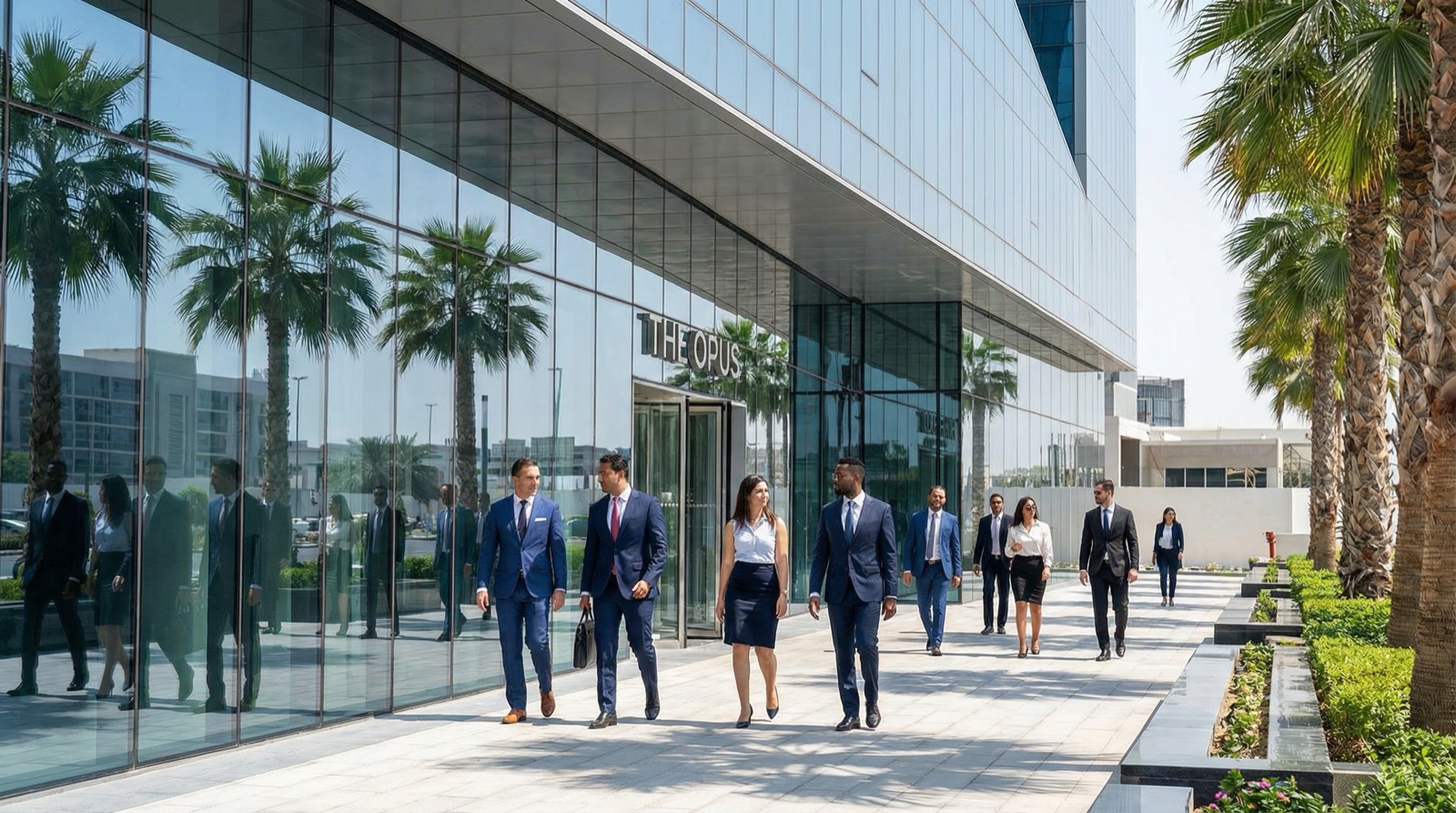
At the heart of Dubai’s commercial property cycle in 2026 is a deepening office space shortage — a structural imbalance now reshaping rents, demand, and investor positioning.
This scarcity isn’t the result of over-speculation or hype — it’s the outcome of sustained demand growth colliding with limited new supply.
The numbers are unambiguous:
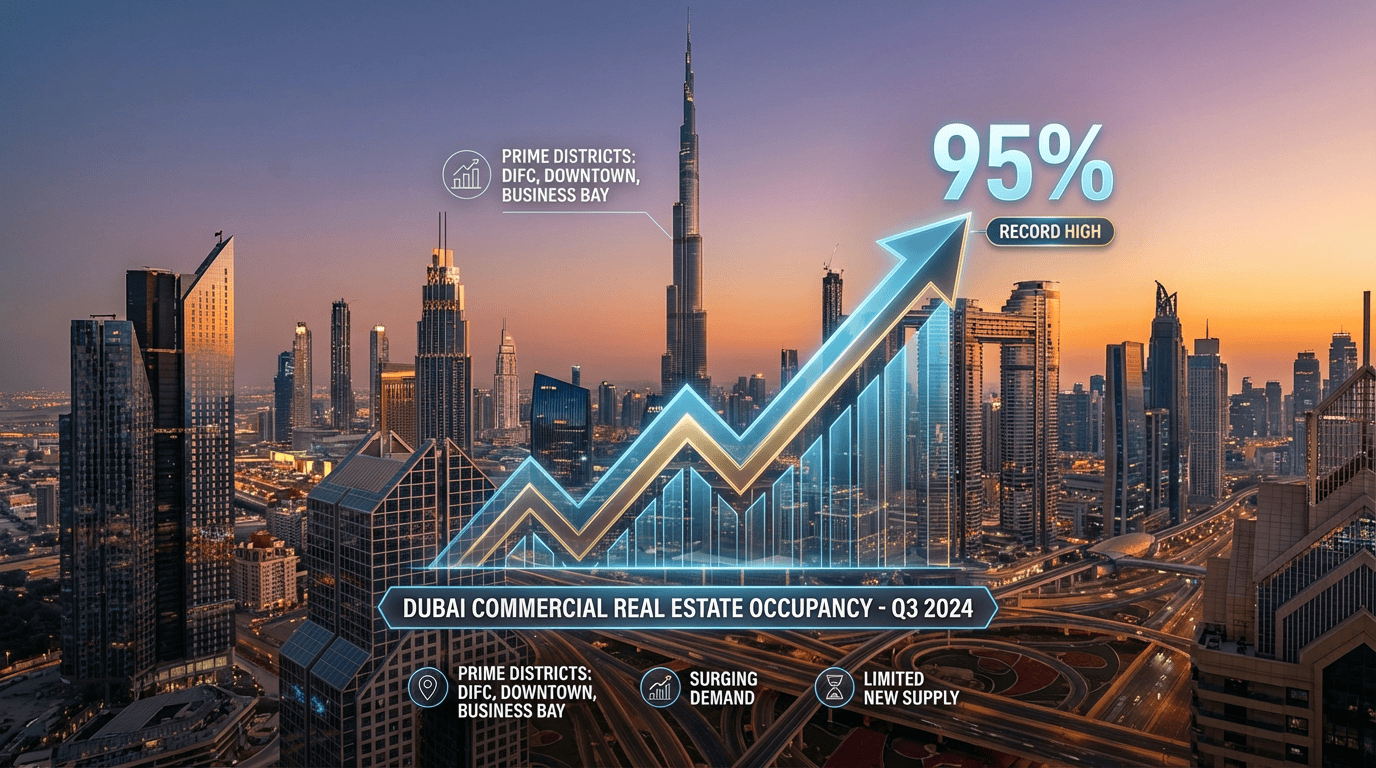
- Vacancy Crisis: Grade A office vacancy rates in DIFC, Business Bay, and Downtown Dubai have plunged below 5%. In Abu Dhabi, occupancy has reached 98%.
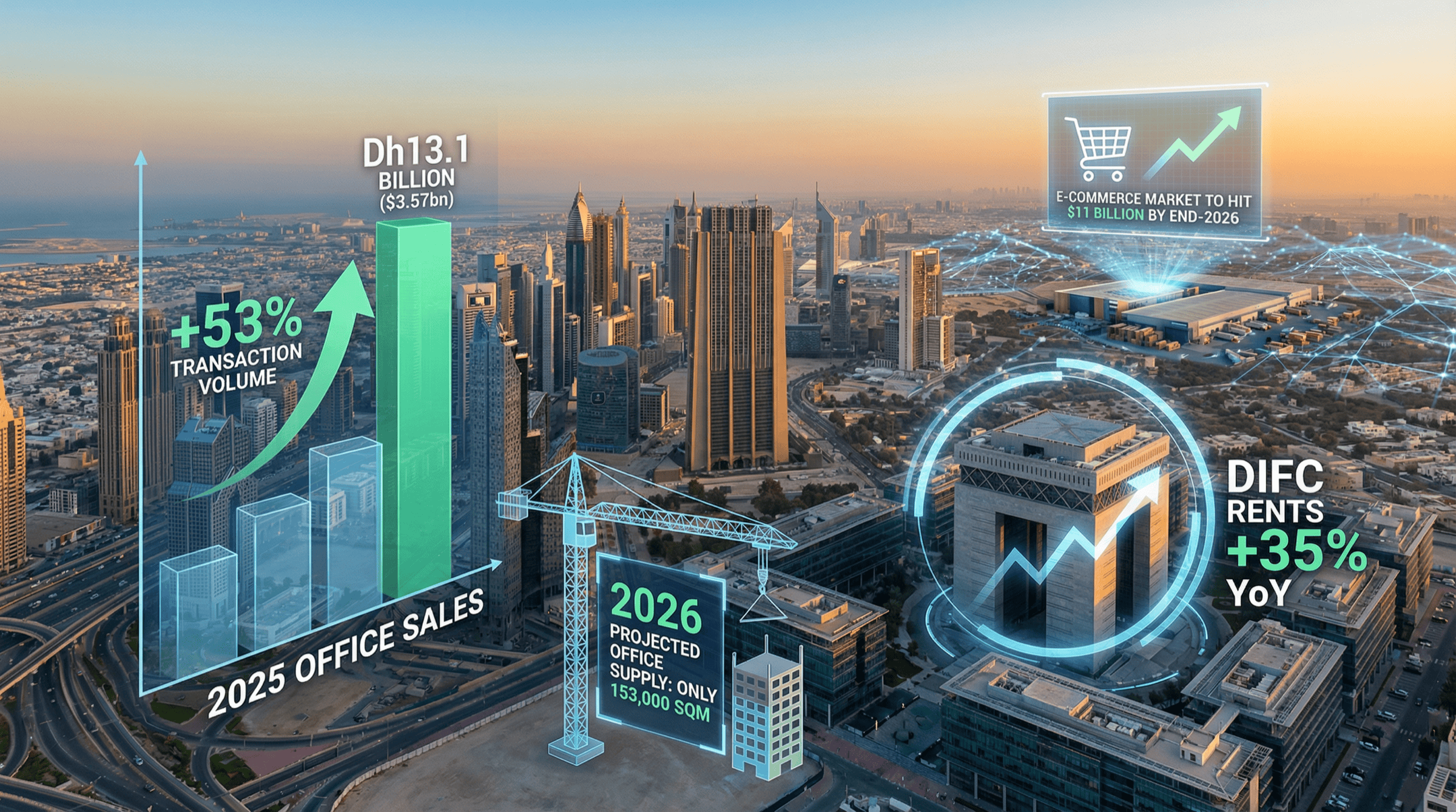
- Rising Rents: DIFC office rents have surged to AED 537/sq. ft., with Business Bay trailing at AED 151/sq. ft. Average rents across Dubai rose 18% YoY in 2025.
- Demand Displacement: As prime districts reach saturation, companies are shifting to fringe and emerging zones such as Dubai South, JLT, and Expo City — causing price ripple effects across secondary stock.
This is no longer a tenant’s market. It’s a landlords’ market with pricing power, driven by delayed new supply and structural demand from multinationals and SMEs alike.
The macro fundamentals validate a long-term growth thesis:
- Population Growth: Dubai’s population is expected to expand from 3.8 million to nearly 6 million within five years.
- Unit Deficit: Housing and commercial needs require ~500,000 new units by 2031. Current delivery capacity stands closer to 300,000 — a 40% shortfall.
- Institutional Logic: Sovereign and institutional capital is targeting commercial infrastructure — not speculative residential flips.
The result is a maturing cycle defined by a “scarcity premium,” particularly in office and logistics stock. Commercial investors are no longer chasing yield curves. They’re buying irreplaceable positioning.
Large-scale equity injections into property-adjacent platforms reflect growing investor sophistication.
- $170M to Property Finder (Feb 2026): Mubadala and UAE sovereign funds backed this latest round, following $525M raised in 2025.
- Strategic Utility Ownership: DEWA’s $1.41B acquisition of a 24% stake in Empower reflects vertical integration of utility infrastructure — the unglamorous but critical base layer for future commercial supply.
- Bank & Developer Strength: Low leverage and high liquidity mean that even with moderate price corrections forecasted by Moody’s, institutional players remain insulated.
Money isn’t leaving real estate. It’s shifting into assets that deliver long-term utility — physical, digital, or infrastructural.
Dubai’s regulatory landscape has enabled the most fundamental shift in decades — property is now tradable.
- Tokenization: As of February 2026, real estate tokens can be traded on secondary markets. More than 7.8 million digital tokens representing residential and commercial assets are circulating.
- Fractional Ownership: This democratizes access to high-value commercial properties, especially for smaller investors priced out of traditional title-deed models.
- PropTech Acceleration: Platforms like Smart Bricks and Daleel (raising $5M and $3M respectively) are further streamlining deal sourcing and property management, embedding efficiency into the transaction lifecycle.
What this means: real estate, especially commercial assets, are no longer illiquid by default. Exit optionality, valuation transparency, and investor participation are now structurally higher.
Occupiers are no longer merely renting space. They’re renting infrastructure — ESG-compliant, tech-integrated, and future-ready.
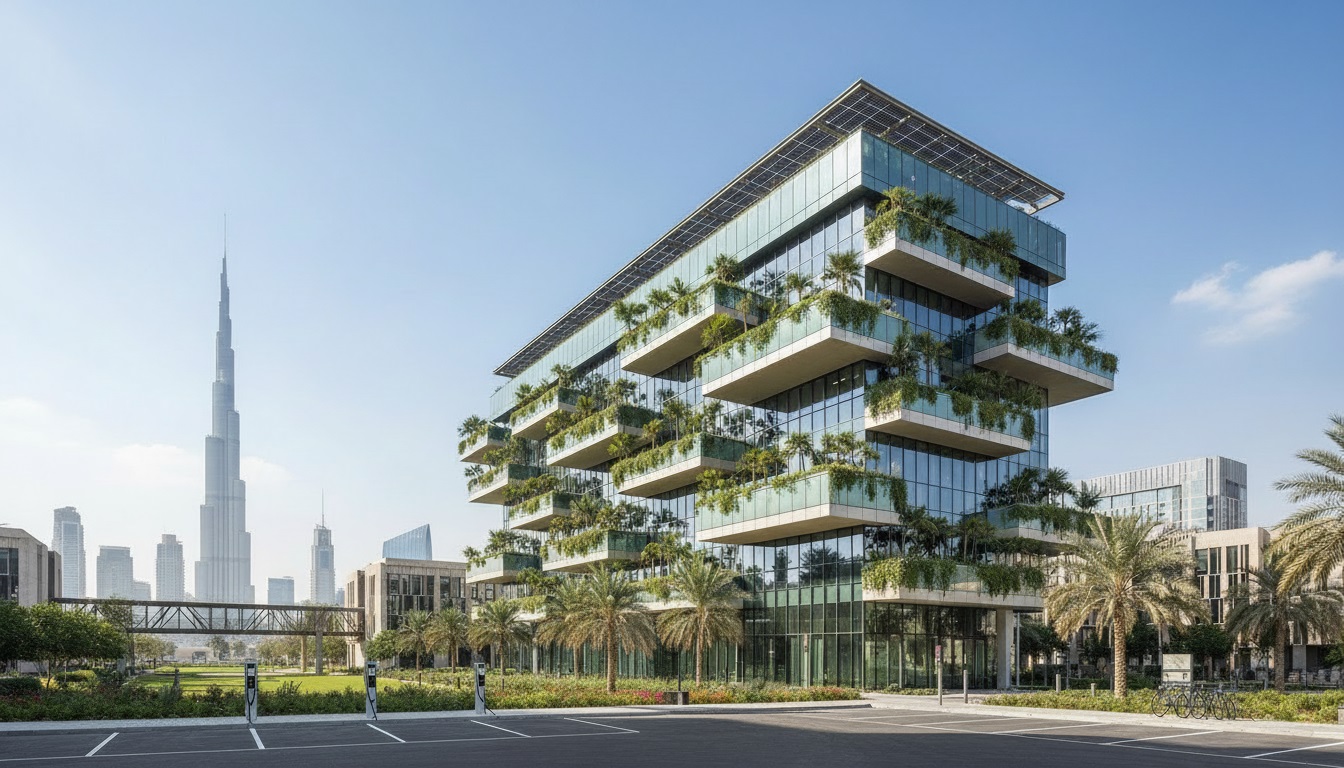
- Green Mandates: Tenants, particularly multinationals, are under pressure to lease only LEED-certified or equivalent green buildings.
- IoT & Automation: From AI-driven building management systems to touchless access and energy monitoring, landlords are embedding automation into their leasing advantage.
- Flexible Footprints: Approximately 63% of 2026 lease inquiries are for spaces below 5,000 sq. ft. The shift to modular, agile workspaces is clear.
Landlords who can’t meet these requirements are facing functional obsolescence — even in good locations.
With prime districts like DIFC, Business Bay, and Downtown nearing saturation, investor focus is shifting toward emerging commercial hubs that offer infrastructure, accessibility, and long-term growth alignment.
These aren’t fringe plays — they’re strategically positioned to absorb demand overflow and support Dubai’s next wave of economic expansion.
- Expo City Dubai: Attracting sustainability-focused corporates and innovation hubs, Expo City’s office districts are benefiting from its “campus-style” planning and anchor tenants.
- Dubai Creek Harbour: The Dubai Square development — a next-generation mall and indoor city — is attracting major office-retail hybrids.
- Dubai South: Serving as a logistics nucleus due to proximity to Al Maktoum International Airport, it’s also evolving into a cost-effective commercial zone.
These aren’t speculative bets — they’re logical extensions of demand spillover and infrastructure readiness.
Explore commercial listings and insights at Mitchell’s Commercial Realty — featuring premium office and retail properties across Dubai, along with market intelligence to help you identify emerging trends.
Beneath the surface of rising demand and limited supply, Dubai’s regulatory framework continues to serve as a key driver of commercial real estate investment.
Recent reforms have removed long-standing barriers, reduced friction, and reinforced investor confidence — especially for long-term institutional strategies.
- Corporate Tax Adjustments: The 9% federal tax introduced in 2023 (on profits above AED 375,000) has not deterred investment. Free zones are not the blanket escape they are often taken for on a property purchase: under Ministerial Decision No. 229 of 2025, owning or exploiting immovable property is an Excluded Activity for a Qualifying Free Zone Person, unless it is Commercial Property inside a free zone let to another Free Zone Person. Our free-zone company property guide sets out the carve-out.
- 100% Foreign Ownership: Now standard across mainland businesses, this reform has led to the registration of over 13,000 Indian companies in 2025 alone, as well as significant inflows from the UK, Pakistan, and Egypt.
- Digital Governance: Blockchain-backed title registration (via the Dubai REST platform) and streamlined commercial licensing have lowered administrative friction — especially for longer-term leasehold assets.
In short, legal certainty and operational clarity are supporting investment decisions across all commercial asset classes.
Still reading
Need expert help on this subject?
While offices dominate the headlines, the logistics sector continues to quietly outperform — driven by structural demand and government-backed expansion.
This is not a cyclical bounce; it’s a durable re-rating of industrial assets across the UAE.
Consider the following dynamics:
- Rental Growth: Dubai warehouse rents rose 13% YoY; in Abu Dhabi’s KEZAD, rents surged 50% in two years.
- E-commerce Demand: JAFZA and DIP have nearly full occupancy, particularly in cold storage and last-mile delivery centers.
- Government Push: The “Operation 300bn” initiative is driving manufacturing and high-tech leasing, with a focus on industrial parks and tech-driven logistics.
Logistics units in prime zones are yielding between 8–10% net — outperforming even luxury residential on a risk-adjusted basis.
As tenant demands evolve and land use strategies shift, Dubai is witnessing the rise of alternative commercial formats that challenge the conventional office tower model.
These new formats are not only more flexible — they’re often more aligned with consumer behavior, footfall dynamics, and brand identity.
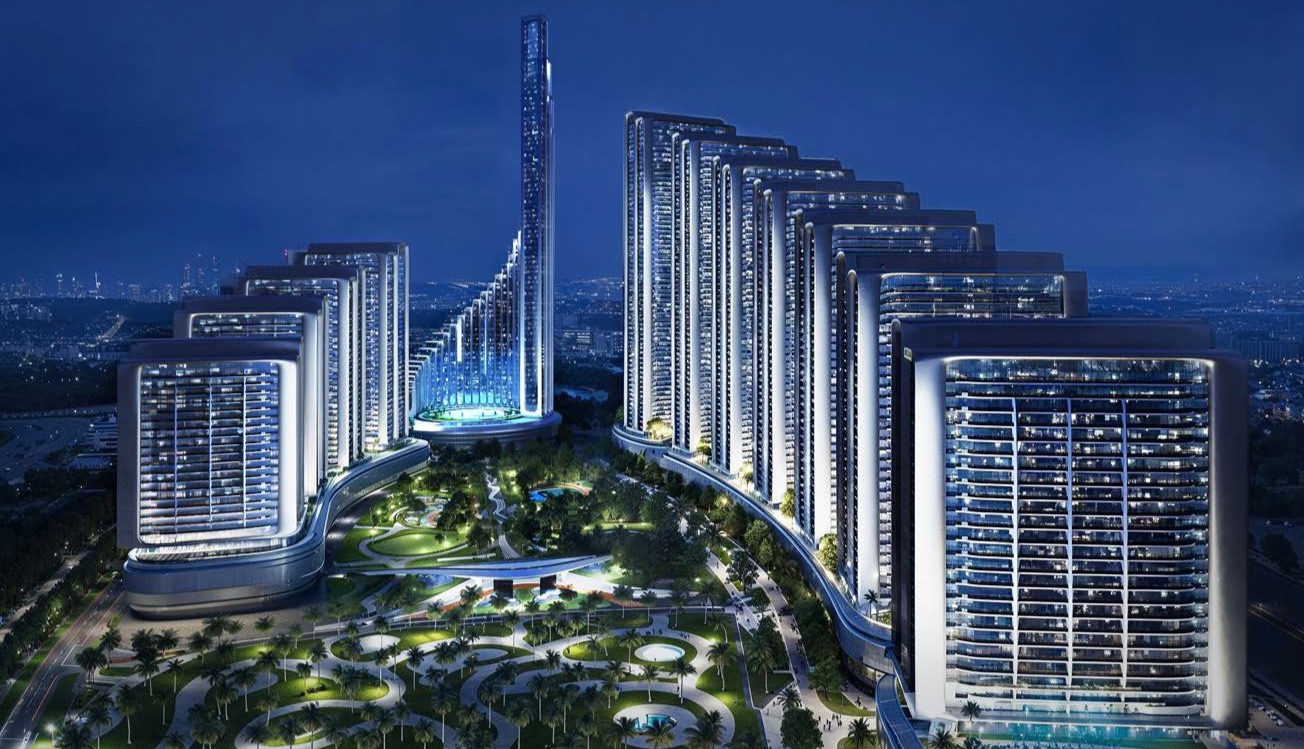
Retail Units Available at Mercedes-Benz Places – Binghatti City
Three standouts include:
- Hybrid Models: Seef Properties and IWG (Regus) are integrating business centers into malls. This hybrid retail-office format leverages footfall for professional space utilization.
- Community Retail: Smaller, neighborhood-focused malls in master-planned communities (e.g., Sobha Hartland, Dubai Hills) are outperforming large-format destination malls in both lease renewal and yield consistency.
- Branded Commercial: Just as branded residences command a premium, branded office spaces (e.g., those co-developed with fashion or automotive brands) are becoming anchor investment products.
The format of commercial is evolving. Agility and alignment with community behavior now matter as much as location and fit-out.
Dubai is not just importing capital — it’s exporting models.
- The Sustainable City – Dallas-Fort Worth (DFW): Dubai firms are now exporting their master-planned, ESG-compliant urban frameworks to the U.S., including a 2,300-acre smart city project in Texas.
- RAK and Branded Growth: In Ras Al Khaimah, branded residences will comprise 54% of new supply by 2030, reflecting how hospitality-led formats are reshaping smaller emirates.
These aren’t just development plays — they represent the globalization of the UAE’s real estate methodology, offering brand prestige and operational excellence to institutional buyers abroad.
In closing
Conclusion: Commercial Scarcity Is Now a Structural Advantage
The most important takeaway for 2026 is this: Dubai’s commercial property cycle has decoupled from speculative froth. The supply-demand imbalance — particularly in Grade A offices and logistics — is structural, not cyclical.
For investors, this means:
- Short-term opportunities lie in acquiring off-plan commercial assets in saturated business zones where pricing power will grow.
- Mid-term strategies should focus on leasing smaller-format spaces to SME tenants seeking flexible terms.
- Long-term positioning is best achieved through smart buildings, ESG-compliant developments, and proximity to infrastructure clusters (e.g., metro lines, airports, ports).
The commercial market in Dubai is no longer the “afterthought” to residential. In 2026, it is the core asset class that defines capital durability, strategic expansion, and long-term yield resilience.
Next step
Let’s Talk
If you’d like to unpack where the most resilient opportunities are emerging — in stabilised residential areas or income-generating commercial zones — I’m happy to share a focused, data-driven shortlist based on your investment goals.
📞 No pressure, no sales pitch—just a focused, informed conversation about your investment goals. Let’s talk.
Next step
Ask us about this

Published 10 February 2026 by Stephen James Mitchell MBA. Market figures quoted reflect the data available at that date.