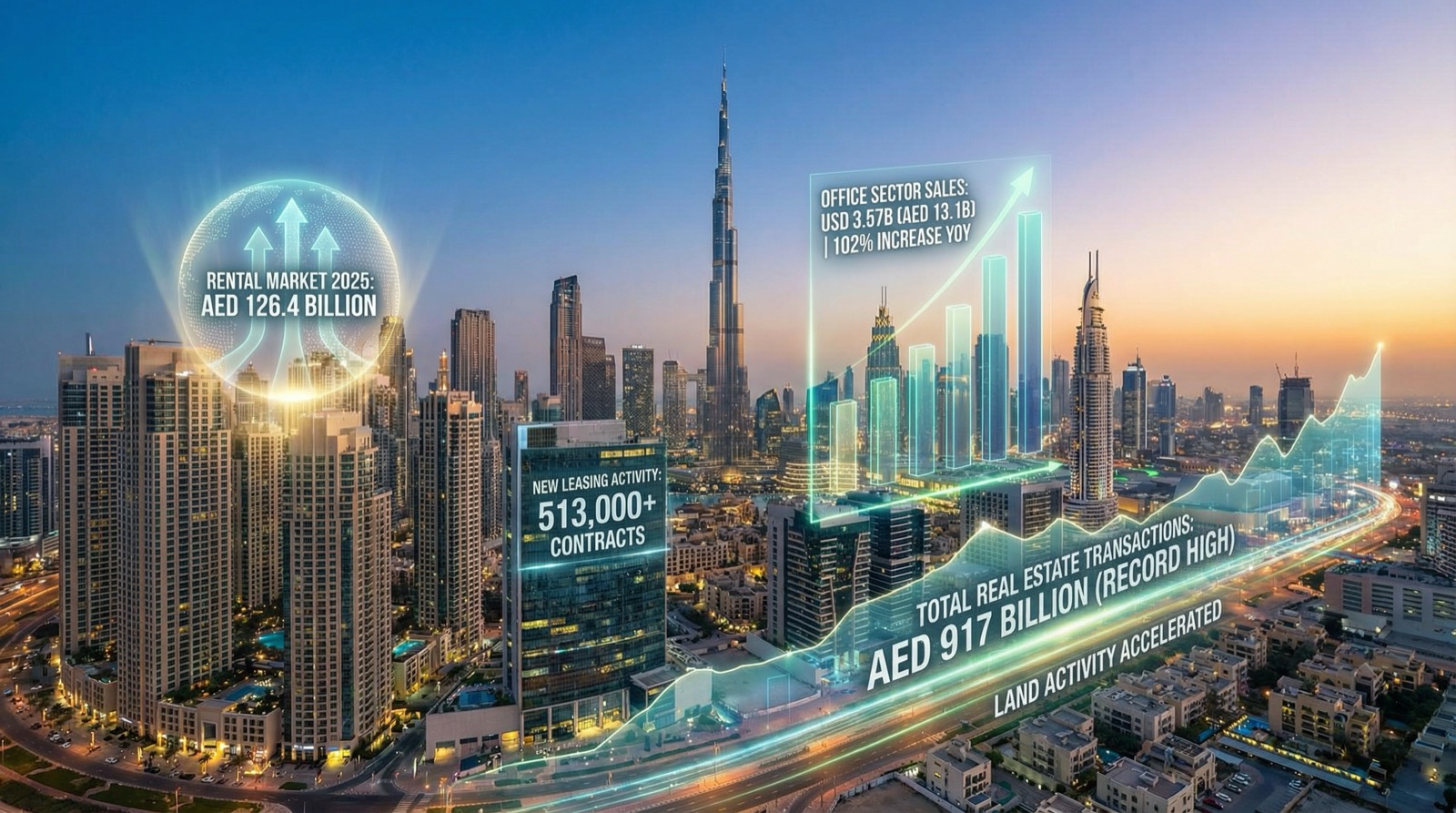
Dubai’s real estate market is carrying strong momentum into 2026, supported by record rental activity, the sharpest office absorption in more than a decade, sustained land acquisition by developers, and tightening conditions in logistics and industrial assets.
Residential sales remain high, but the most pronounced shifts are occurring in commercial and income-producing sectors.
The data from 2025 and early 2026 highlights where demand is concentrating, where supply pressures are easing, and which segments are strengthening their yield profile.
If you’re planning your next strategic allocation, I can share a targeted shortlist of high-performing options.Click here to speak with me directly.
Dubai’s rental market reached AED 126.4 billion in 2025, the highest on record. Total tenancy activity hit 1.38 million contracts, supported by population growth that pushed the city above 4 million residents.
New leasing activity remained strong with 513,000+ new contracts (+10%), while 514,000+ renewals (+3%) confirmed high tenant retention. Rental values rose 17% year-on-year, with most new leases trading 15%–30% above renewals. The sharper surges were concentrated in supply-limited villa communities.
Despite 124 completed projects worth AED 27.5B—adding approximately 43,000 units—rents remained resilient as the influx of 200,000+ new residents absorbed much of the new supply. The imbalance between household formation and keys delivered explains the continued price pressure.
Forward supply is significant. 937 projects are under construction (+25% YoY) and will add meaningful inventory through 2026. This should slow the pace of rental growth and move the market toward stabilisation, not contraction.
Investor Consideration: High occupancy and easing rental escalation support steady yields. Demand remains strongest in mid-market districts with high leasing turnover (e.g., JVC) and established villa communities with limited new supply (e.g., Dubai Hills).

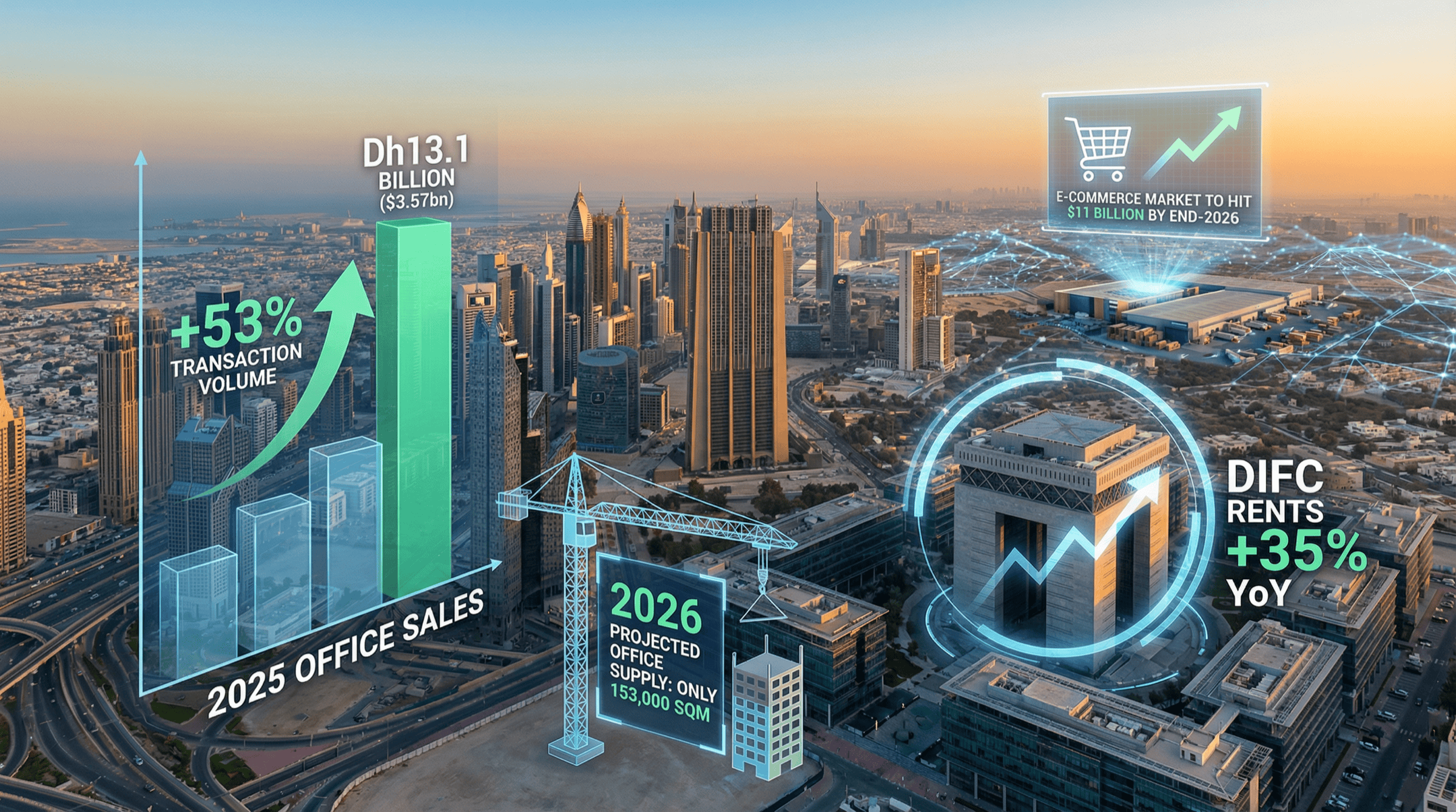
Dubai’s office sector recorded its strongest performance since 2014. Total sales reached USD 3.57B (AED 13.1B)—a 102% increase year-on-year—while transaction volumes rose 53% to roughly 4,600 units. The scale of both value and volume confirms a broad-based surge in demand rather than isolated high-value trades.
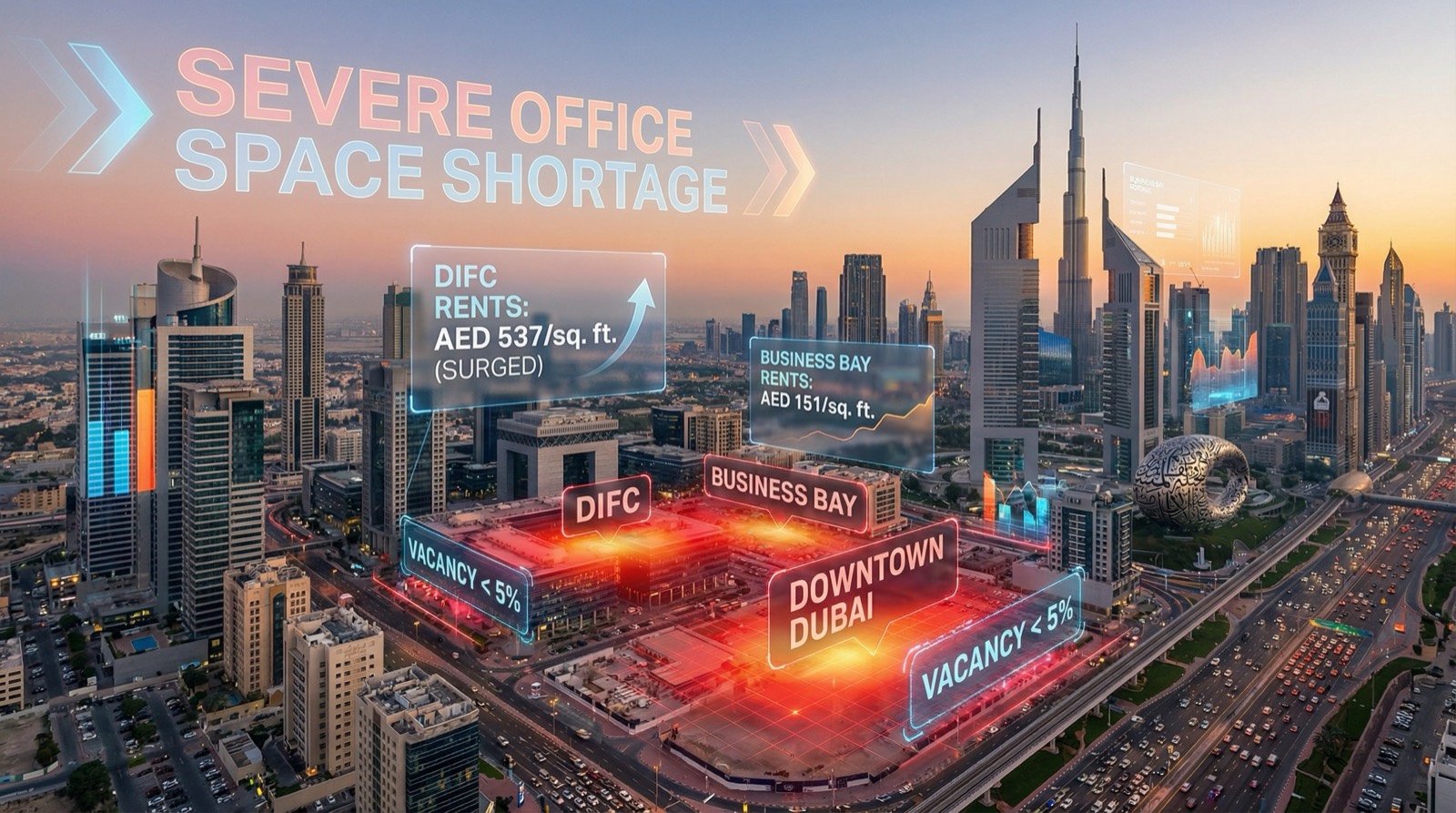
Pricing strength was most visible in DIFC, where rents increased 35%, supported by exceptionally low Grade A vacancy and a 9% expansion in the district’s workforce. Corporate relocations, professional services growth, and regional headquarters consolidation continue to concentrate demand within prime commercial zones.
A clear indicator of market depth was the full sell-out of AHS Properties’ 69-storey AHS Tower on Sheikh Zayed Road, generating over USD 700 million. Absorption at this scale during the development phase demonstrates that both institutional buyers and end-users are securing long-term commercial footprints amid constrained high-quality supply.
International capital interest also strengthened. Madison Realty Capital established a Middle East hub at ADGM in February 2026, signalling deeper cross-border debt and equity participation in UAE commercial real estate. For investors, this points to continued liquidity support for office and mixed-use development, as well as wider institutional endorsement of the market’s fundamentals.
Explore curated office and retail opportunities at Mitchell’s Commercial Realty.
Land activity accelerated in 2025 as Dubai’s total real estate transaction value reached AED 917 billion, the highest on record. More than AED 3 billion in land acquisitions was recorded during the year, reflecting how developers are positioning ahead of the next launch cycle across master communities and emerging corridors.
The scale and distribution of land banking point to two clear dynamics:
- Developers are anticipating sustained end-user demand over a multi-year horizon, not a short sales cycle.
- Commercial and mixed-use growth is pushing outward, particularly along the E311 corridor, where infrastructure upgrades are enabling new development nodes.
Institutional participation also strengthened. Nisus Finance deployed approximately AED 110M into income-producing residential assets in Majan, marking its fourth UAE investment under a broader USD 500M regional strategy. Majan and adjacent districts such as Motor City continue to attract capital due to 9%+ rental yields and the emergence of new commercial activity.
Investor takeaway: The momentum in land transactions signals developer conviction in medium-term demand and highlights the corridors likely to anchor the next phase of mixed-use and commercial development.
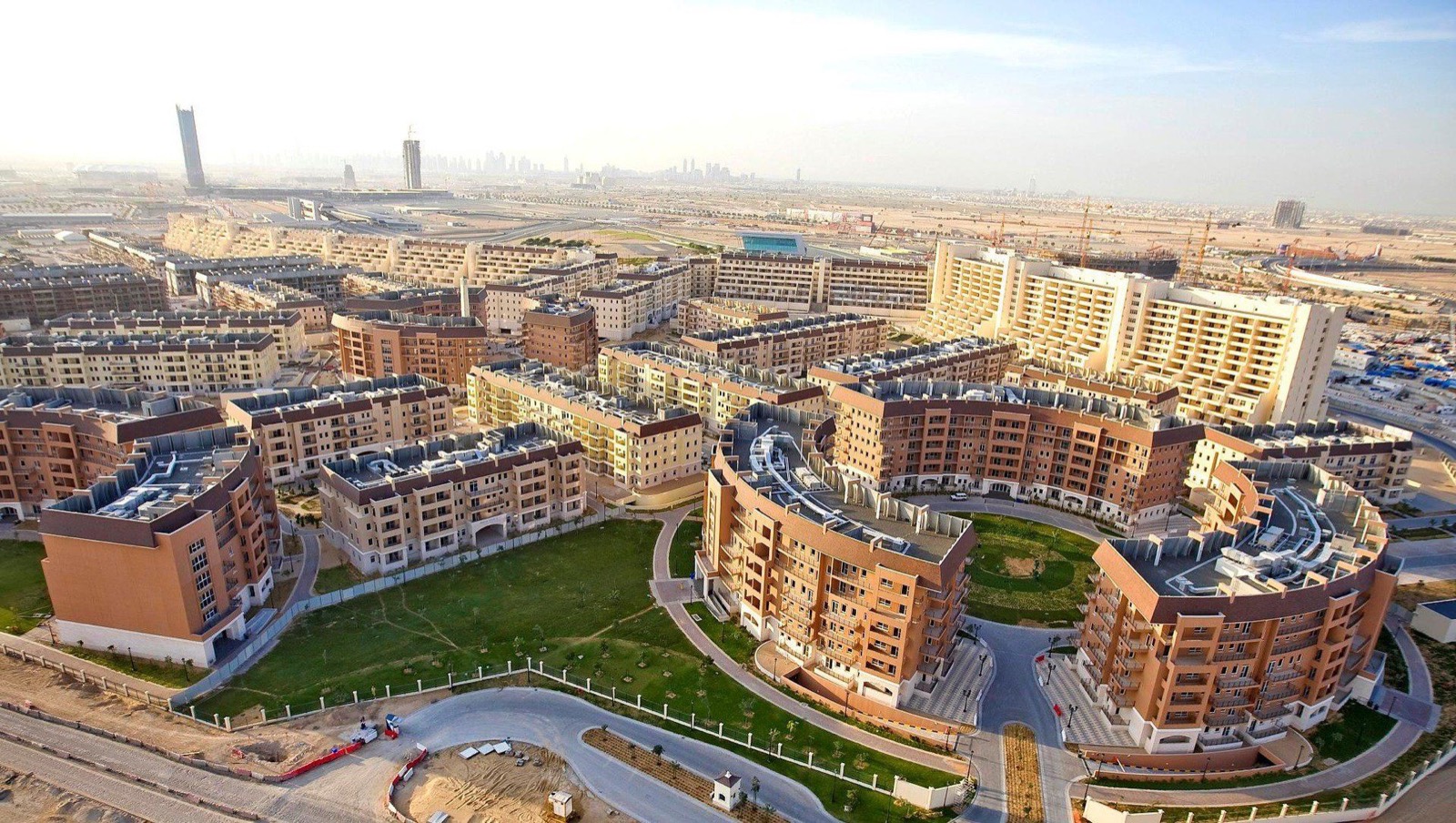
A new joint venture was announced in February 2026 to develop an integrated commercial district in Motor City, adjacent to the Dubai Autodrome. The plan includes six Grade A office buildings, a hospital, and a retail mall, marking one of the most significant commercial repositioning initiatives outside Dubai’s traditional core.
This development underscores Dubai’s ongoing decentralisation. Commercial demand is no longer concentrated in Business Bay, DIFC, or Sheikh Zayed Road. Well-connected sub-markets with established infrastructure and lower entry costs are capturing a rising share of new office and retail absorption. Motor City’s trajectory reflects this shift, supported by a 234% increase in sales volume recorded recently in the district.
Investor Consideration: Early stages of commercial repositioning often establish the pricing benchmarks for an area. Districts undergoing integrated development—particularly those adding offices, healthcare, and destination retail—offer stronger early-entry potential before valuations realign with long-term planning under the Dubai 2040 Urban Master Plan.
Section 05
Logistics & Industrial Property: Strong Fundamentals Driven by Trade and Transport Expansion
Logistics and industrial assets remain one of the UAE’s most structurally resilient segments.
A February 2026 JLL update highlights the main drivers of sustained demand:
- 41.3% growth in non-oil exports in 2025, significantly increasing throughput across major logistics corridors.
- Continued expansion in e-commerce and re-export trade, driving requirements for specialised fulfilment and cold-storage facilities.
- Grade A warehouse occupancy at 95%–100% in core zones such as JAFZA and Dubai South, creating competitive tension for high-specification space.
Prime logistics yields of 7.25%–8.25% rank the UAE among the strongest industrial yield markets globally.
Tight occupancy is pushing some spillover demand toward Abu Dhabi’s KEZAD, while maintaining double-digit rental growth across several Dubai submarkets.
Built-to-suit facilities and serviced industrial land remain heavily absorbed as tenants prioritise automation-readiness and ESG-compliant specifications.
Investor Consideration: Logistics offers stable tenancy, low churn, and predictable income—qualities that are especially valuable in periods of global volatility. Yield durability is further supported by the UAE’s USD 10.6B infrastructure pipeline, including Etihad Rail and the Al Maktoum Airport expansion, which will continue to anchor long-term demand for warehousing and industrial capacity.
A report from The Sentry highlighted properties linked to foreign political figures, underscoring continued scrutiny around AML compliance in the region. While not market-moving, this aligns with Dubai’s broader Real Estate Sector Strategy 2033 and the D33 agenda, both of which emphasise transparency, governance, and investor safeguards.
Regulators are tightening operational frameworks through enhanced KYC obligations, digital monitoring, and improved reporting systems. These measures are designed to protect market integrity as transaction volumes rise and cross-border capital flows deepen.
Implication for Investors: Strengthened governance reduces transactional and counterparty risk, increases confidence for institutional capital, and supports deeper liquidity across commercial segments. Over time, a more transparent regulatory environment helps sustain pricing resilience and enables smoother exits for investors operating in institutional-grade assets.
Still reading
Need expert help on this subject?
The UAE issued its first 7-year Islamic Treasury Sukuk worth USD 150M (AED 550 million) in February 2026, which was oversubscribed by a factor of six.
This indicates strong confidence in the UAE’s credit profile and deepening demand for dirham-denominated sovereign debt.
For real estate investors, the maturing capital markets landscape matters for three reasons:
- Lower long-term funding costs support development and acquisition financing.
- Institutional benchmarks improve price discovery.
- Strong sovereign liquidity enhances macro stability, which directly supports property demand.
Global inflation risks are rising, and advisory commentary notes a renewed investor preference for scarce, income-yielding assets—conditions that historically favour prime real estate in stable, high-growth cities such as Dubai.
Additionally, the UAE’s commitment of over USD 110B in African investments from 2019–2023 demonstrates strong sovereign deployment capacity, indirectly reinforcing domestic liquidity and economic resilience.
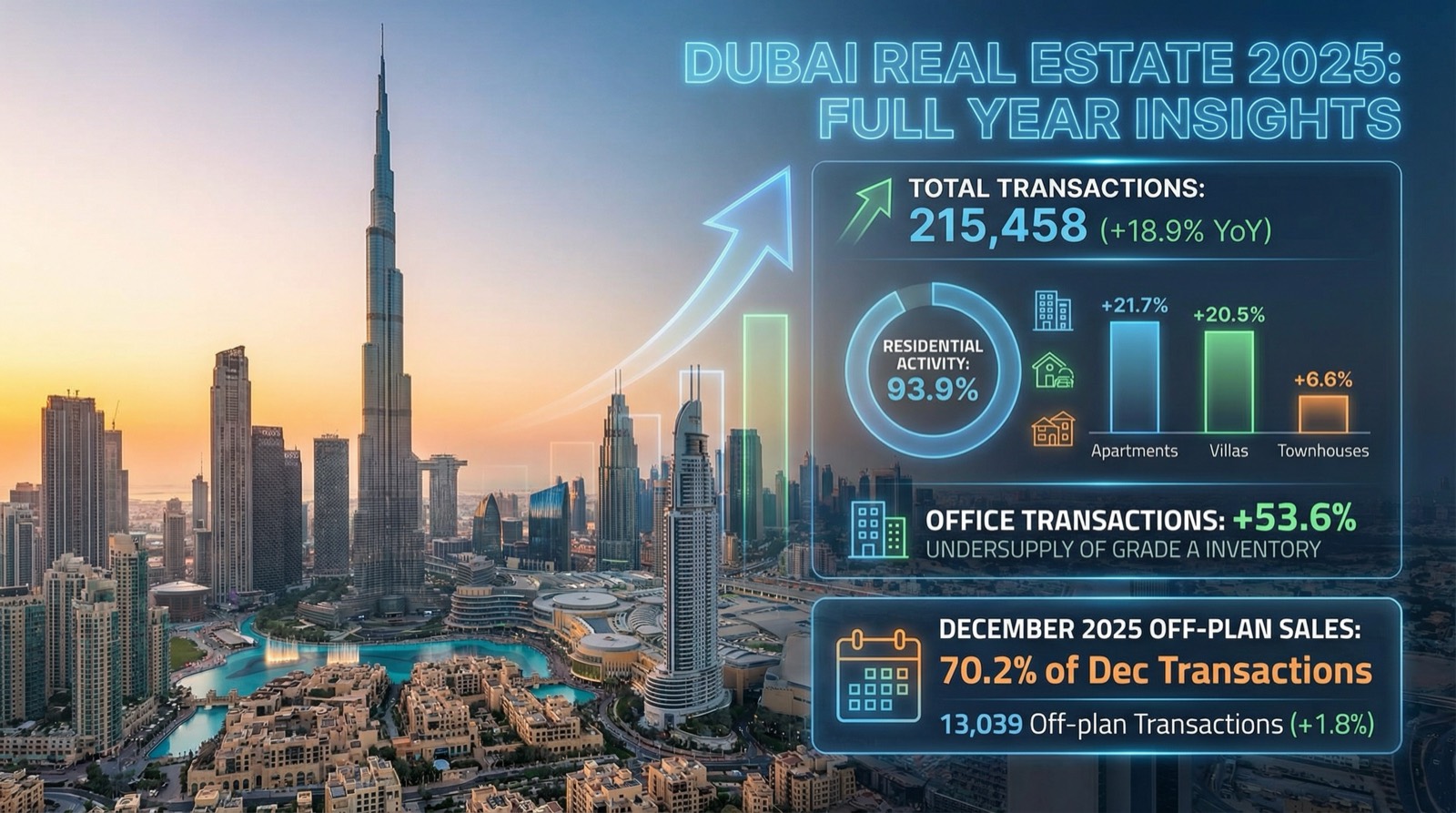
Dubai’s property market recorded USD 76.2B in sales during 2025, alongside USD 34.4B in rentals—placing the city among the world’s most liquid real estate environments. Sales volumes increased 25% year-on-year, and total transaction value rose ~30%, reflecting both higher prices and sustained buyer activity.
Villa values climbed even as transaction volumes moderated, indicating a shift toward higher-quality inventory rather than pure volume expansion. Developers delivered 124 completed projects in 2025, and more than 937 remained under construction entering 2026, showing continued confidence in buyer depth across segments.
What this means for investors: Supply is expanding, but demand remains ahead of completions in most established areas. Price stability is strongest in villas, branded residences, and premium mid-market locations (e.g., JVC and Dubai South) with high rental churn.
- Commercial offices remain undersupplied, especially Grade A assets, with strong price support from corporate expansions and limited vacancy in core districts.
- Rental markets will stabilise rather than soften, supported by population growth and strong occupancy.
- Land transactions indicate continued developer confidence, particularly in mid-market and emerging commercial districts.
- Logistics real estate is structurally strong, offering competitive yields and low vacancy risk.
- Governance and financial reforms are deepening institutional trust, supporting liquidity and long-term investment quality.
This week’s data reinforces the same overarching conclusion: Dubai remains in a mature growth cycle, defined by strong fundamentals, diversified demand, and rising institutional participation across both commercial and residential segments.
Next step
Let’s Talk
If you’d like to unpack where the most resilient opportunities are emerging — in stabilised residential areas or income-generating commercial zones — I’m happy to share a focused, data-driven shortlist based on your investment goals.
📞 No pressure, no sales pitch—just a focused, informed conversation about your investment goals. Let’s talk.
Published 2 March 2026 by Stephen James Mitchell MBA. Market figures quoted reflect the data available at that date.