Global capital flows shifted noticeably this week as US equities posted their weakest start relative to world markets since 1995, pushing investors toward higher-yielding and more stable jurisdictions.
New UAE data reinforced that shift: non-oil growth remains above 6%, industrial exports hit US$71.4B, and the country reclaimed the #1 global safety ranking, strengthening both relocation demand and investment inoflows.
At the same time, major trade corridors — including India, Turkey, Hong Kong, and emerging Eurasian partners — expanded their economic frameworks with the UAE, underscoring the country’s position as a consolidating hub for capital and commerce. Within the GCC, momentum remains firm but accompanied by early signals of rising delivery costs and uneven risk distribution.
For Dubai property investors, the takeaway is clear: capital is still moving into the UAE, but selectivity now carries more weight than cycle momentum.
If you’re planning your next strategic allocation, I can share a targeted shortlist of high-performing options. Click here to speak with me directly.
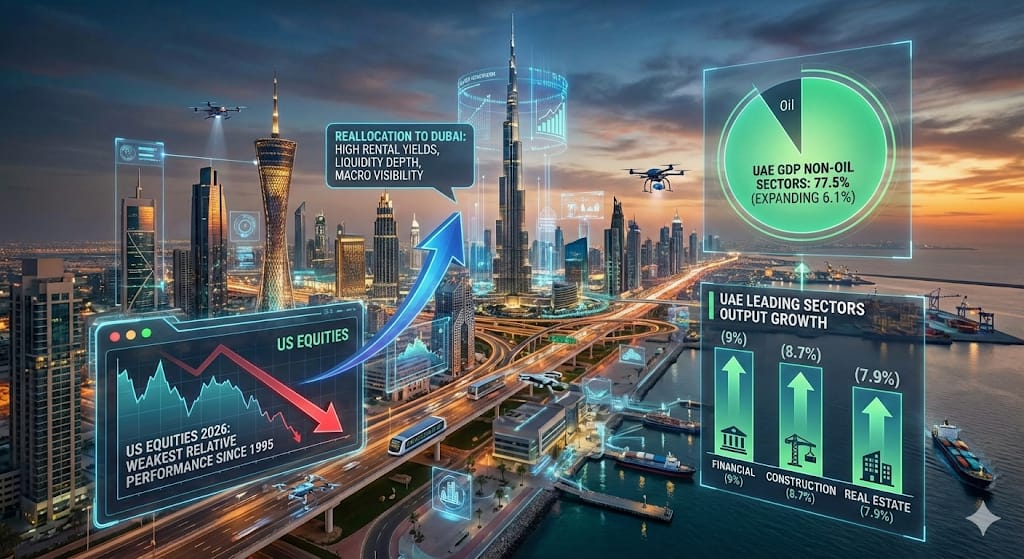
Fresh data shows US equities have begun 2026 with their weakest relative performance against global markets since 1995.
This marks a clear shift in market positioning, driven by:
- A rotation out of concentrated US mega-cap exposure
- Increased allocation toward international markets
- Stronger demand for tangible, yield-oriented assets amid rate uncertainty
In this environment, jurisdictions offering stable income, transparent regulation, and resilient economic fundamentals are attracting a larger share of global capital.
Dubai continues to benefit from this reallocation due to its consistently high rental yields, liquidity depth, and macroeconomic visibility.
This macro rotation is also strengthening inbound flows into UAE property, particularly income-generating assets such as logistics, Grade A offices, and well-located retail.
Explore curated office and retail opportunities at Mitchell’s Commercial Realty.
The UAE economy continues to outperform global peers.
Latest figures show:
- 5.1% GDP growth in the first nine months of 2025 (Total: AED 1.4T)
- Non-oil sectors expanding 6.1%, now accounting for 77.5% of total GDP
- Financial (9%), Construction (8.7%), and Real Estate (7.9%) are leading output
More importantly, the UAE is now emerging as a global industrial exporter, with new data confirming:
- US$71.4 billion in industrial exports, up 25% year-on-year.
- US$25 billion from high-tech and advanced manufacturing.
- 2031 Export targets exceeded 5-6 years early, signaling a rapid "AI-native" industrial shift.
For Dubai property investors, this matters because it fuels:
- Job creation
- Household formation
- Corporate tenancy expansion
- Long-term rental demand resilience
These are structural drivers — not speculative ones.
Several international developments this week significantly enhance the UAE’s long-term investment profile:
India–UAE Economic Corridor
- Bilateral trade surpassed US$100B, reaching the target five years early.
- Non-oil trade stands at US$65B, up more than 20%.
- CEPA continues to accelerate cross-border business formation and capital mobility.
Turkey–UAE Trade Ambition
- Officials set a new target of US$40B in trade, more than double the current level.
- Collaboration expanding in logistics, industrial goods, and infrastructure.
UAE–Africa Deepening Investment
- UAE investments in Africa reached US$110B over four years.
- Focus areas include logistics, ports, energy, and real estate.
Hong Kong–UAE Financial Integration
- Regulators advanced cooperation in digital assets and cross-border settlement systems.
- This is expected to open additional liquidity channels from Asia into Dubai real estate.
Azerbaijan–UAE Partnership
- New cooperation outlined in energy, logistics, and investment — strengthening the UAE’s Eurasian connectivity.
Investor takeaway: The UAE is not just receiving global capital — it is embedding itself into global trade, finance, and supply chains. This underwrites long-term economic resilience and property market depth.

Several new signals this week provide clarity on where the market is heading:
Dubai: Yields Remain Among the Highest Globally
Dubai continues to deliver:
- 6–8% gross yields across established segments
- Up to 9% in select submarkets
- Strong rental liquidity across family-oriented districts
This is why global capital continues to view Dubai as a yield-driven safe haven, not just a speculative growth market.
GCC Outlook: Upward Trajectory Confirmed for H1 2026
Latest GCC market indicators show that property performance across Saudi Arabia, the UAE, Qatar, and Bahrain is expected to remain firm through the first half of 2026.
The outlook is being supported by four measurable drivers:
- Ample liquidity in banking and private capital markets
- Continued population expansion, particularly in workforce-led cities
- Active economic diversification programmes that are stimulating housing and commercial demand
- Non-oil sector growth, which remains the primary contributor to regional GDP
Healthy GCC conditions generally translate into greater capital absorption in Dubai, driven by superior yields, market liquidity, and governance standards.
Super-Prime Market: UK Wealth Exodus Continues
The flow of high-net-worth individuals relocating from the UK continues to underpin Dubai’s super-prime segment, with sustained activity in AED 100M+ and AED 400M+ transactions.
Demand in this tier is being driven by permanent relocation, asset-protection strategies, and tax-efficiency planning, rather than short-cycle investment behaviour.
As a result, liquidity at the top end remains resilient even as mid-market conditions normalise.
Logistics Real Estate: Yields Holding at 7.25–8.25%
Logistics remains one of the most stable commercial asset classes due to:
- E-commerce expansion
- Cold-chain development
- Trade volume growth
For investors seeking durable income, this segment continues to outperform, with Prime/Grade A yields specifically holding at 7.25%–8.25% across Dubai and Abu Dhabi.
Abu Dhabi: Rising Transaction Volume and Institutional Participation
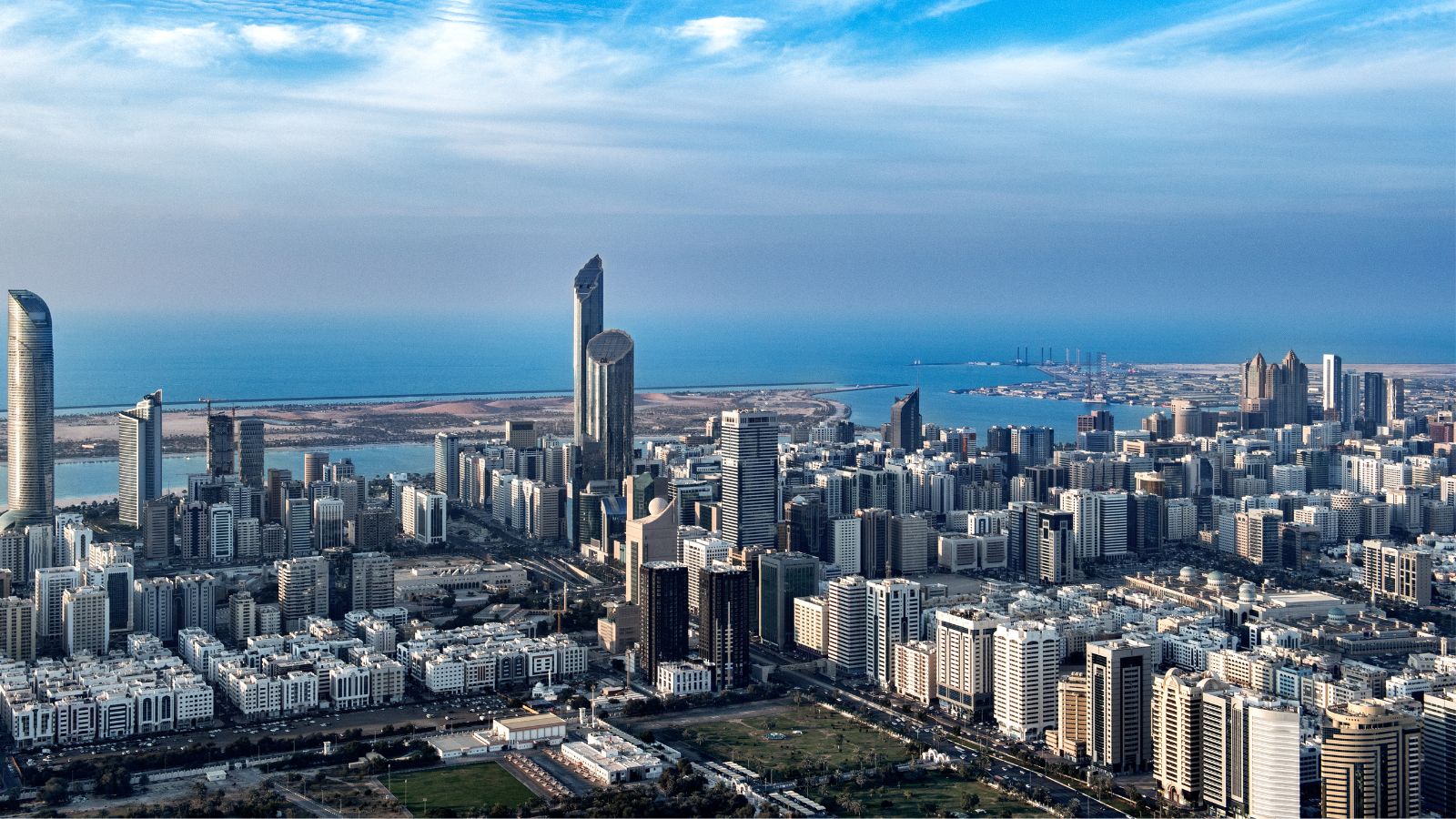
New data shows:
- AED 142B in real estate transactions in 2025
- 52% increase in transaction volume
- Strong institutional participation in mixed-use and community-scale developments
This is increasingly relevant for Dubai investors looking to diversify into lower-volatility, high-yield community-scale assets.
While Dubai saw 12–13% price and rent growth last year, the handover environment for 2026–2030 is becoming more complex.
The UAE Will Add 390,000 Homes by 2030
Projections indicate that approximately 390,000 new homes are expected to be delivered nationwide by the end of the decade, with several key patterns emerging:
- Deliveries will cluster in mid-market zones
- Demand in villa-led areas will remain structurally tight
- Population growth toward 4 million+ will absorb much of the coming supply
Rising Construction Costs
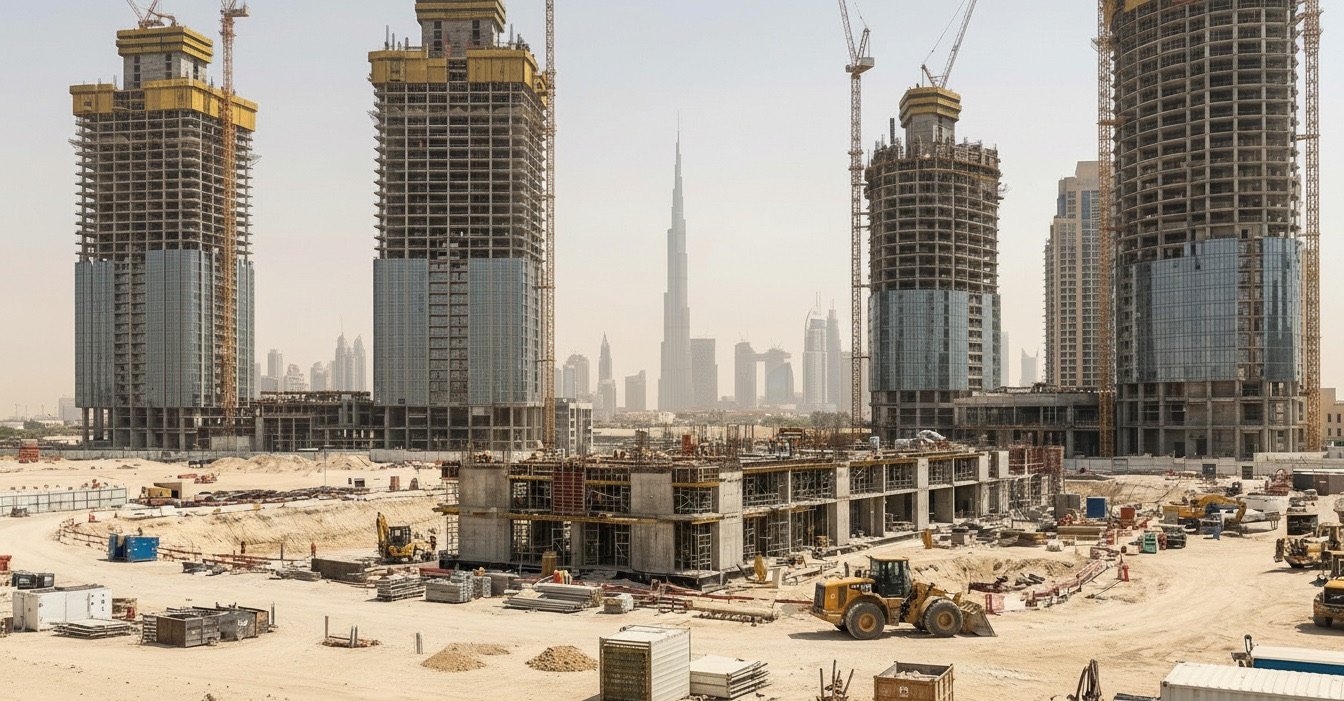
Material and labour costs continue to trend higher across the UAE construction sector, making timely delivery an increasingly important point of differentiation among developers. The pressure on input costs is also squeezing margins on new land acquisitions, which may widen the gap between well-capitalised developers and those reliant on continuous off-plan cash flows.
This has direct implications for off-plan strategies: developer selection now carries more weight than at any point since 2020, as firms with existing land banks and stronger balance sheets will be better positioned if liquidity tightens, while others may face increasing delivery and funding risk.
Despite healthy liquidity across the GCC, several underlying risk indicators are becoming more visible.
These include:
- Submarket-specific oversupply
- Rising construction input costs
- Liquidity imbalances among certain developers
- Continued market reliance on off-plan sales cycles
None of these factors undermine Dubai’s macro stability, but they do create greater differentiation between strong and weak projects.
For investors, this elevates the importance of rigorous submarket analysis, developer due diligence, and clear visibility on delivery capability.
Regional Geopolitical Dynamics
Strategic competition between major Gulf economies — particularly in finance, logistics, tourism, and broader economic positioning — is becoming more pronounced.
While not a direct risk to Dubai real estate, these shifts influence long-term regional development priorities, investment incentives, and the allocation of sovereign capital.
Still reading
Need expert help on this subject?
The UAE now ranks 3rd globally in AI adoption, with usage reaching 56%—the fastest national acceleration worldwide.
This rapid uptake is reshaping real estate market infrastructure, driving improvements in:
- AI-enabled valuation and pricing models
- Data-driven rent indexation and compliance
- Faster regulatory and registration workflows
- More accurate feasibility assessments for new developments
These enhancements collectively reduce friction, increase transparency, and strengthen investor confidence across both the off-plan and secondary markets.
Dubai recorded AED 4.9B in property transactions this week, including a AED 61M Palm Jumeirah apartment.
This underscores the continued depth of liquidity at the upper end of the market and the resilience of capital deployment into prime segments.
Market signals this week point to clear areas of resilience and equally clear pockets of risk.
The dispersion across segments is widening, and performance in 2026 will be driven by asset quality, delivery capability, and submarket fundamentals rather than broad cycle momentum.
Segments Best Positioned to Perform
- Prime and super-prime residential, supported by sustained wealth migration and deep liquidity
- Institutional-grade logistics, benefiting from trade expansion and stable yields
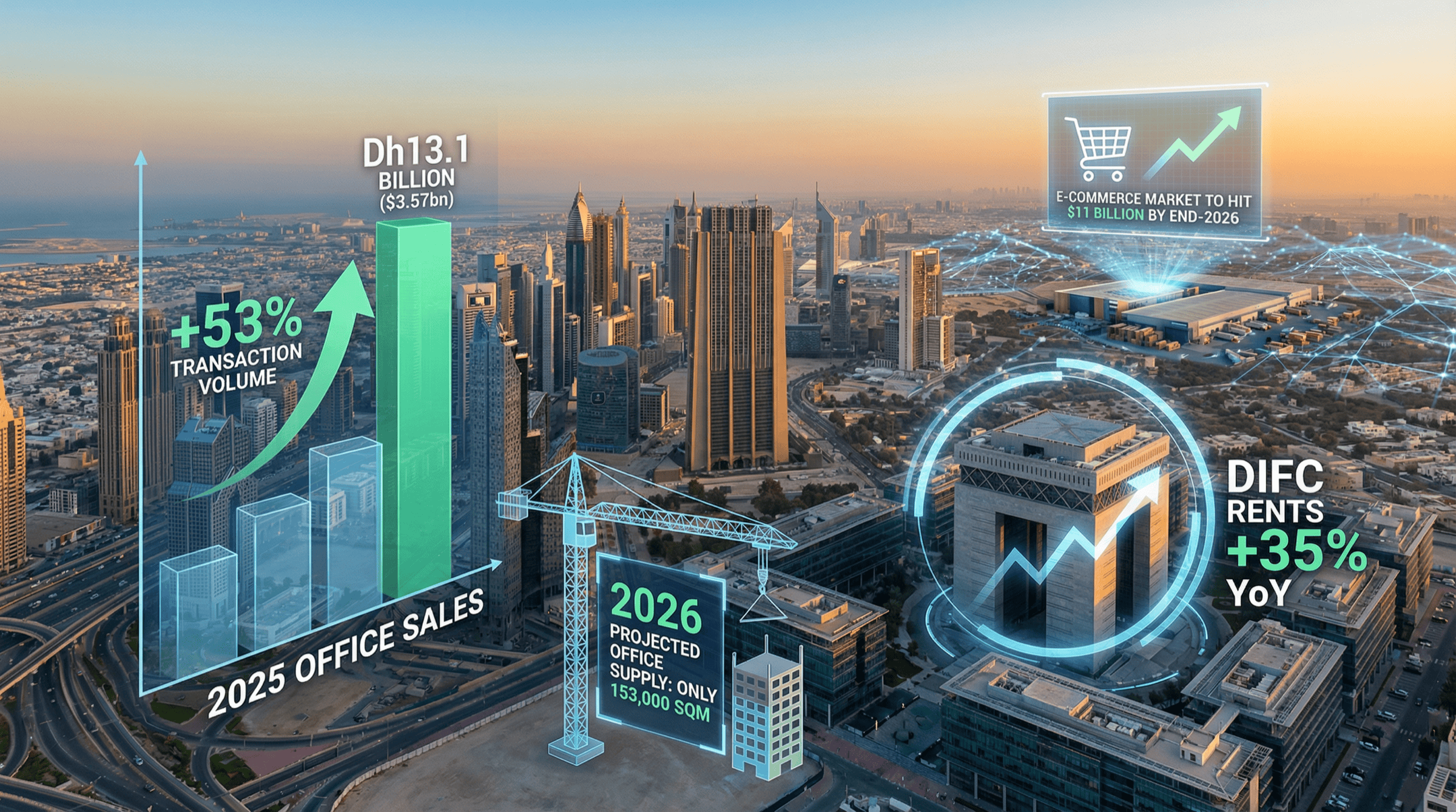
- High-quality Grade A offices, where supply remains structurally constrained
- Established community retail, with consistent footfall and healthier tenant profiles
- Off-plan projects from well-capitalised developers, where delivery risk is low, and demand visibility is strong
Areas Requiring a More Cautious Approach
- Rising construction costs may pressure delivery timelines
- Mid-market districts with concentrated supply pipelines
- Developers with limited liquidity buffers or inconsistent execution history
The overarching message: the UAE remains fundamentally strong, but returns in 2026 will favour selective, data-led positioning rather than broad exposure across all segments.
Next step
Let’s Talk
If you’d like to unpack where the most resilient opportunities are emerging — in stabilised residential areas or income-generating commercial zones — I’m happy to share a focused, data-driven shortlist based on your investment goals.
📞 No pressure, no sales pitch—just a focused, informed conversation about your investment goals. Let’s talk.
Published 22 February 2026 by Stephen James Mitchell MBA. Market figures quoted reflect the data available at that date.