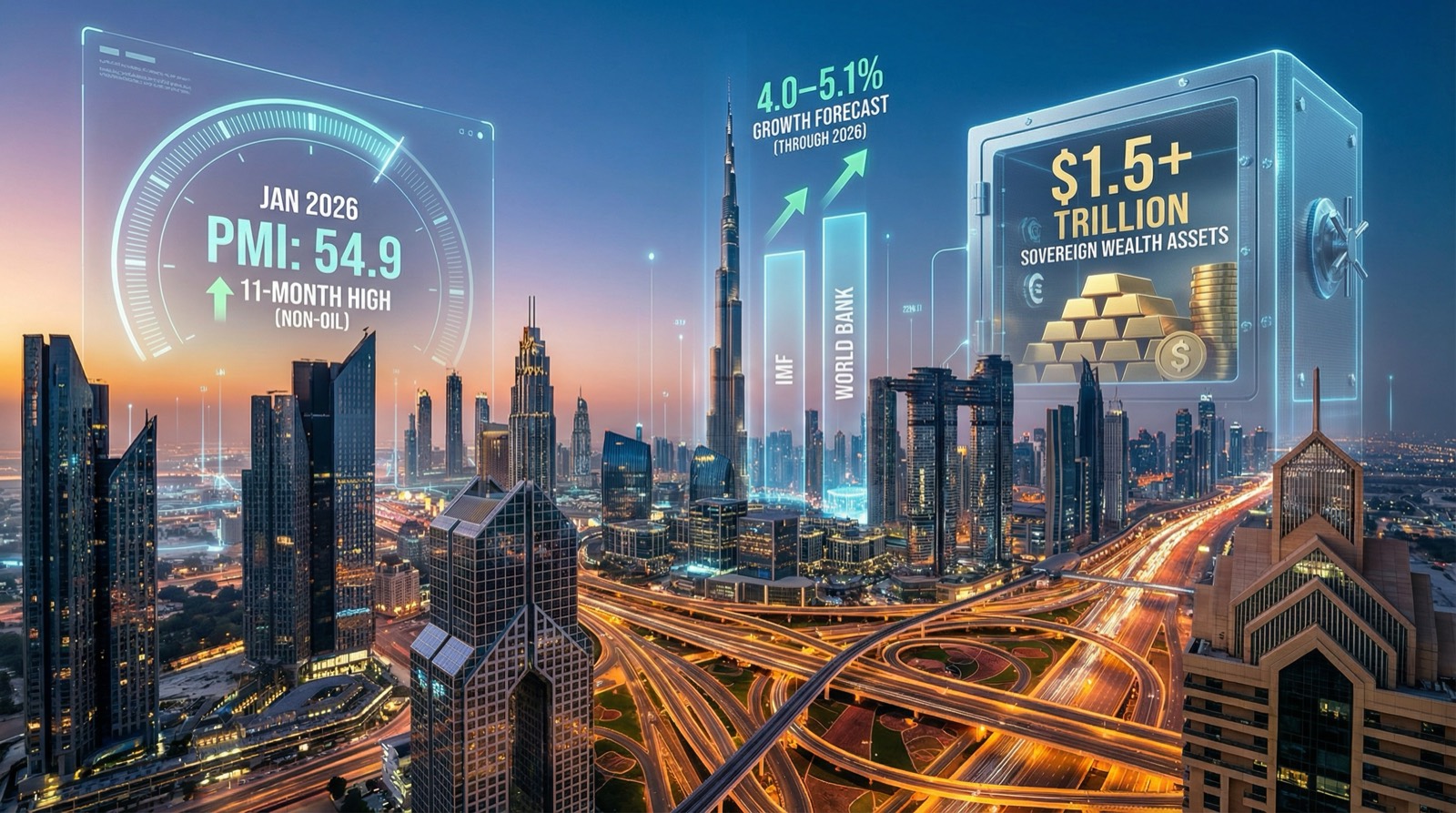
Despite global volatility, the UAE continues to chart a confident growth path. January’s Purchasing Managers’ Index (PMI) — a key indicator of non-oil private sector strength — rose to an 11-month high of 54.9, pointing to solid business momentum and sustained economic expansion.
The UAE–India CEPA has already driven $85B in trade since signing. New sovereign investment deals are widening sector coverage, and the UAE recorded over 1,490 new FDI projects in 2025 — the second-highest count globally.
Institutions like the IMF and World Bank maintain upbeat forecasts, projecting 4.0–5.1% growth through 2026.
All signs point to long-term capital pivoting into infrastructure, manufacturing, logistics, and high-productivity services. From sovereign capital realignment to strategic trade corridors and investment inflows, the foundations are strengthening.
This week’s edition breaks down those shifts — and why they matter — along with other key signals shaping the next phase of investor positioning.
If you're looking to position yourself strategically in this evolving cycle — whether through high-demand office assets, premium mixed-use hubs, or undervalued off-plan launches — reach out now. I’ll share a curated shortlist of top-performing, data-backed opportunities aligned with your 2026 investment goals. Click here to speak with me directly.
Occasional commentary has resurfaced questioning whether Gulf economies could face fiscal stress. In the UAE’s case, the structural position remains materially different from most emerging markets.
The country benefits from over $1.5 trillion in sovereign wealth assets, anchored by Abu Dhabi institutions such as ADIA, Mubadala, and consolidated investment platforms. This scale of external assets provides a balance sheet buffer that few global economies can replicate.
Credit markets reflect that strength. Fitch maintains the UAE’s AA‑ sovereign rating, citing strong fiscal reserves and foreign assets. Inflation remains relatively stable at around 2%, and unemployment remains low by global standards.
More importantly, growth is broad-based rather than oil-dependent.
- The IMF projects approximately 5.1% real GDP growth for 2026
- World Bank forecasts 4.0–4.1% through 2026
- CBUAE projects 4.4% in 2025 and 5.4% in 2026
- Non‑oil sectors now account for nearly 77.5% of GDP
January’s PMI reading of 54.9 — the highest in 11 months — reflects private-sector expansion driven by new orders, hiring, and business optimism.
The federal Vision 2031 strategy aims to double GDP to AED 3 trillion, targeting AED 800 billion in non‑oil exports. AI (G42, MGX), green energy (Masdar, Barakah), and financial services positioning are central pillars.
For property investors: Sustained non-oil growth is driving demand across offices, logistics, and residential leasing. Key demand is coming from trade, finance, tech, and professional services.
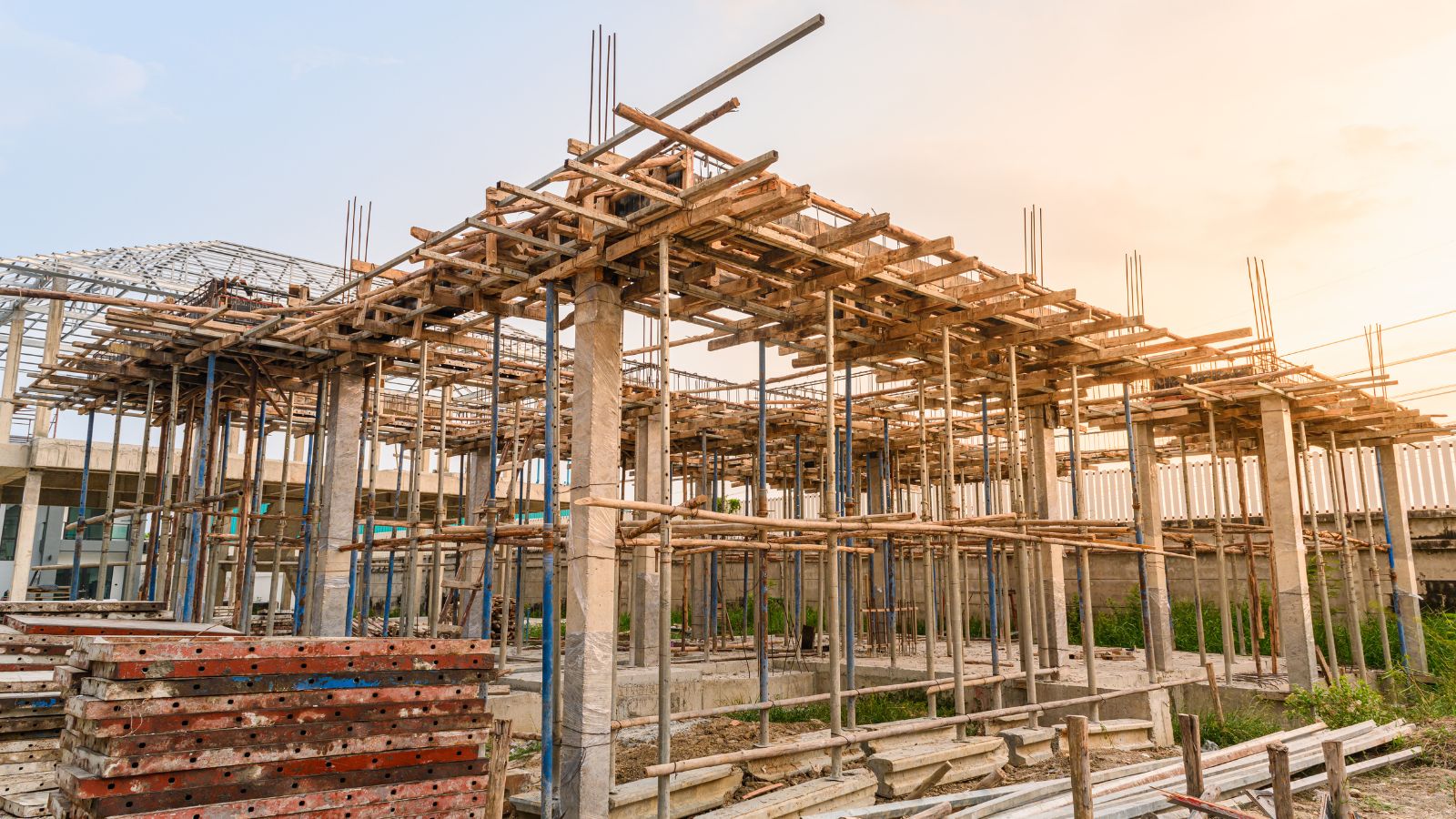
Dubai’s off-plan market is entering a more disciplined phase in early 2026, with land prices at record highs and handovers rising. New launches are down 47% year-on-year, not due to weak demand, but tighter feasibility. Developers are prioritising cash flow over margins, with sales velocity now the key profitability constraint.
While buyer protections via escrow accounts remain intact, developers are facing increasing pressure on working capital as slower sales compress cash flows and returns.
Two Paths Ahead: Price Reset or Premium Positioning
If land costs stay high, off-plan prices must rise — but only highly differentiated, well-executed projects in prime locations are likely to succeed. If land prices moderate, broader feasibility may return, and pricing can stabilise. If neither happens, suppressed launch volumes could lead to future supply gaps.
Implications for Investors
With 40,000–50,000 ready units expected in 2026 (vs. 35,000 historical average), exit timing becomes critical. Most stock is sold, but resale liquidity will hinge on handover schedules, financing cycles, and demand by location.
Signals to Watch
- Land tender results and developer acquisitions
- Average selling time for new launches
- Resale listings in handover-heavy zones
- Launch delays or cancellations in high-cost areas
Feasibility — not demand — is the core constraint. How developers respond will shape Dubai’s off-plan trajectory through 2026 and beyond.
FDI remains one of the clearest leading indicators for commercial and residential property demand.
Greenfield FDI surged 78% in 2025, reaching $33.2 billion, with the UAE ranking second globally for announced projects (1,491). Broader estimates place total inflows closer to $45.5 billion in 2024, with a multi-year pipeline targeting Dh1.3 trillion by 2031.
Major contributors include:
- India: $12.58B
- United States: $10.3B
- A $10B Erisha E Mobility smart manufacturing hub in Ras Al Khaimah
Strategic partnerships are reinforcing that momentum:
- UAE–US framework securing critical minerals and rare earth supply chains
- CEPA signed with Gabon (~$320M current trade)
- Investment and services agreement with Armenia
Despite global protectionism trends, Middle East trade growth (15%) continues to outpace global averages (~9%).
Implications for Real Estate: FDI converts into office leasing, regional headquarters setup, industrial land demand, executive housing, and eventually long-term institutional capital rotation into stabilised commercial assets.

The UAE continues to strengthen its position as a supply-chain hub.
The Middle East food logistics market alone is projected to reach $100.6 billion by 2030. The UAE ranks first regionally and third globally in logistics performance indices.
Jebel Ali handles roughly 73% of the UAE’s food and beverage trade, and the Dubai Food District (first phase launching 2027) will expand cold storage, processing, and food-tech infrastructure.
This is not cyclical trade activity — it is structural supply chain reconfiguration.
Implications for investors:
- Cold storage and Grade A logistics stock remain supported
- Free zones continue evolving into integrated commercial ecosystems
- Industrial land in trade corridors retains long-term relevance
Commercial Property
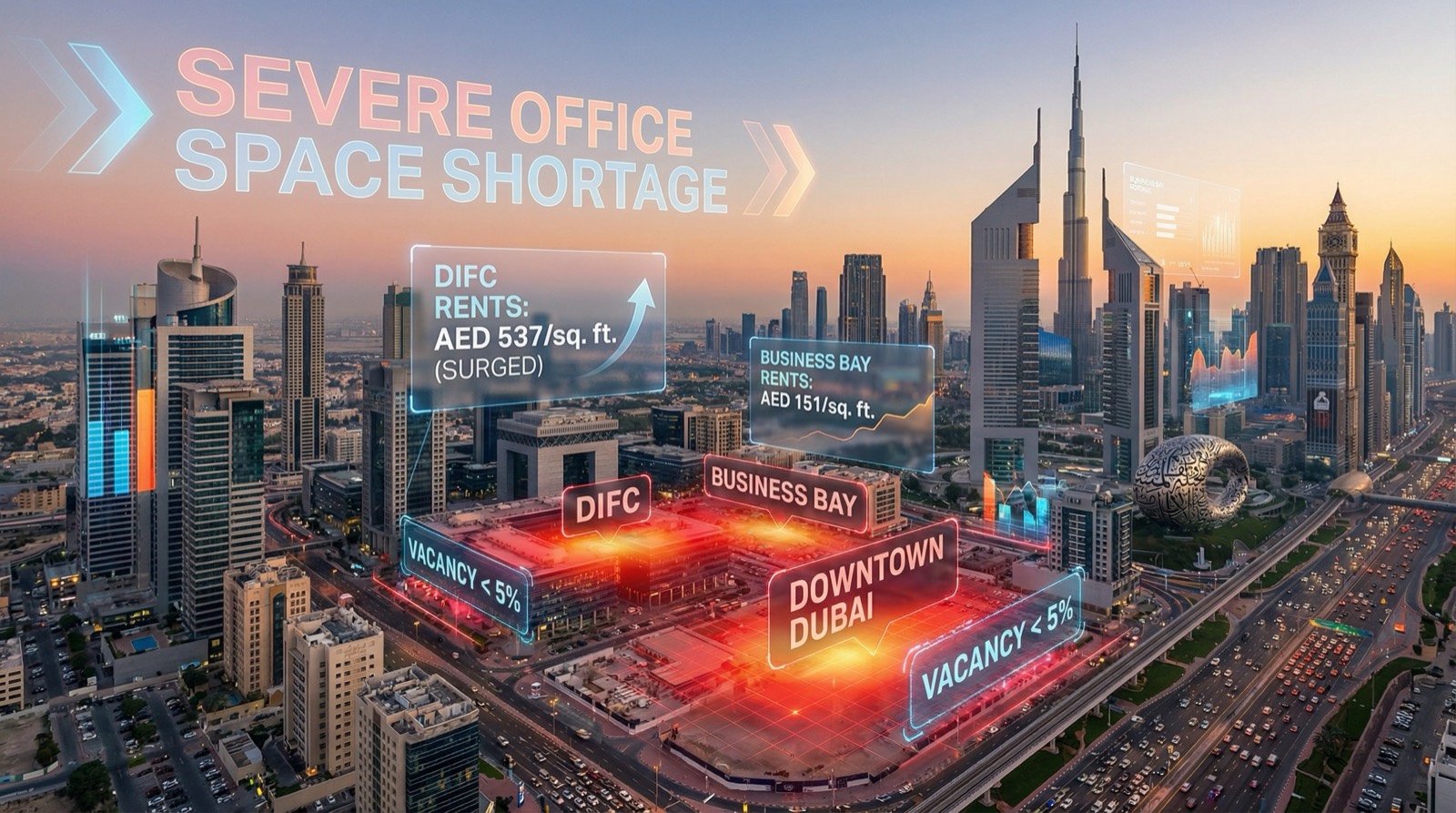
The widening supply gap in Grade A office stock continues to be a structural theme. Institutional buyers remain focused on income-generating assets rather than speculative launches.
However, margin pressure is increasing.
Rising land prices are compressing developer spreads. While demand remains strong, 2026 may be a more challenging year for developers than 2024–2025 from a cost perspective.
The Dh100B DIFC Zabeel District expansion continues to anchor demand in central Dubai, while Aldar and Dubai Holding’s expanded JV targets $10B GDV and ~14,000 residential units in key zones including Nad Al Sheba and Palm Jebel Ali.
Takeaway: The market remains demand-driven, but disciplined pricing and land cost management will increasingly separate strong developers from weaker operators.
Explore commercial listings and insights at Mitchell’s Commercial Realty— featuring premium office and retail properties across Dubai, along with market intelligence to help you identify emerging trends.
Residential: Decentralisation & Lifestyle Shift
Dubai has moved from a single-core city to a network of integrated hubs.
Remote and hybrid work have shifted buyer behaviour.
Proximity to CBD offices is no longer the primary driver. Instead, communities offering integrated schools, parks, and lifestyle amenities are gaining permanent status.
Dubai Hills, Town Square, Dubai South, DAMAC Hills, and Tilal Al Ghaf are no longer “secondary” locations. They are now established residential ecosystems in their own right.
Meanwhile, first-time buyers are entering the market through areas like JVC, Arjan, and Dubailand. One-bedroom apartments in these zones typically range from AED 650,000 to AED 1.1 million.
With rents rising and mortgage rates easing, in many mid-market communities monthly mortgage payments are now comparable to rent levels — supporting ownership migration.
The “stepping stone” strategy is becoming common: enter through a smaller asset in an emerging zone, build equity, and upgrade later.
Female participation in property investment continues to rise, reflecting demographic and capital shifts within the market.

The UAE continues to attract high-net-worth individuals from around the world.
Key drivers include:
- 100% foreign ownership
- Zero capital gains tax
- Zero inheritance tax
- Unrestricted profit repatriation
Golden Visa expansion and selective citizenship policies signal a shift from short-term hosting to long-term integration.
Legal infrastructure continues to strengthen:
- AML-aligned banking systems
- Specialised Bankruptcy Court in Abu Dhabi
- Enhanced insolvency frameworks
Together, these frameworks enhance investor confidence, support commercial lending, and ensure greater security for cross-border capital.
The UAE–Saudi relationship is entering a more competitive phase.
Withdrawal of UAE firms from Saudi’s World Defense Show, tensions in Yemen, and diverging positions in Sudan and Somalia suggest strategic divergence. Both countries are competing to dominate finance, AI, healthcare, and tourism capital.
Separately, investigative reporting on the $500M investment involving Sheikh Tahnoon and a Trump-affiliated crypto startup has introduced diplomatic scrutiny. Allegations include board overlap with MGX and potential regulatory shifts in US crypto enforcement.
So far, these developments have not translated into measurable property market impact, but they remain geopolitical variables worth monitoring.
Still reading
Need expert help on this subject?
A 2026 Gallup survey ranked the UAE highest globally for overall resident satisfaction. Still, nearly one in five respondents cited environmental concerns, and infrastructure capacity remains a recurring topic — especially in light of the 2024 floods.
As a result, climate resilience is now a meaningful factor in investor due diligence.
Well-planned communities with strong drainage systems, upgraded infrastructure, and long-term master developer oversight are increasingly favoured for their ability to retain value during stress events.
Investor Takeaway: Focusing on master-planned, high-quality communities with proven flood resilience and long-term infrastructure planning may help preserve capital during climate shocks and cater to rising end-user demand for stability and reliability.
Dubai’s positioning as a high-tech urban hub is becoming more visible through both mobility pilots and property tech innovation. Recent flying taxi previews near Dubai Mall reflect not just futuristic ambition, but coordinated infrastructure planning that aligns with broader urban mobility goals. These efforts underscore the city’s long-term strategy to embed innovation into its physical and regulatory landscape.
On the data side, AI-native platforms like Daleel—which recently secured $3M in funding—are building new layers of property market intelligence. By improving valuation models and enabling greater transparency, platforms like these reduce friction for institutional investors, support smarter pricing decisions, and open the door to more sophisticated capital strategies in real estate.
For investors, these developments signal more than novelty. They indicate:
- Government-level support for long-horizon infrastructure and smart city frameworks
- Data transparency improvements that can reduce execution risk
- Global visibility that elevates the city’s appeal as a capital allocation hub
As tech and infrastructure converge, asset selection will increasingly reflect forward-looking criteria—favouring projects aligned with innovation, mobility, and digital integration.
The UAE property market is transitioning into a more mature and fundamentals-driven phase. Growth is still underpinned by strong sovereign capital, healthy non-oil GDP projections, and record-breaking FDI—but rising land prices, selective launch behaviour, and shifting geopolitical dynamics are making investors more discerning.
Rather than speculative turnover, today’s market is increasingly shaped by long-term drivers: trade corridor development, infrastructure investment, and remote work–led decentralisation of residential demand. Supply is more controlled, particularly in Grade A commercial segments, and capital flows are favouring well-executed, differentiated projects backed by credible developers.
For investors, the opportunity remains intact—but success depends on sharper positioning. Returns will favour those who prioritise capital efficiency, risk-adjusted pricing, and alignment with where structural demand is building—whether that’s logistics zones, innovation-led mixed-use hubs, or master-planned communities with proven resilience.
Next step
Let’s Talk
If you’d like to unpack where the most resilient opportunities are emerging — in stabilised residential areas or income-generating commercial zones — I’m happy to share a focused, data-driven shortlist based on your investment goals.
📞 No pressure, no sales pitch—just a focused, informed conversation about your investment goals. Let’s talk.
Published 9 February 2026 by Stephen James Mitchell MBA. Market figures quoted reflect the data available at that date.