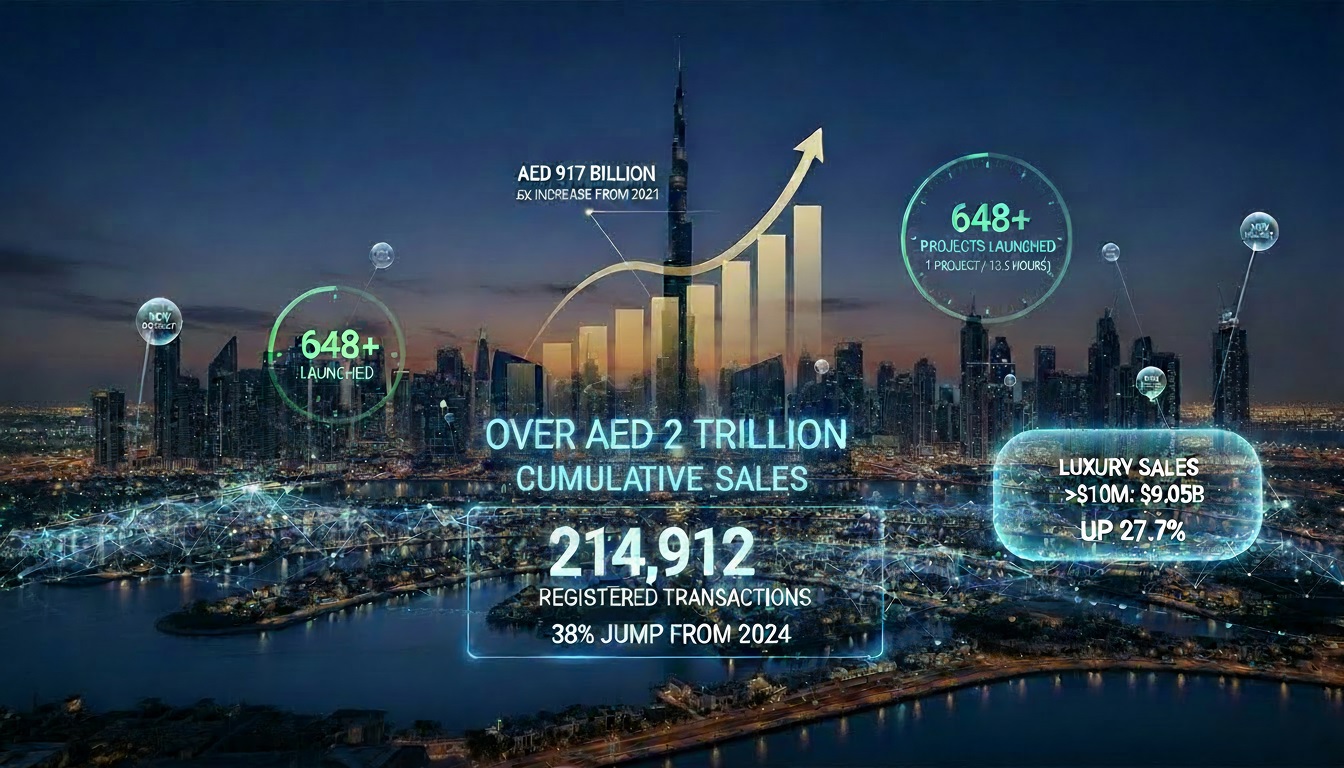
Dubai’s property market ended 2025 with a record-breaking AED 917 billion in transaction value, marking a nearly fivefold increase from 2021 and bringing five-year cumulative sales to over AED 2 trillion ($544B). According to the Dubai Land Department, this surge was accompanied by 214,912 registered transactions — a 38% jump from 2024 — reflecting not just growth, but structural transformation.
What’s driving it? Verified data points to a confluence of long-term residency incentives, regulatory maturity, first-time buyer support schemes, and a broader shift toward end-user and institutional ownership. Meanwhile, luxury property sales above $10M surged 27.7% to $9.05B (Knight Frank), and over 648 new real estate projects were launched across the city — averaging one every 13.5 hours (Property Monitor). Population growth, soft power gains, and international trade flows have reinforced Dubai’s positioning as both a lifestyle hub and an investment magnet.
Moving beyond headline figures, this week’s insights examine the data to highlight the market’s structural direction. Whether you're holding, entering, or exiting the market, the trends are clear: Dubai’s evolution is no longer cyclical — it’s strategic, data-led, and structurally resilient.
If you're looking to convert this momentum into results — whether through resilient commercial assets, premium villa communities, or upcoming off-plan launches — reach out now. I’ll share a tailored shortlist of high-performing, data-backed opportunities based on your investment goals. Click here to speak with me directly.
According to the latest data from Dubai Land Department, Dubai property sales exceeded AED 2 trillion ($544B) over the past five years, with 2025 alone delivering a record-breaking AED 682.6B ($186B) in value and 214,912 transactions — a 38% YoY jump in volume. This represents nearly a fivefold increase from 2021.
Critically, the rise has been broad-based. Off-plan and ready properties, mid-market and luxury, apartments and villas — all segments posted strong gains. However, what separates 2025 from earlier rallies is who is buying and why. Long-term residents are entering ownership for the first time, global HNWIs are relocating full-time, and developers are increasingly delivering products aligned with end-user needs rather than speculative flip cycles.
The government’s First-Time Home Buyer Scheme helped more than 2,000 residents secure homes in just six months, contributing AED 3.25B+ in new sales — a small fraction of the total market but a symbolic one. With over 41,000 registrations in the program to date, the move signals a long-term policy push toward homeownership and social stability.
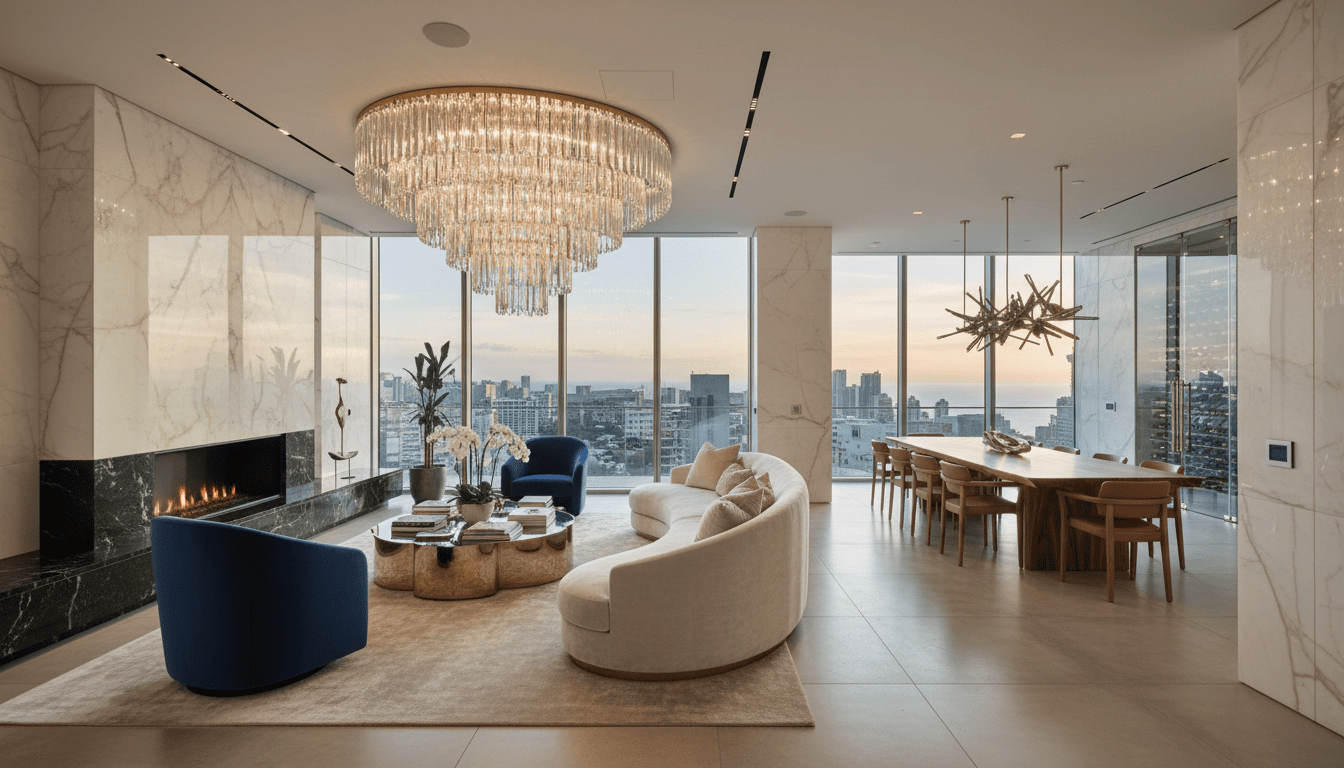
Dubai’s luxury market posted another landmark: 500 homes sold above $10 million in 2025, with 68 crossing $25 million, totalling $9.05B in ultra-prime sales — a 27.7% increase over 2024. Q4 alone saw 143 such deals, up 39% quarter-on-quarter.
Communities like Palm Jumeirah (28 deals), Palm Jebel Ali (22), La Mer (16), and Jumeirah 2 (13) led the pack, but the biggest single transaction came from a 6-bedroom penthouse at Bugatti Residences in Business Bay — sold for a record $149.7M (AED 550M).
Yet the luxury story is no longer driven by flippers or short-term opportunists. According to Knight Frank, this market is now led by genuine end-users — globally mobile families, entrepreneurs, and business owners establishing primary residence in Dubai. That shift makes luxury sales less volatile and more stable long-term. It also aligns with Dubai’s rise in soft power rankings — now among the top 10 globally, bolstering investor trust.
One of the most talked-about figures this week is 120,000 new residential units expected to be handed over in 2026 — a headline number that triggers fears of oversupply. But when placed in context, the risk looks far more muted.
Dubai’s population grew by ~208,000 in 2025. At an average of 4.15 residents per household (Dubai Statistics Center), this implies demand for ~50,000 new units per year. On paper, the 2026 pipeline looks like 2.4–3.2 years’ worth of supply — but it’s rarely that simple:
- Not all units will complete on time: Historical data shows 30–40% attrition in handovers each year.
- Geographic mismatch: Much of the new supply is concentrated in areas with active absorption, not in isolated zones.
- End-user demand remains robust: First-time buyers, long-term expats, and visa-linked purchases continue to rise.
In short, delivery is rising, but it’s not uncontained. S&P Global reaffirmed this week that they do not see oversupply risks in 2026–2027, citing strong population growth, cash-led off-plan sales, and limited mortgage exposure as stabilisers. Price growth is expected to moderate to 5–8%, suggesting a maturing — not overheating — market.
According to Property Monitor, Dubai recorded 648 new project launches in 2025, averaging one announcement every 13.5 hours — up from one every 18 hours in Q1 2024. In total, over 167,000 units worth AED 463B ($126B) were launched by 258 developers, marking a 40% year-on-year increase in launch activity and developer participation.
Apartments made up 88.8% of the total units, but villas and townhouses captured more total value, reflecting strong investor appetite for larger homes. Prime and waterfront locations such as Palm Jumeirah, Palm Jebel Ali, Dubai Hills, Dubai Creek Harbour, and Sobha Hartland II accounted for a disproportionately high share of sales value — despite lower volumes.
This reflects a two-tier market structure: mid-market communities like JVC and Dubai South are absorbing volume, while prime zones drive pricing. This segmentation makes Dubai more resilient to shocks — not every part of the market is moving in the same direction at the same speed.
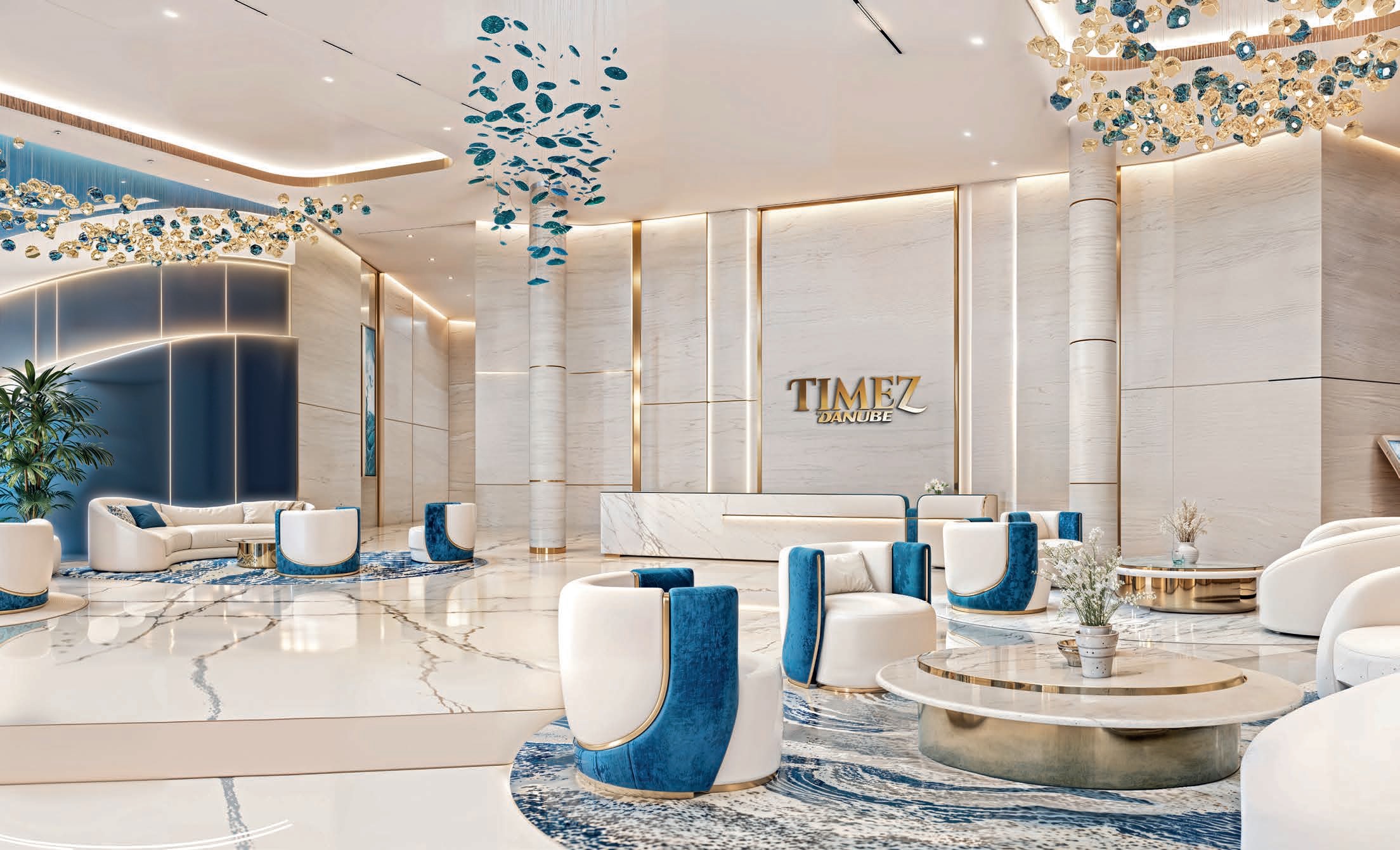
Timez by Danube in Dubai Silicon Oasis
While residential grabs headlines, commercial and industrial space in Dubai is facing its own pressure points. EnterpriseAM reports that Dubai’s industrial zones, including Dubai Silicon Oasis, are nearing full capacity.
As a response, the emirate is:
- Allocating AED 12.8B for commercial expansions
- Expanding Dubai Food District to 29 million sq. ft.
- Attracting 6,500 new firms and targeting AED 30B in FDI
These are not just stopgaps — they are part of a deliberate strategy to anchor Dubai’s role as a logistics, food security, and R&D hub for the region. The continued growth of demand for warehousing, cold storage, lab space, and Grade-A offices will shape investor opportunities in 2026.
Explore commercial listings and insights at Mitchell’s Commercial Realty— featuring premium office and retail properties across Dubai, along with market intelligence to help you identify emerging trends.
Still reading
Need expert help on this subject?
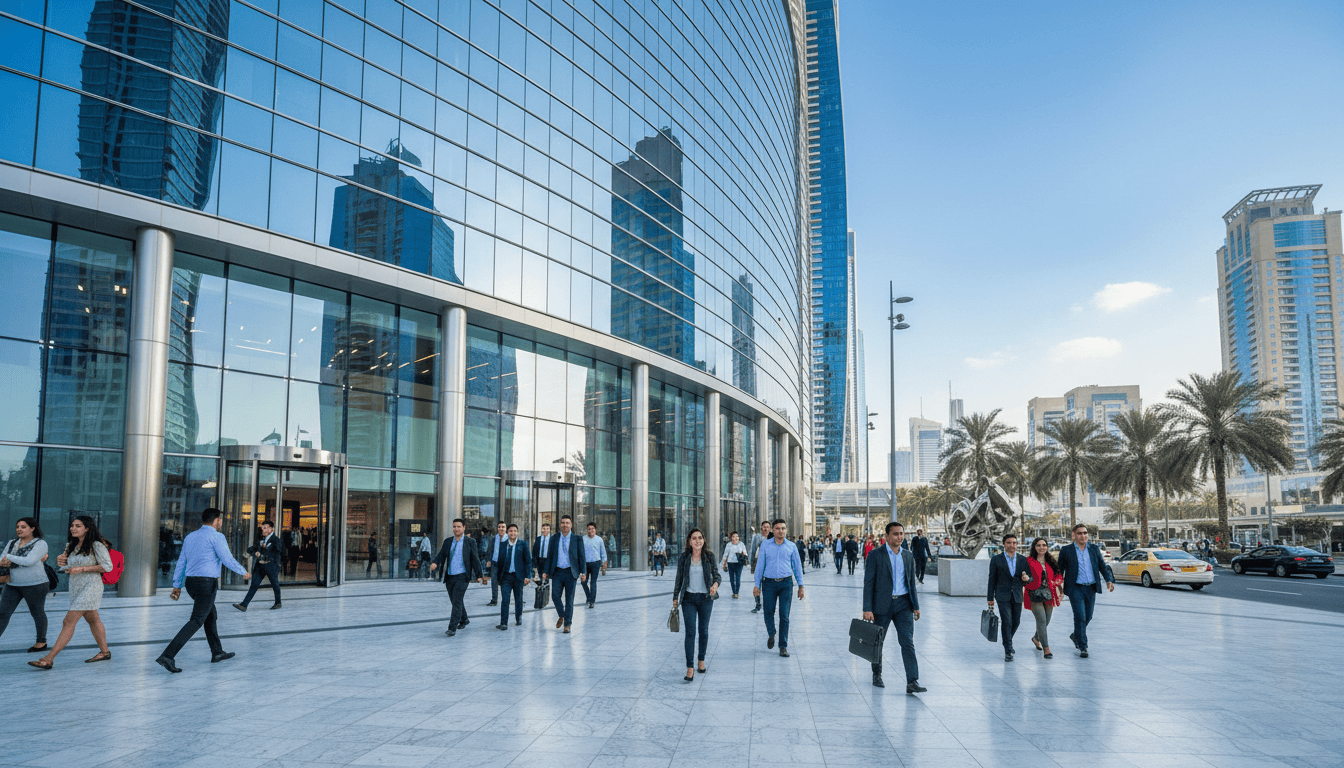
The UAE workforce expanded 12.4% in 2025, supported by a 7.8% rise in private-sector companies and a youth-dominated labour force (54.9% aged 18–35). Emiratisation and women’s participation also rose, broadening the consumer base and underpinning end-user real estate demand.
At the international level, India-UAE non-oil trade reached $37.6B in H1 2025, up 34% YoY. The CEPA deal continues to cut tariffs and drive bilateral flows in tech, pharma, and infrastructure — sectors with real estate demand side-effects (e.g., warehousing, staff housing, commercial fit-outs).
The UAE also signed a new mining cooperation MoU with Uzbekistan, expanding its strategic footprint in Eurasia — another move with long-term real estate implications (logistics, industrial, and executive housing).
On the global front, 2026 growth is expected to hold steady at ~3.3% (IMF) — led by AI investment, steady U.S. expansion, and Chinese export resilience. But risks remain: debt pressures in emerging markets, volatile asset pricing, and elevated geopolitical tension.
Despite this, the UAE remains well-positioned. With low inflation (~1.8%), strong banking liquidity, and record trade and fiscal surpluses, Dubai offers what few others do: a high-growth economy with low-tax stability and global connectivity.
This macro backdrop — coupled with the UAE’s climb in soft power rankings — makes the country even more attractive for capital rotation out of saturated Western markets into high-yield, real-economy assets.
- Buy Quality, Not Hype: End-user demand, not speculation, is now the anchor. Focus on projects aligned with real use cases: family homes, rental-grade apartments, office and logistics facilities.
- Watch the Supply Map: Oversupply is not a blanket risk — it’s localised. Know which zones have infrastructure, absorption, and price stability.
- Leverage First-Mover Zones: Areas like Palm Jebel Ali, Dubai South, and key D33 urban corridors offer long-term potential — if chosen carefully.
- Track FDI-Linked Growth: Commercial and industrial assets in areas tied to India trade, food logistics, and AI infrastructure may outperform.
- Stay Liquid and Data-Led: The market is not in a bubble, but momentum will vary. Access to real-time pricing, valuations, and investor-grade metrics is now a necessity — not a luxury.
In closing
Conclusion
Dubai’s property market is entering 2026 from a position of strength — not just in terms of record numbers, but in the quality and sustainability of growth. With end-user demand rising, supply being absorbed, and macro fundamentals holding firm, the market is showing signs of long-term maturity. For serious investors, the opportunity now lies in reading the data carefully, identifying structural shifts early, and focusing on real demand — not just momentum.
Next step
Let’s Talk
If you’d like to unpack where the most resilient opportunities are emerging — in stabilised residential areas or income-generating commercial zones — I’m happy to share a focused, data-driven shortlist based on your investment goals.
📞 No pressure, no sales pitch—just a focused, informed conversation about your investment goals. Let’s talk.
Next step
Ask us about this

Published 26 January 2026 by Stephen James Mitchell MBA. Market figures quoted reflect the data available at that date.