Dubai’s real estate cycle is entering a more disciplined phase. Strong 2025 earnings from Emaar and IHC confirm underlying resilience, but the signals shaping 2026 now centre on governance standards, regulatory modernisation, and uneven supply distribution.
Developments such as the Abu Dhabi–Dubai high-speed rail and the February 20 tokenisation launch signal structural changes in the way real estate is transacted, financed, and accessed.
For investors, the emphasis is shifting from broad momentum to project transparency, delivery capability, and submarket selection.
If you’re planning your next move in this cycle, I can share a targeted shortlist of high-performing options. Click here to speak with me directly.
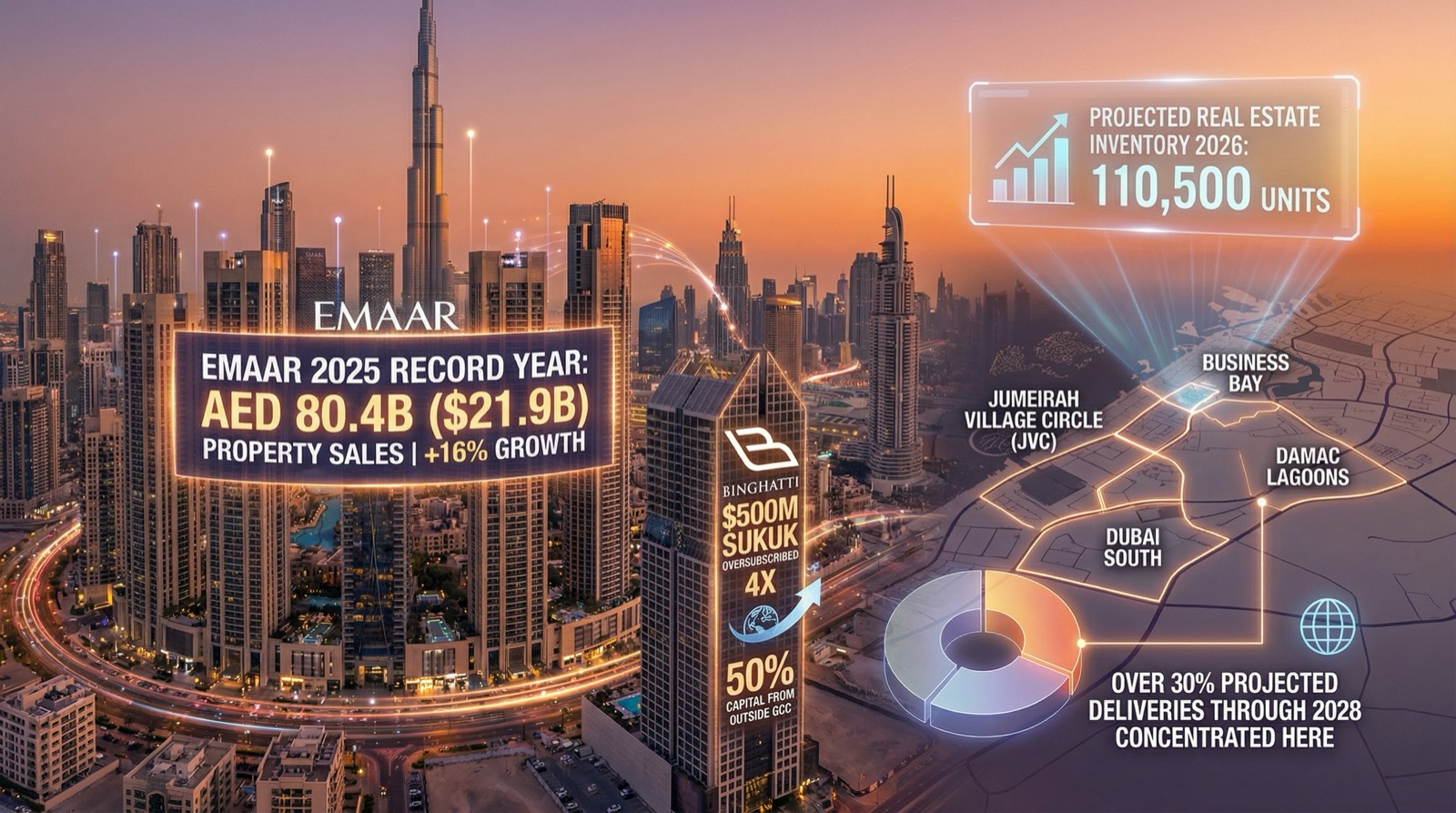
Emaar posted its strongest year on record in 2025:
- AED 80.4B in property sales (+16% YoY)
- AED 25.7B net profit before tax (record high)
- AED 155B revenue backlog, supporting multi-year visibility
Citywide, residential prices rose 12.1% in 2025 (down from 16.5% in 2024). Rents increased 11–12%, indicating moderated but still positive momentum. At the premium end, ultra-luxury transaction value increased 53.7%, contrasting with more measured activity in mid-market stock.
Regionally, Abu Dhabi registered $3.27B in January sales, with 83% of transactions off-plan. IHC reported a 35.1% profit rise, generating AED 44.2B from real estate and construction.
Takeaway: Growth is stabilising. Market activity is broad-based but no longer accelerating at prior speeds.

High-net-worth inflows remain a major demand driver.
In 2025:
- Luxury transactions rose 47.1%
- Ultra-luxury (>$10M) recorded 302 deals worth $7.6B (AED 27.9B)
- Branded residence sales increased 43%, with 35–50% premiums
This segment remains supported by asset-quality requirements, brand assurance, and liquidity preference rather than short-cycle investment behaviour.
Takeaway: The premium tier continues to operate on its own fundamentals, largely insulated from mid-market moderation.
For 2026, projected new inventory is 110,500 units. Based on historical completion rates, actual deliveries are likely 33,000–50,000 units.
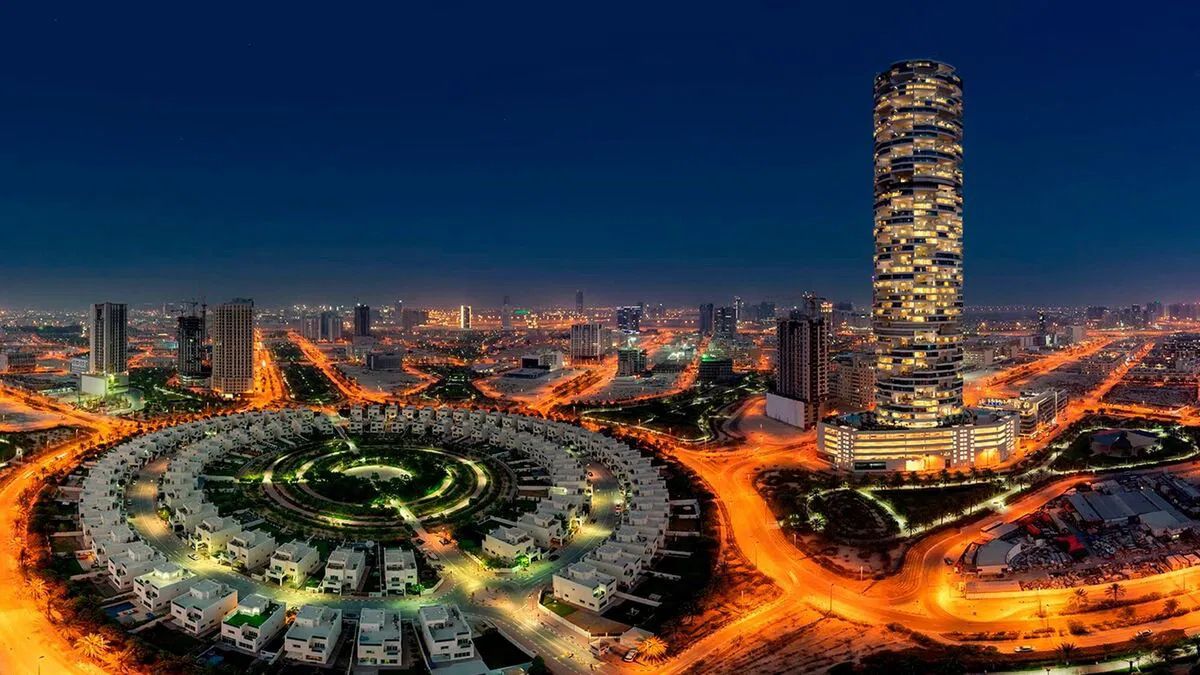
More than 30% of 2026–2028 supply is concentrated in four locations:
- Jumeirah Village Circle
- Dubai South
- Business Bay
- DAMAC Lagoons
This clustering is already shifting leverage toward tenants in mid-market zones such as JVC and Arjan. Incentives (e.g., chiller-free, cheque flexibility, monthly payments) are becoming more common as developers and landlords compete for occupancy.
In contrast, villa-led and mature prime districts show continued structural undersupply, with limited new stock entering these segments.
Takeaway: Supply pressure is localised. Mid-market clusters face competitive conditions; established family districts remain constrained
Key structural developments are reshaping market infrastructure:
Smart Rental Index 2026
- Static tables replaced with a 1–5 star AI classification model.
- Uses real-time data, building characteristics, and transaction history.
- The 90-day notice requirement remains unchanged.
- Provides clearer justification for rent adjustments based on asset quality.
Secondary Trading of Tokenised Real Estate (Feb 20 Launch)
- 7.8 million tokens eligible for regulated secondary trading.
- Platforms such as Prypco Mint allow fractional owners to exit without traditional resale constraints.
- Early move toward improving liquidity and lowering entry thresholds.
Regulated Crypto-to-AED Settlement

- DLD and VARA-licensed entities (including Crypto.com) piloting structured, compliant settlement rails.
- Not on-chain property settlement, but reduces friction for cross-border capital flows.
PropTech & Valuation Infrastructure
- DIFC’s PropTech Hub targets 200 startups and $300M in sector investment.
- AI valuation tools (e.g., YallaValue) are becoming standard for instant, data-backed assessments.
Takeaway: Transparency, liquidity, and data consistency are improving. The market is becoming more structured and more accessible to global capital.
Explore curated office and retail opportunities at Mitchell’s Commercial Realty.
Corporate governance gained attention following the resignation of Sultan Ahmed bin Sulayem as DP World’s Group Chairman and CEO.Key partners, including Canada’s CDPQ and the UK’s BII, paused incremental deployments pending clarity. DP World appointed HE Essa Kazim as Chairman and Yuvraj Narayan as Group CEO.
While near-term real estate fundamentals are unaffected, the incident highlights growing institutional sensitivity to governance considerations.
Locally, boutique developers such as Amirah Developments are benefitting from increased buyer preference for transparent leadership and clear accountability.
Takeaway: Governance is becoming a material component of investor due diligence.
Still reading
Need expert help on this subject?
Liquidity indicators remain strong:
- Binghatti’s $500M sukuk was oversubscribed more than fourfold, with 50% international participation.
- Bank–developer partnerships (e.g., Emirates NBD, ADIB) are expanding structured off-plan mortgages once projects reach 40% completion, shifting demand toward end users.
For landlords, the Smart Rental Index ends uniform rental escalation.
- Average yields: 6.3% city-wide
- Adjustments now tied to AI-verified building quality
Takeaway: Access to capital remains broad; financing is becoming more structured and end-user friendly.
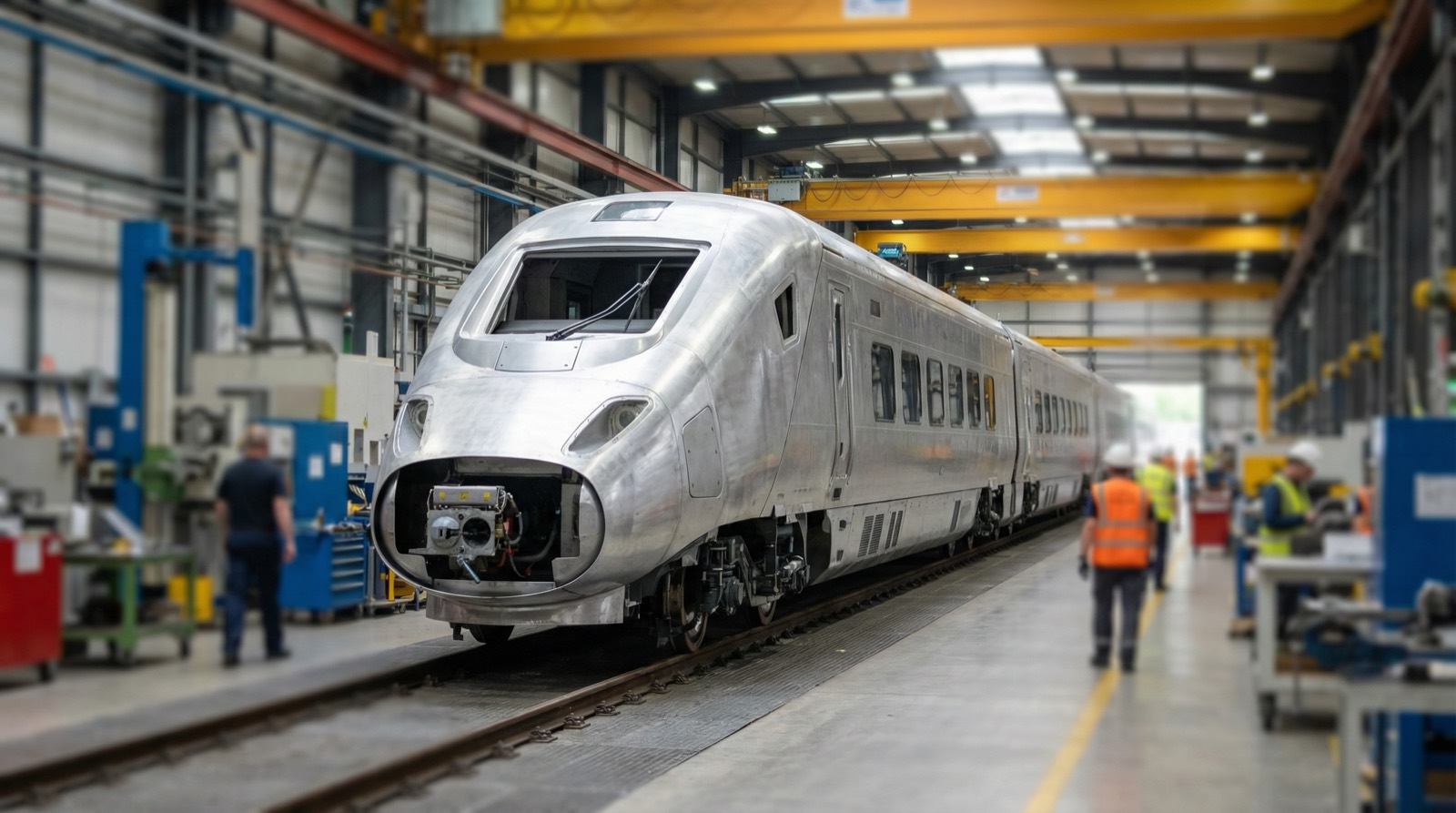
High-Speed Rail
- Eight billion dollars in contracts awarded for Abu Dhabi–Dubai high-speed rail
- 350 km/h line linking Al-Zahiyah to Al-Jaddaf in ~30 minutes
- Expected to re-rate decentralised nodes such as Dubai South
Northern Emirates
Affordability-driven relocation is rising. Projects such as Amwaj Tower in Ajman (100% freehold, 7-year plans) are attracting mid-market buyers priced out of Dubai’s coastal locations.
Tokenisation Export & International Expansion
- PRYPCO secured a government MoU to implement Dubai’s tokenisation framework in Tbilisi
- Dubai developers increasing exposure to India and Turkey through targeted investment outreach
Takeaway: Dubai remains the primary hub, but adjacent and international markets are becoming part of broader capital allocation strategies.
Key signals shaping the year ahead:
- Premium segment resilience: sustained HNWI inflows keep top-tier liquidity strong.
- Normalised growth: prices and rents trending toward 5–8% annual gains.
- Delivery alignment: actual completions remain close to organic demand growth.
- Regulatory maturation: AI indexing and tokenised trading improve transparency.
- Governance relevance: track record and leadership now meaningful differentiators.
Overall, the market remains stable, but performance will vary significantly by segment and submarket. Asset selection, developer quality, governance history, and delivery risk will carry greater weight in 2026 than in the previous two years.
Next step
Let’s Talk
If you’d like to unpack where the most resilient opportunities are emerging — in stabilised residential areas or income-generating commercial zones — I’m happy to share a focused, data-driven shortlist based on your investment goals.
📞 No pressure, no sales pitch—just a focused, informed conversation about your investment goals. Let’s talk.
Next step
Ask us about this

Published 15 February 2026 by Stephen James Mitchell MBA. Market figures quoted reflect the data available at that date.