The third week of April delivered the most comprehensive set of market signals since the Iran conflict began. The news flow operated on two tracks simultaneously. On one side, there is clear evidence that the market’s structural institutions are strengthening through new financing tools, regulatory integration, and major capital commitments.
On the other hand, a more direct picture of uneven recovery is emerging, with demand softness in specific segments, tourism pressure, and shifting regional capital dynamics.
This is no longer a uniform market. It is segmenting, and capital is beginning to follow that segmentation.
If you’re reassessing your positioning in this market, I can show you where risk-adjusted opportunities are emerging. Click here to speak with me directly.
The Dubai real estate index reflects listed developer equities, not physical property pricing. Its movement this month — including a ~30% decline from peak and a 10% rebound in a single session — is a reflection of sentiment repricing rather than asset-level fundamentals.
The divergence between paper and physical markets remains clear:
- Developer equities: ~-30% from peak
- Property prices: ~-4% to -5%
- Cash transactions: ~86% of all deals
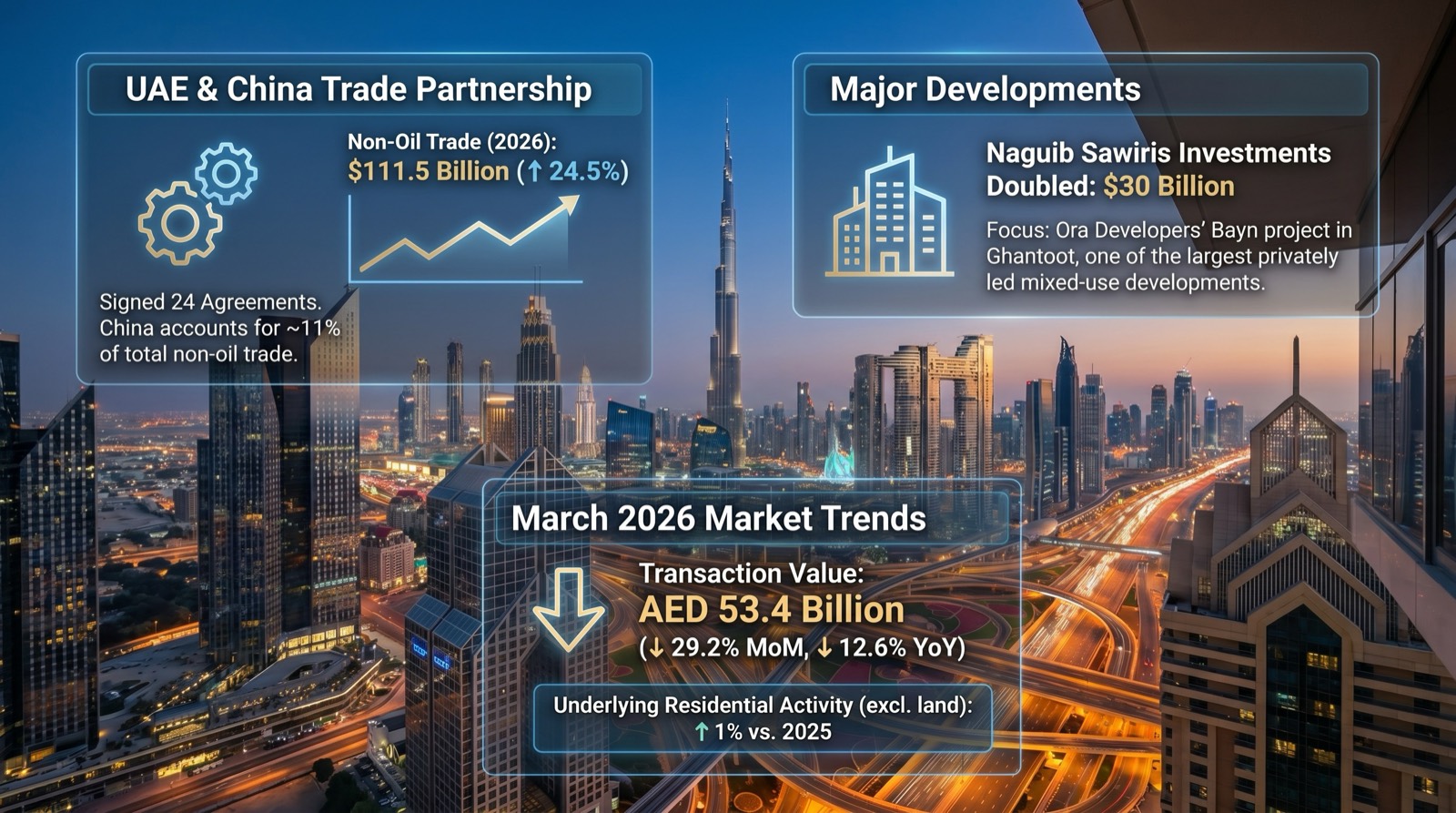
March transaction value fell to AED 53.4 billion, representing a 29.2% drop from February and 12.6% YoY decline. However, once land transactions are excluded, underlying residential activity was actually 1% higher than March last year, indicating that the core market remains stable.
The key forward risk is supply. With 110,500+ units expected in 2026, compared to a historical average of ~27,000 units, the market’s ability to absorb new inventory will depend on how quickly international demand normalises.
Demand has begun to normalise following the ceasefire, with previously stalled transactions moving back into execution. Conversion activity improved quickly, supporting earlier expectations that 60%+ of delayed deals could complete within one quarter if conditions stabilised.
Recovery, however, is not uniform. New enquiries fell by around 45% during peak tensions, and non-resident buyers remain partially constrained by travel disruption. This introduces a lag effect, with pricing in completed units likely to adjust over the next 1–2 months.
The market is currently operating within a short-term buyer window, characterised by:
- Stabilised pricing across most segments
- Selective discounts in softer secondary stock
- Increased upgrade activity from existing residents
Execution has resumed, but transaction timelines remain longer and more deliberate than earlier in the year.
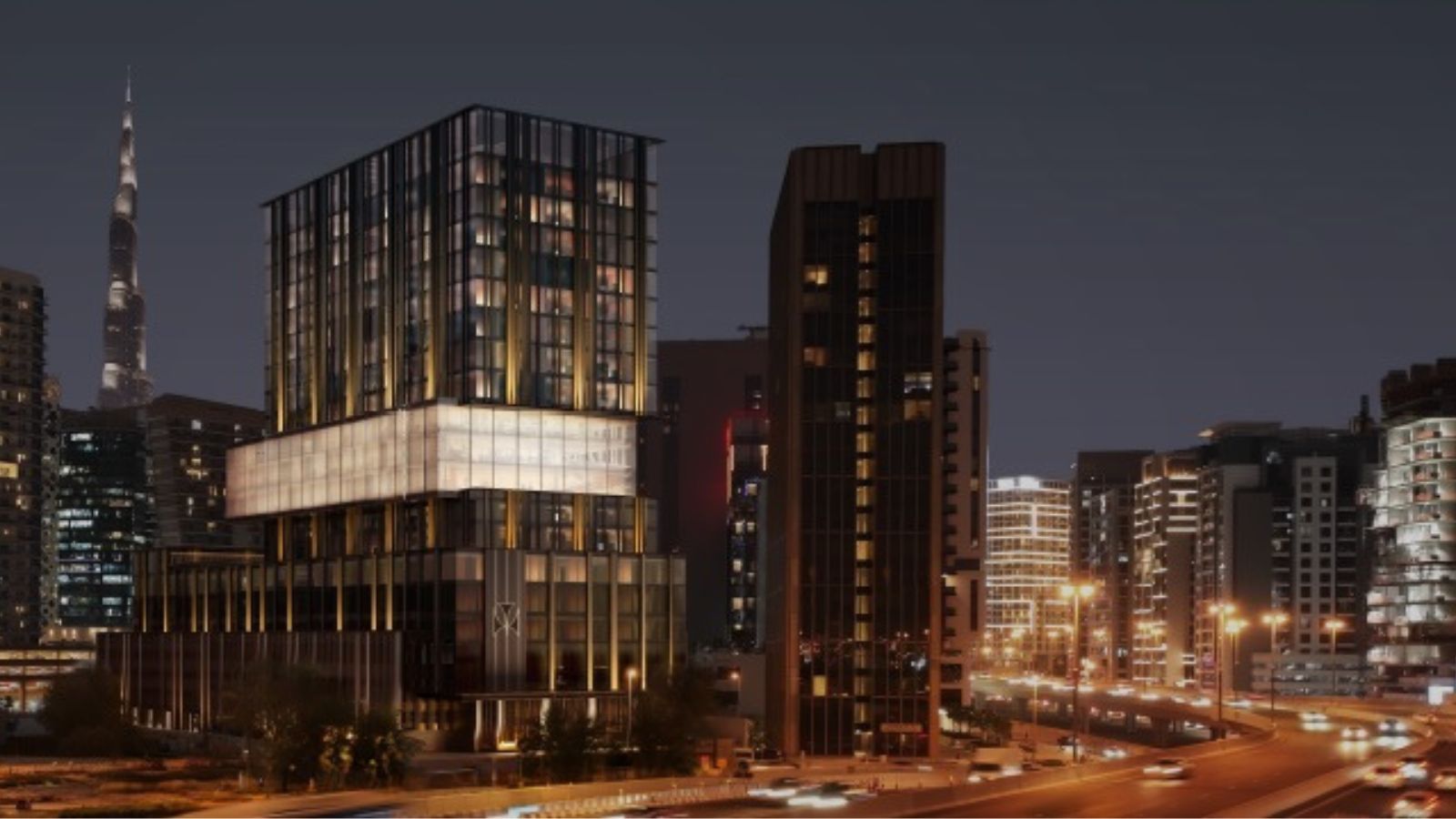
Grade A office space at Haus of Tenet by IRTH, Business Bay
The commercial segment remains the strongest-performing part of the market.
According to Gulf News, office pricing in core districts has reached AED 5,130 per square foot, reflecting 29% year-on-year growth, while high-value transactions have increased significantly, with 167 deals above AED 10 million, up 114%.
Demand continues to be concentrated in specific sectors:
- Banking & finance: 32.5%
- Technology: 23.1%
Investors continue to favour income-generating assets, particularly in prime office locations.
Supply remains constrained in the short term. While approximately 24.2 million square feet of office space is scheduled for delivery between 2026 and 2030, this does not materially impact current availability. As a result, pricing strength is being driven by a genuine supply-demand imbalance, with Grade A assets outperforming while secondary stock continues to lag.
A recent AED 90 million duplex penthouse sale at Bluewaters Residence further reinforces that demand for prime assets remains intact.
Explore curated office and retail opportunities at Mitchell’s Commercial Realty.
Section 04
Regulatory Radar: Unified Digital Platform for Golden Visa, Property and Retiree Residency
Dubai has introduced a unified system integrating Golden Visa, property residency, and retiree residency services, streamlining application processes for investors.
This allows the full process — document submission, payment, ownership verification, and tracking — to be completed within a single platform.
Key improvements include:
- Automated ownership verification via the DLD database
- Automatic scheduling of biometric appointments
- Processing times reduced by ~7 days
The AED 2 million unmortgaged equity threshold remains unchanged.
This materially reduces administrative friction, particularly for non-resident investors managing transactions remotely.
Mortgage solutions are now integrated directly into off-plan sales processes.
Buyers can now access financing at the point of booking rather than waiting until completion. This removes a key area of uncertainty in off-plan transactions.
In a market where over 70% of residential transactions are off-plan, this shift is particularly significant. The model has already been implemented across Meraas, Nakheel, and Dubai Properties, with similar structures introduced alongside Sobha Realty.
The shift improves:
- Financial clarity at entry
- Cash flow planning during construction
- Transaction certainty overall
Further adoption across major developers is expected.
Egyptian billionaire Naguib Sawiris has doubled his UAE investment exposure from $15 billion to $30 billion, despite the ongoing Iran war.
The expansion is centred on Ora Developers’ Bayn project in Ghantoot, where additional land acquisition has increased the total development area to 9.6 million square metres, positioning it as one of the largest privately led mixed-use developments in the UAE.
The project is strategically located:
- Between Dubai and Abu Dhabi
- Connected to Sheikh Maktoum bin Rashid Road
- Approximately 25 minutes from Al Maktoum International Airport
The first phase has already sold out, with 40% of buyers being UAE nationals. This level of capital commitment during an active conflict period reflects long-term positioning rather than short-term opportunism.
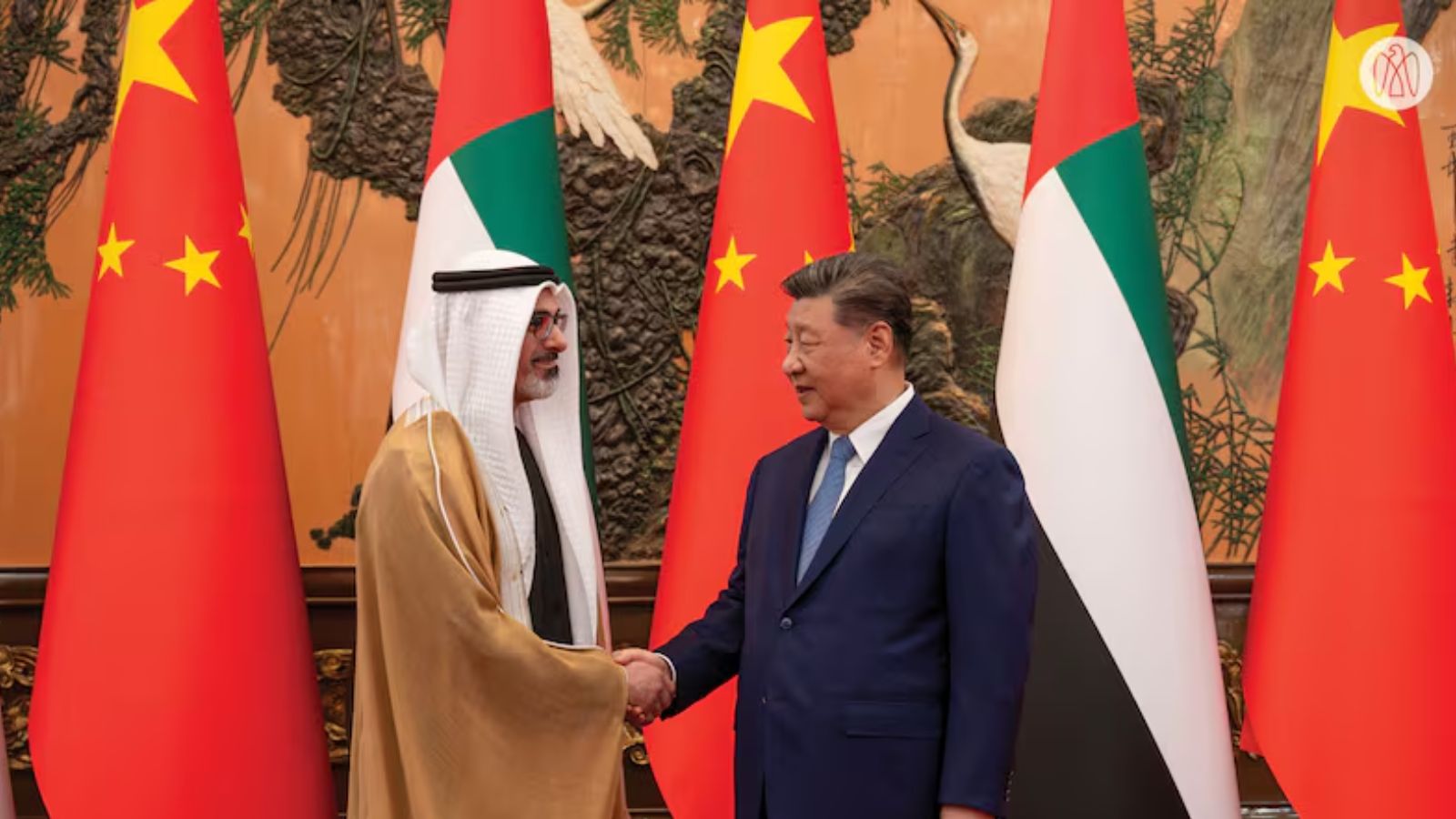
Sheikh Khaled bin Mohamed during his official visit to China. Photo: The National
The UAE and China signed 24 agreements to expand trade and investment, pushing non-oil trade to $111.5 billion, a 24.5% increase, with China accounting for approximately 11% of total UAE non-oil trade.
This has direct implications for real estate demand. Chinese high-net-worth and institutional investors represent a growing segment of capital entering the UAE, and deeper trade integration supports sustained inflows.
Investors continue to favour the UAE due to:
- Policy consistency
- Regulatory clarity
- Long-term economic positioning
Still reading
Need expert help on this subject?
The UAE enforced repayment of a $3.5 billion loan to Pakistan, completed across three tranches in April. The loan had been rolled over since 2018, with progressively shorter extensions signalling a shift in policy.
At the same time:
- Central bank reserves increased to $119.5 billion
- Emirates Development Bank (EDB) is injecting AED 20 million per day into the economy to support business activity
This reflects a shift toward capital consolidation and domestic liquidity protection, rather than external financial support.
Tourism performance in 2025 was strong, with AED 49.21 billion in revenue, 32.34 million visitors, and 79.3% occupancy. This creates a high base for comparison.
In 2026, the picture is more challenging. Travel disruption is affecting demand, and the Burj Al Arab is set to close for 18 months, removing a key asset from the market.
The impact is concentrated in:
- Hotel-linked investments
- Short-term rental performance
Long-term residential and commercial assets remain more insulated.
Section 10
UAE-Wide Activity: Sharjah +40.7%, Abu Dhabi AED 66bn, SMEs Integrated into Property Sector
Regional expansion continues, with strong growth across multiple emirates:
| Emirate | Q1 Value | Growth |
|---|---|---|
| Dubai | AED 252B | +31% |
| Abu Dhabi | AED 66B | +160% |
| Sharjah | AED 18.5B | +40.7% |
Additional developments include:
- 113 nationalities investing in Sharjah
- AED 40B Sobha project in Abu Dhabi
- 9,000-unit Aldar rental pipeline
- 27,000 SMEs targeted for integration by 2033
This reflects increasing diversification beyond Dubai’s core market.
Development activity remains strong and execution-focused.
Dubai Properties awarded AED 1.1 billion in construction contracts to expand its Villanova community in Dubailand, adding 850 townhouses.
At the same time, new capital continues to enter the market, including a $70 million Dubai Islands project backed by Khabib Nurmagomedov, with projected yields between 8% and 10% and 38% of units already sold.
On the delivery side, Samana completed the handover of 157 units, while developers such as Danube confirmed no delays despite construction costs rising by up to 50%.
In the current environment, delivery capability is increasingly becoming the primary differentiator between developers.
In closing
Final View for Dubai Property Investors
Current conditions point to a market operating across three distinct layers: volatile sentiment in public markets, gradual adjustment in physical pricing, and continued structural strengthening through regulation, financing, and capital deployment.
External pressures remain, particularly around tourism, supply pipeline concentration, and geopolitical uncertainty. However, the domestic framework — liquidity, policy consistency, and continued capital inflow — continues to provide stability.
The gap between external sentiment and on-ground pricing remains the defining feature of this phase.
Next step
Let’s Talk
If you’d like to unpack where the most resilient opportunities are emerging — in stabilised residential areas or income-generating commercial zones — I’d be happy to share a focused, data-driven shortlist based on your investment goals.
📞 No pressure, no sales pitch—just a focused, informed conversation about your investment goals.
Next step
Ask us about this

Published 20 April 2026 by Stephen James Mitchell MBA. Market figures quoted reflect the data available at that date.