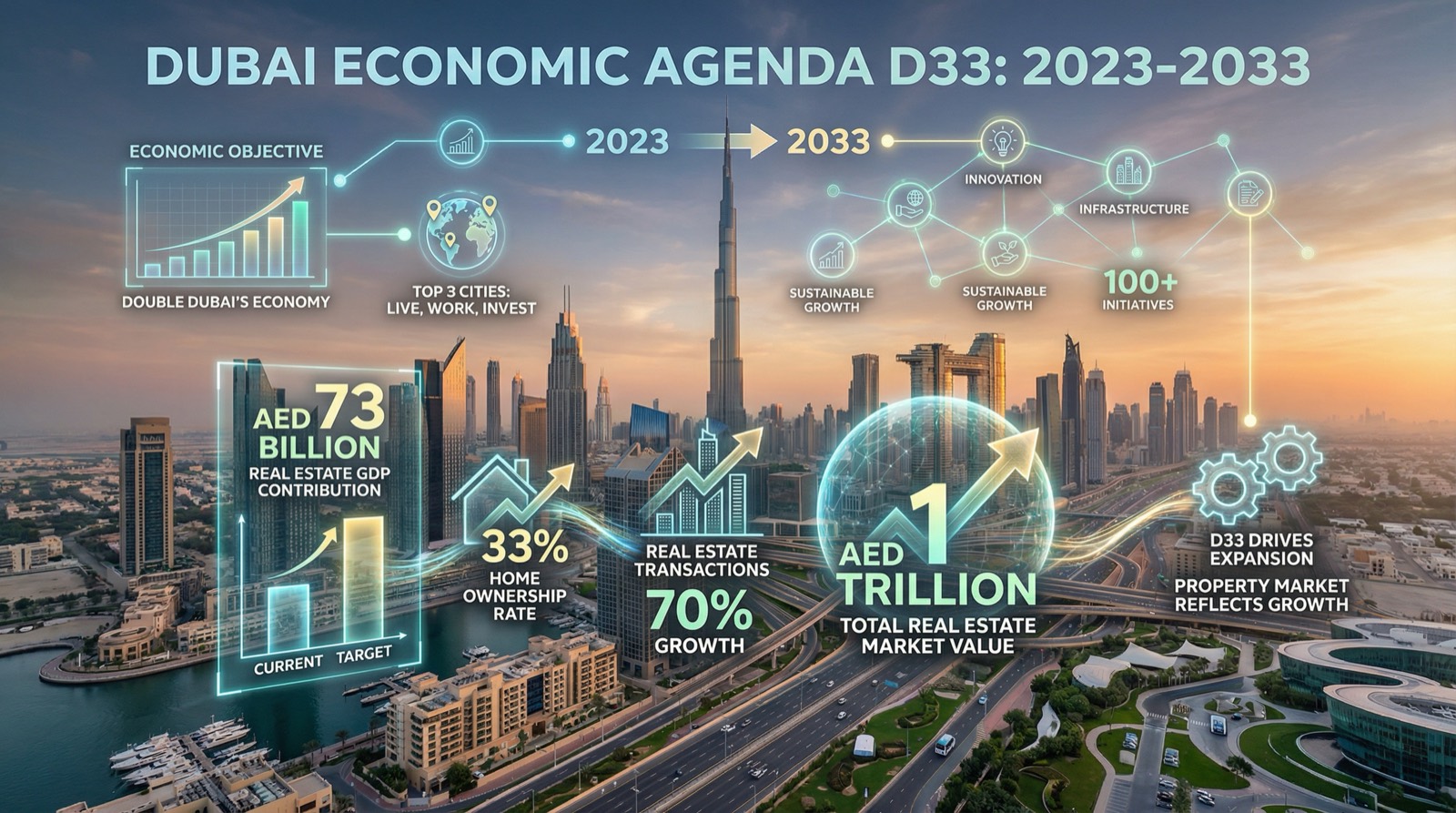
Dubai, along with the wider UAE, is entering a new phase of economic confidence—driven by large-scale technology investment, energy-sector stability, and a maturing real estate cycle. These developments matter because they directly influence asset performance, rental yields, and long-term capital strength.
Over the past week, several key events have aligned to create a clearer investment picture:
- Microsoft announced a US $15.2 billion commitment to the UAE’s AI and data-centre ecosystem.
- The UAE and US formalised anew partnership for AI and energy cooperation.
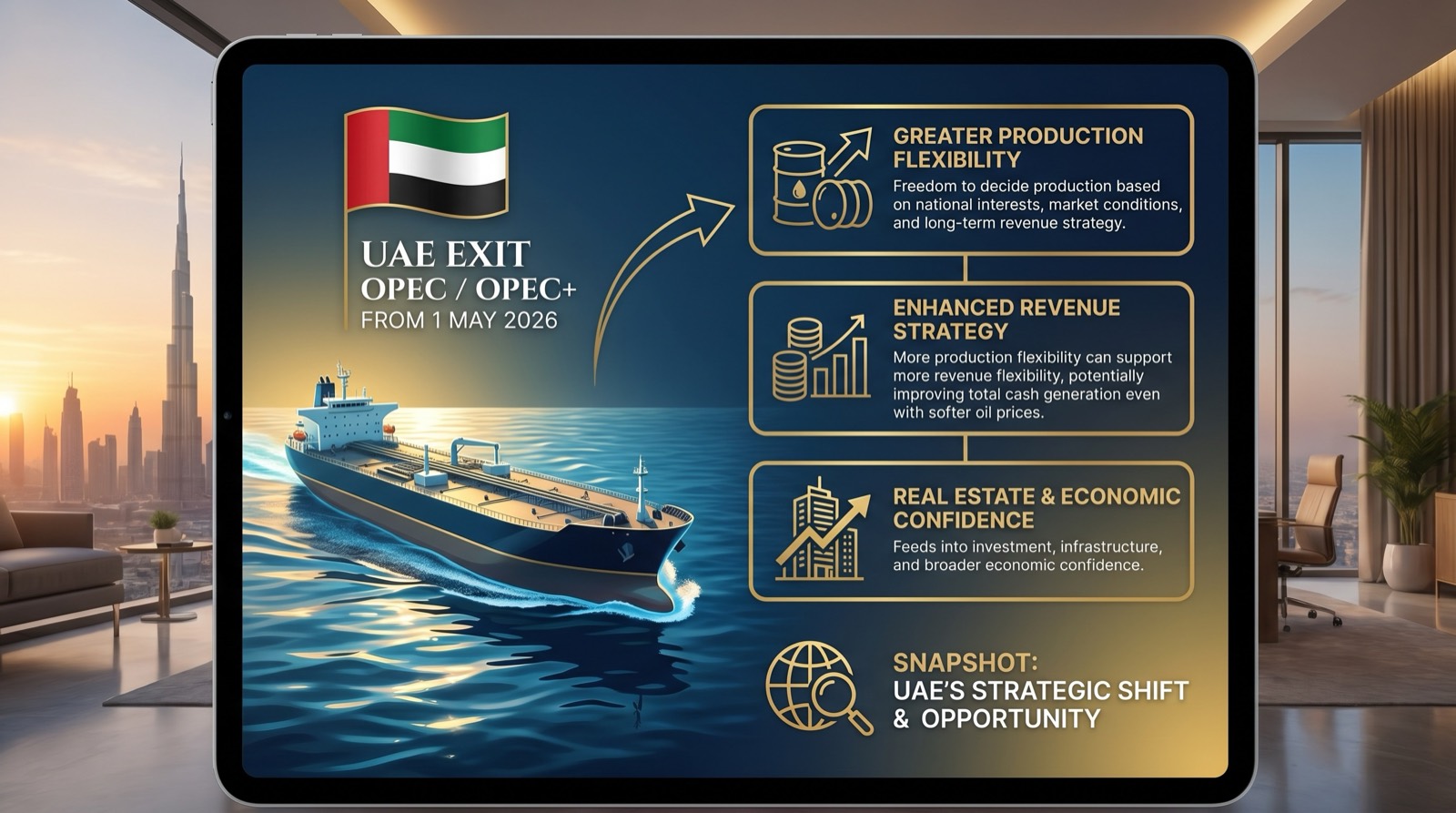
- OPEC + paused output hikes to stabilise oil prices.
- Dubai’s October sales reached AED 12.6 billion, with 71% from off-plan transactions.
- Expo City Dubai confirmed a major expansion, and the UAE unveiled a Dh 170 billion transport plan.
- New research ranked Dubai the world’stop city for global high-net-worth residents, surpassing New York.
Each of these signals reinforces Dubai’s shift from cyclical growth to structural maturity — a market driven by fundamentals rather than speculation.
If you’d like to see which projects stand to benefit most from these shifts, get in touch now! I’ll share a focused shortlist of opportunities aligned with the current market direction.
Microsoft’s US $15.2 billion UAE investment is more than a headline — it’s a strategic anchor for sustained growth. The plan includes AI infrastructure, advanced data-centres, and extensive local-talent development. By 2029, the initiative is expected to support thousands of high-skilled jobs and strengthen the UAE’s global standing as a technology hub.
This directly benefits the property market. Technology clusters generate long-term employment, attract international professionals, and increase demand for both residential and commercial real estate. Areas surrounding innovation corridors, free zones, and mixed-use business districts are likely to see the strongest absorption.
The UAE–US agreement on AI and energy cooperation, signed this week, reinforces this trajectory. The pact focuses on clean-energy transition, data-governance frameworks, and AI commercialisation — all of which attract multinationals seeking stable, innovation-friendly jurisdictions. For property investors, this is the type of economic foundation that drives both yield stability and capital appreciation.
The spill-over effect on Dubai’s office and mixed-use markets will be significant. As more firms establish regional HQs or data-operations locally, demand for high-specification commercial space will continue rising.
Investors who secure units in Grade A projects at present — particularly in Sheikh Zayed Road, Business Bay, and Dubai Internet City — position themselves ahead of this demand curve.
Explore premium office listings and market insights at Mitchell’s Commercial Realtyand discover where the next wave of high-specification workspace demand is forming.
At ADIPEC 2025, UAE officials outlined an energy strategy focused on resilience and diversification. Rather than expanding production indefinitely, OPEC+ has paused output hikes through early 2026 to maintain price discipline. The message is clear: stability first, volatility later.

For investors, this policy reinforces fiscal consistency. With oil prices steady and the UAE’s AED 92.4 billion federal budget already approved, roughly 40% of national spending is being directed toward social infrastructure, housing, and community services.
Stable energy revenues underpin government spending, infrastructure development, and household confidence — all of which flow directly into real-estate activity. The manufacturing and logistics sectors, supported by Dh 190 billion in GDP contribution last year, continue to expand, creating fresh employment and housing demand.
Energy discipline also reduces exposure to external shocks. Combined with the country’s strong non-oil growth — projected at 4.6% for 2026 — this positions Dubai as one of the region’s most stable environments for both investment and long-term residency.
Investors benefit through consistent occupancy, dependable rental yields, and long-term appreciation grounded in fundamentals rather than speculation.
Dubai’s residential market has entered a healthy consolidation phase. October’s AED 12.6 billion in sales marks a record, yet price growth is becoming more measured. Off-plan transactions now represent 71% of the total — evidence that investors continue to favour future-dated value and flexible payment structures.
Recent research from CBRE and Arabian Business confirms that ready-property prices are stabilising while rents are plateauing in prime areas such as Downtown, Dubai Marina, and Business Bay. This cooling period is a positive sign: it reflects a market finding equilibrium after two years of rapid expansion.
For investors, this shift presents an opportunity to reposition. The focus is moving from momentum-driven gains to end-user-led resilience. Buyers are now prioritising location, developer credibility, and lifestyle integration — traits that ensure liquidity even during slower phases.
Key dynamics to leverage:
- End-User Conversion: Tenants facing high rents are increasingly choosing ownership in “affordable-luxury” communities like Dubai Hills Estate and Creek Harbour.
- Mid-Market Expansion: Developers are targeting family-oriented communities, providing strong rental continuity and lower volatility.
- Prime Branded Residences: Global names — from Four Seasons to Bulgari — continue to attract international capital, supported by Golden Visa eligibility and global brand equity.
Population growth above 4 million, coupled with record tourism inflows (12.5 million visitors in nine months), ensures continuous absorption. The imbalance between new housing supply and population expansion will likely sustain rental strength into 2026.
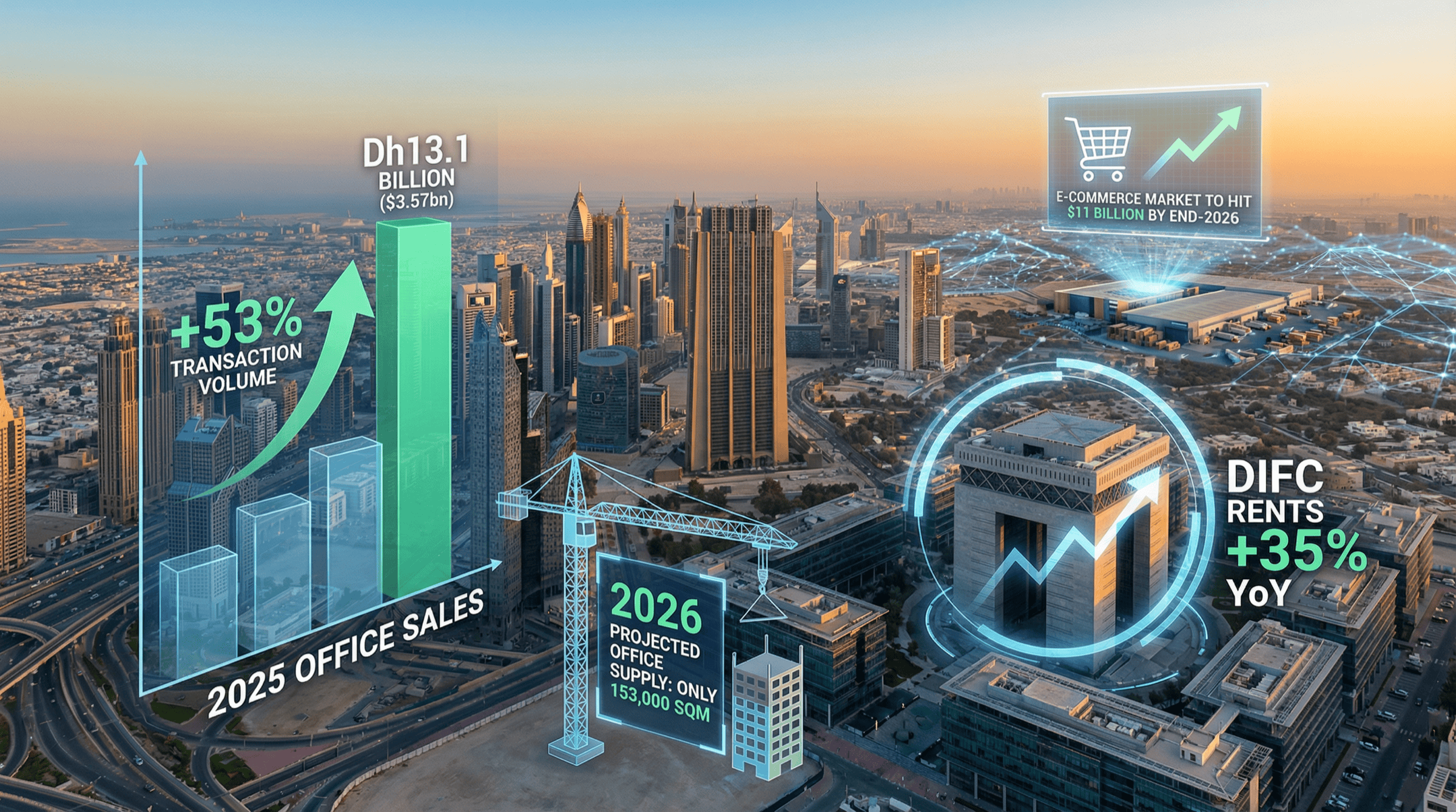
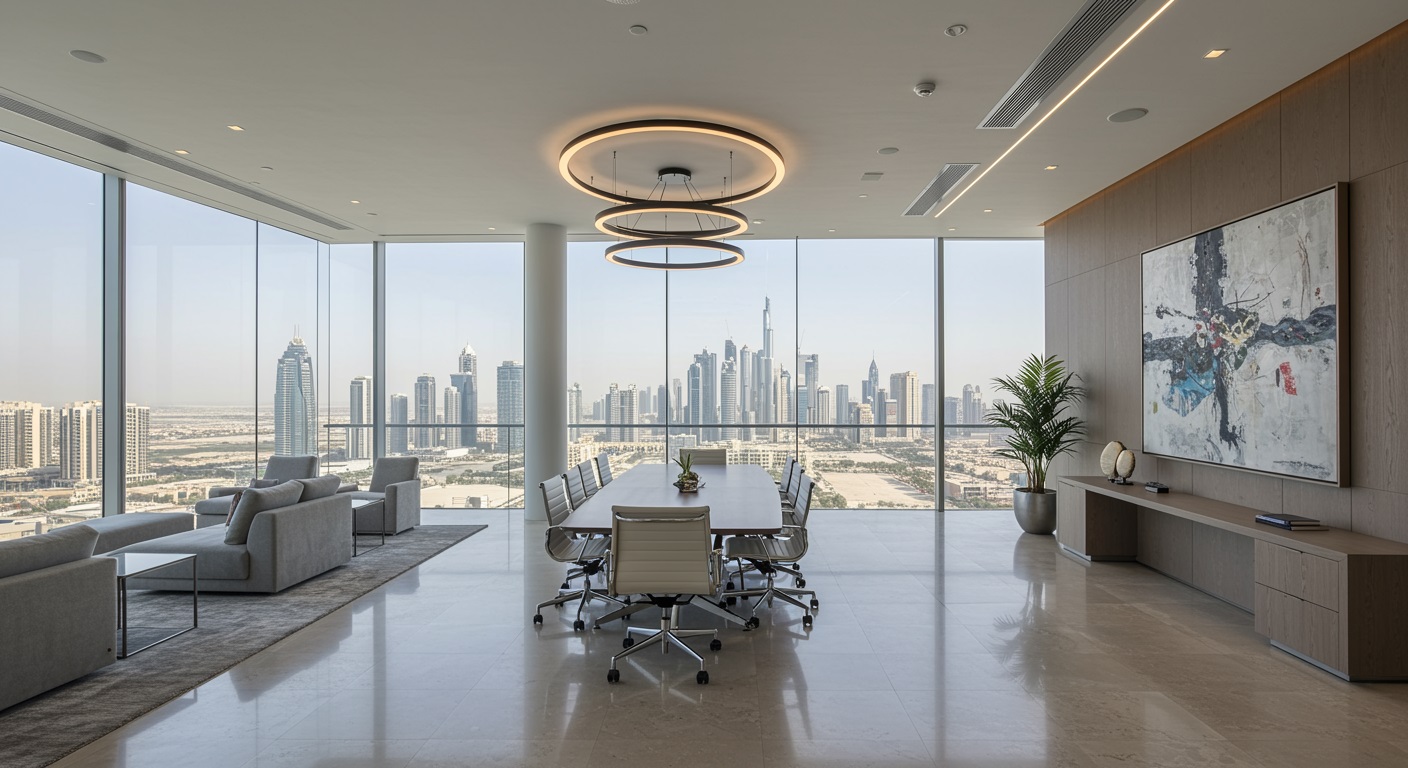
While residential headlines dominate, Dubai’s commercial property market is quietly delivering some of 2025’s strongest performance metrics. S&P Global data shows office occupancy averaging 94%, with prime-district vacancy below 6%. Rental rates have climbed 15–2% year-on-year across Business Bay, JLT, and DIFC.
Several factors underpin this resilience:
- The influx of tech, fintech, and AI companies following the Microsoft, Palantir, and Dubai Holding “Aither” joint venture.
- The government’s “open finance economy” initiative, which encourages regional HQ relocation.
- Limited new Grade A supply relative to demand, protecting rental upside.
Investors purchasing premium office or retail units within mixed-use towers now capture higher yields than equivalent residential stock, with lower turnover risk. Hybrid assets — projects that integrate retail podiums, offices, and branded residences — offer portfolio diversification and exposure to multiple income streams.
Expo City Dubai’s planned expansion will further enhance the commercial landscape. New zones dedicated to education, sustainability and innovation will extend the city’s footprint and reinforce Dubai’s role as a regional business capital.
Explore commercial listings and insights at Mitchell’s Commercial Realty — featuring premium office and retail properties across Dubai, along with market intelligence to help you identify value and emerging trends.
Dubai has officially topped Savills’ 2025 Ranking as the world’s best city for global high-net-worth residents, surpassing New York. The ranking cites tax efficiency, safety, connectivity, and lifestyle infrastructure as key drivers.
For investors, this recognition is not symbolic — it has direct implications for asset performance. Global wealth migration translates into sustained premium-market demand and deeper international liquidity. High-net-worth buyers view Dubai as both a residence and a store of value, which helps stabilise prices even during broader market adjustments.
Government policy continues to align with this positioning. Visa reforms, remote-work programmes, and investment-linked residency pathways are encouraging long-term settlement. The “ We the UAE 2031 ” agenda has already achieved 67% of its targets, demonstrating execution strength rarely seen in emerging markets.
Infrastructure is scaling in tandem. The Dh 170 billion national transport plan and major road, metro, and airport upgrades are future-proofing mobility and expanding catchment areas for both residential and commercial investors.
Still reading
Need expert help on this subject?
The UAE property market is now characterised by measured growth, stable liquidity, and sectoral diversification. For investors, this calls for a refined approach:
- Prioritise End-User Assets: Properties serving long-term residents — not speculators — will sustain value. Look for well-planned communities with schools, retail, and connectivity.
- Favour Developers with Delivery Discipline: Reputation and track record now matter more than pre-launch hype.
- Leverage Payment Plans Strategically: Use flexible off-plan schedules (60/40, 80/20 etc.) to optimise cash flow, but ensure realistic completion timelines.
- Expand into Commercial and Hybrid Assets: Diversify beyond residential by targeting high-yield office or retail units in established districts.
- Maintain Moderate Leverage: With interest rates easing, mortgage access improves, but discipline remains essential to preserve returns.
- Think 5-to-10 Years Out: Population growth and foreign investment ensure that holding periods reward patience more than short-term flips.
The next phase is defined by sustainability, affordability, and selectivity — not by speculative price spikes. Investors who align with these structural drivers stand to benefit from steady yields and compounded growth.
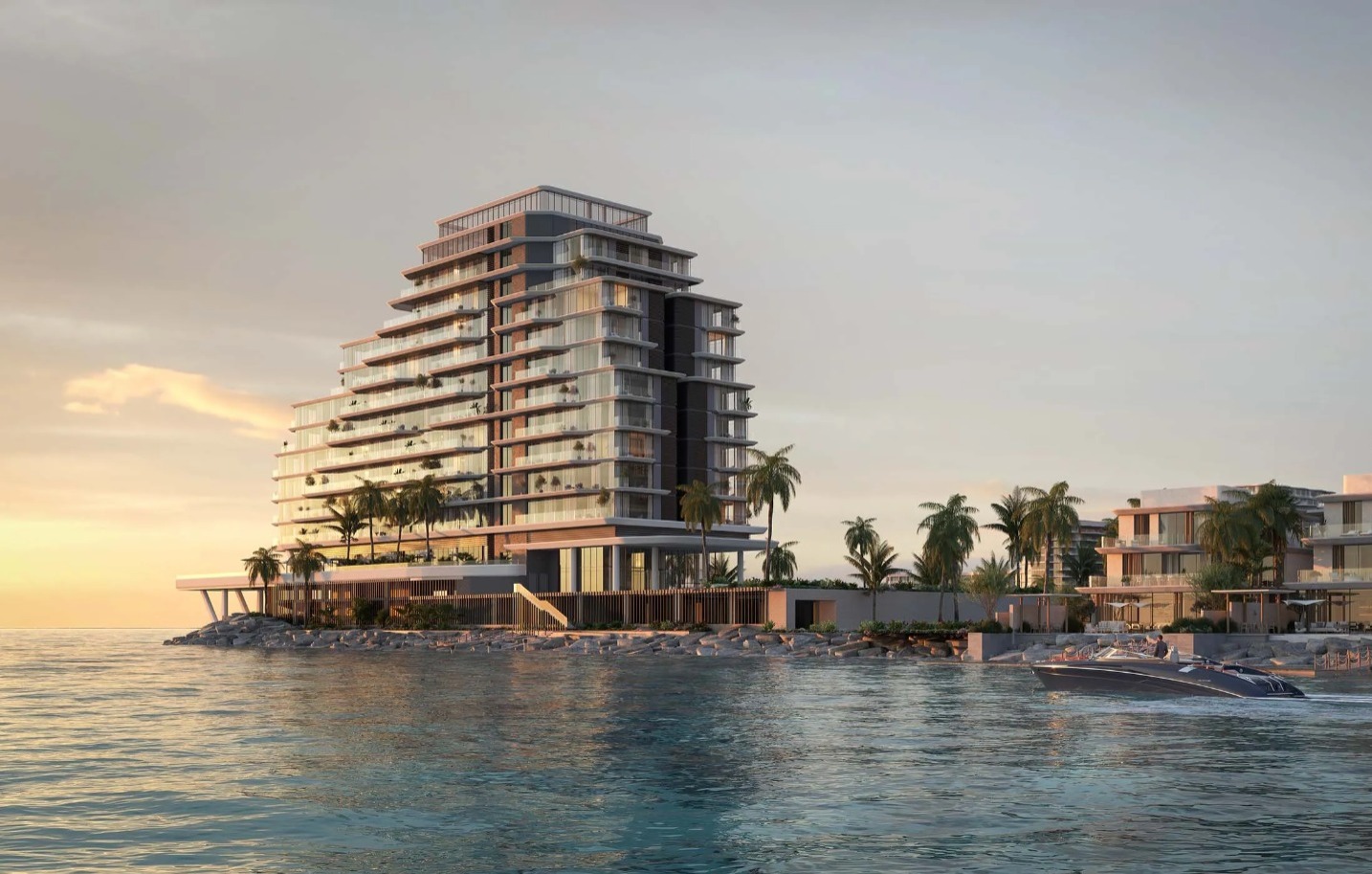
20/80 Payment Plan: 10% on booking, 10% after three months — nothing until completion
1–3 Bedroom Luxury Apartments, Townhouses and Villas
- 1 Bed (824 sq.ft) — AED 1.6 M
- Anantara-branded 1 Bed (1,100 sq.ft, full sea view) — AED 3.2 M
Direct from RAK Properties — Government Developer
Limited availability and exceptional entry pricing make this offer compelling for both end-users and investors seeking resort-style assets with strong rental appeal.
The flexible plan reduces up-front exposure and aligns payments with delivery, making it ideal for portfolio diversification outside core Dubai.
Contact me immediately to access full deal information and secure priority allocation.
In closing
Conclusion
The UAE economy is advancing on multiple fronts: technology integration, energy discipline, industrial diversification, and social infrastructure investment. For property investors, this represents a rare alignment of factors that support both yield and long-term capital growth.
Dubai’s real-estate market is not overheating; it is maturing. Liquidity remains strong, developers are more disciplined, and investor behaviour is becoming more strategic.
The opportunities now lie in curated selection — targeting communities, asset classes and developers that benefit from the structural themes of tech, talent and infrastructure.
If you’d like to review current opportunities in the Dubai property market, I’d be happy to share insights drawn from over 19 years of experience. With the right strategy, investors can capture both resilient yields and sustained capital strength in today’s evolving landscape.
📞 No pressure, no sales pitch—just a focused, informed conversation about your investment goals. Let’s talk.
Next step
Talk to Mitchells
Tell us what you are weighing up — a building, a project, an area, or a rule you need to get right — and we will come back with the specifics that apply to it.
Published 7 November 2025 by Stephen James Mitchell MBA. Market figures quoted reflect the data available at that date.