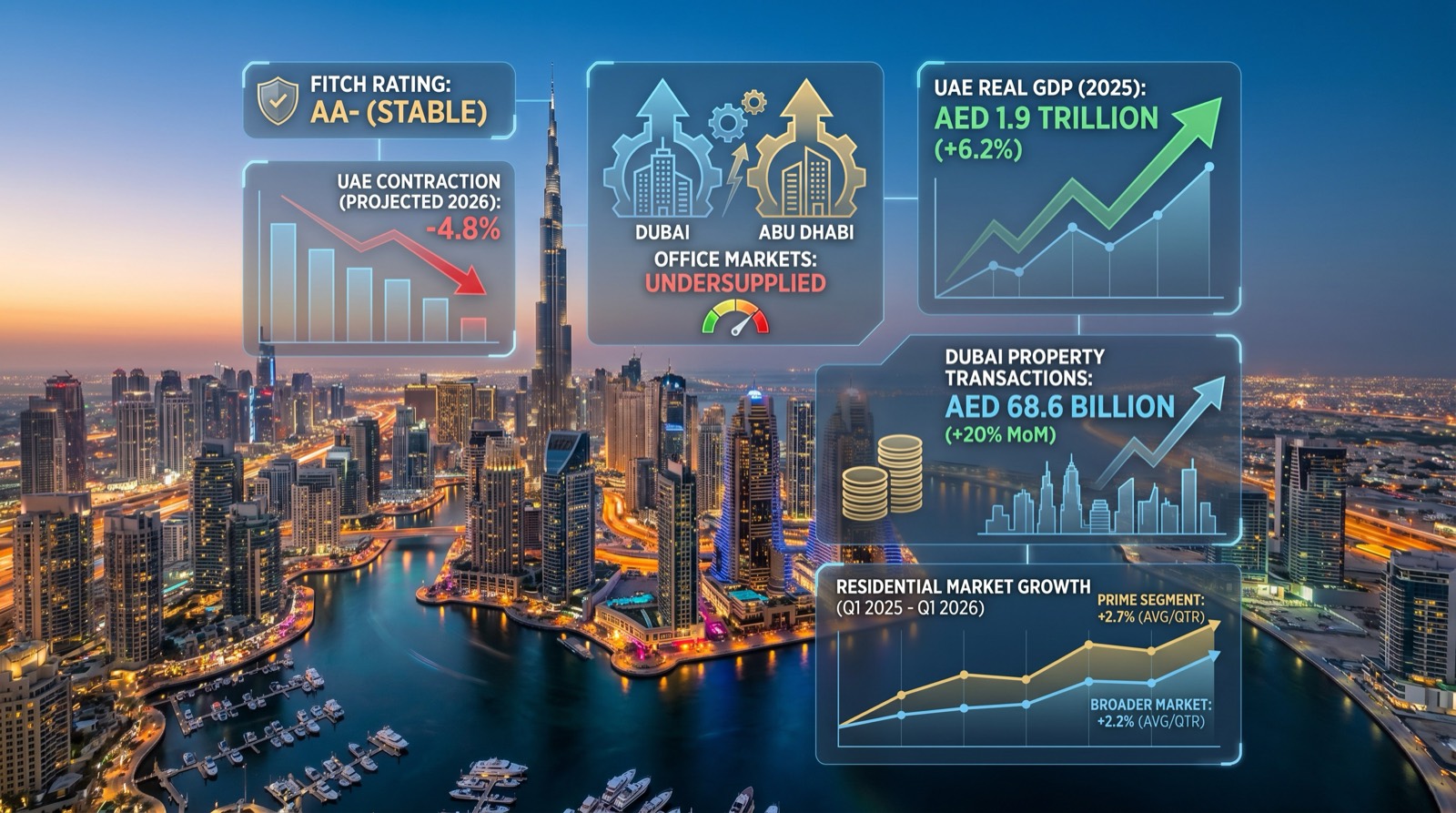
It was a week of mixed signals. Fitch reaffirmed the UAE's AA- credit rating with a stable outlook and projected a 4.8% UAE contraction for 2026, with Dubai down around 7% under its war-impact base case.
Meanwhile, official figures for 2025 were finalised at +6.2% real GDP growth — the base from which 2026's softer trajectory begins.
On the ground, the market continues to tell a different story. Office rents are rising, prime residential property is outperforming, and capital is steadily moving into infrastructure projects.
If you’re reassessing your positioning in this market, I can show you where risk-adjusted opportunities are emerging. Click here to speak with me directly.
UAE 2025 GDP Grows 6.2% to AED 1.9 Trillion
The Federal Competitiveness and Statistics Centre reported UAE real GDP grew 6.2% in 2025 to AED 1.9 trillion, with non-oil GDP up 6.8% to AED 1.5 trillion. Construction led at +11.1%, followed by financial and insurance (+10.4%), real estate (+7.9%), and transport and storage (+7.8%).
These are settled 2025 numbers, not forecasts. They confirm the base from which 2026's softer trajectory begins, and show the real estate sector's underlying contribution to national output before any war-related drag was priced in.
Fitch Reaffirms UAE at AA- with Stable Outlook — but Cuts 2026 GDP
Fitch reaffirmed the UAE's sovereign credit rating at AA- with a stable outlook, citing low consolidated government debt, a strong net external asset position, and high GDP per capita.
Abu Dhabi's sovereign foreign assets were estimated at 164% of UAE GDP in 2025 — among the strongest globally — and Central Bank foreign reserves stood at USD 277 billion in March 2026.
The same report lowered the 2026 outlook: Fitch projects UAE real GDP to contract 4.8%, with a 3.2% non-oil decline and a near 7% contraction in Dubai's economy under its base case, as tourism, investment, and expatriate inflows slow.
The fiscal surplus is still forecast at 4.5% of GDP; consolidated debt rises to 27%, well below the AA-category median of 50.3%.
The UAE's fiscal strength remains exceptionally strong, but investors should still price Dubai-specific GDP weakness into their 2026 underwriting assumptions for tenant demand, occupancy, and rental growth.
Dubai and Abu Dhabi Office Markets Remain Critically Undersupplied

JLL's Q1 2026 report showed office markets in both Dubai and Abu Dhabi remain undersupplied, but for different reasons. In Dubai, rental growth is being driven by occupiers moving into Grade B buildings as Grade A space becomes increasingly unavailable.
In Abu Dhabi, demand remains concentrated in Prime assets, where vacancy is now close to zero.
| Metric | Dubai | Abu Dhabi |
|---|---|---|
| Prime office rent growth (YoY) | +17.2% | +11.7% |
| Grade A rent growth (YoY) | +19% | +5.1% |
| Grade B rent growth (YoY) | +23.4% | +4.2% |
| Citywide office vacancy | 7.3% | 1.4% |
| Prime office vacancy | 0.7% | 0.1% |
| Retail vacancy | 4.8% | 8.9% |
Dubai office contract registrations fell 7.7% year-on-year, while new contracts in March were down 20.6% compared to February. However, lease renewals increased 11.2% over the same period, indicating that existing occupiers are choosing to remain in place rather than relocate.
Dubai's super-regional malls also continued to perform strongly, with rents rising 12.4% year-on-year.
In Abu Dhabi, prime super-regional mall rents remained stable at AED 5,524 (USD 1,504) per sqm.
For investors allocating capital across both emirates, the longer-term trend remains unchanged. Commercial capital is likely to continue favouring Abu Dhabi while prime office space remains effectively unavailable.
In Dubai, the rise in lease renewals is a more important signal than the slowdown in new contracts, particularly for investors focused on income-producing office assets.
Explore curated office and retail opportunities at Mitchell’s Commercial Realty.
Dubai Property Transactions Rebound to AED 68.6 Billion as Luxury Demand Holds Firm
Elite Merit Real Estate's April analysis showed Dubai property transactions reached AED 68.6 billion (USD 18.6 billion), up 20% month-on-month.
Mortgage activity increased 33.5% to AED 14.5 billion, while cash sales rose 13.5% to AED 48.3 billion. The AED 10 million-plus luxury segment recorded 995 transactions, with Palm Jebel Ali and Aman Residences among the key drivers of activity.
Performance varied across market segments. Mid-market locations such as Jumeirah Golf Estates apartments and Dubai South continued to gain momentum, with prices rising 5.7% and 2.64% respectively, month-on-month.
At the ultra-prime end, Emirates Hills and Jumeirah Bay Island recorded declines of 15.43% and 8.30%. However, the data points more toward ongoing price discovery in a thinly traded market than signs of distress.
Prime Residential Continues to Outperform the Wider Market

Data from eXp Realty Dubai shows the broader residential market grew by an average of 2.2% per quarter between Q1 2025 and Q1 2026, while the prime segment delivered stronger average quarterly growth of 2.7%.
The divide between villas and apartments now appears firmly established. ValuStrat's price index places villas at 301.5, compared with 171.6 for apartments.
Older freehold villa communities are approximately 196% above post-pandemic levels and 80% above their 2014 peak. Apartments, by comparison, remain 72% above post-pandemic levels but are still 6% below their previous peak.
At the ultra-prime end of the market, Q1 2026 recorded 16 transactions above AED 30 million, including four above AED 50 million, concentrated in Palm Jumeirah, Dubai Hills Estate, and DIFC.
The premium attached to villas is no longer being driven solely by the cycle; it is increasingly being reflected in long-term valuations.
AED 280 Million Villa Sale Reinforces Demand at the Ultra-Prime End
Dubai Sotheby's completed the sale of Villa Gaia, a beachfront mansion on Jumeirah Bay, for AED 280 million (USD 76 million), making it one of the highest-value ready-built villa resales recorded in Q2 2026. The six-bedroom property comprises 21,884 sq ft of built-up area on a 24,002 sq ft beachfront plot.
When viewed alongside last week's AED 377 million Naïa Island land transaction, a consistent pattern emerges.
Both ultra-prime ready homes and premium waterfront land continue to transact at top-tier prices despite the current uncertainty.
At this end of the market, buyers appear to be using periods of volatility to acquire scarce assets that seldom come to market.
Government Infrastructure Investment Remains a Key Growth Driver
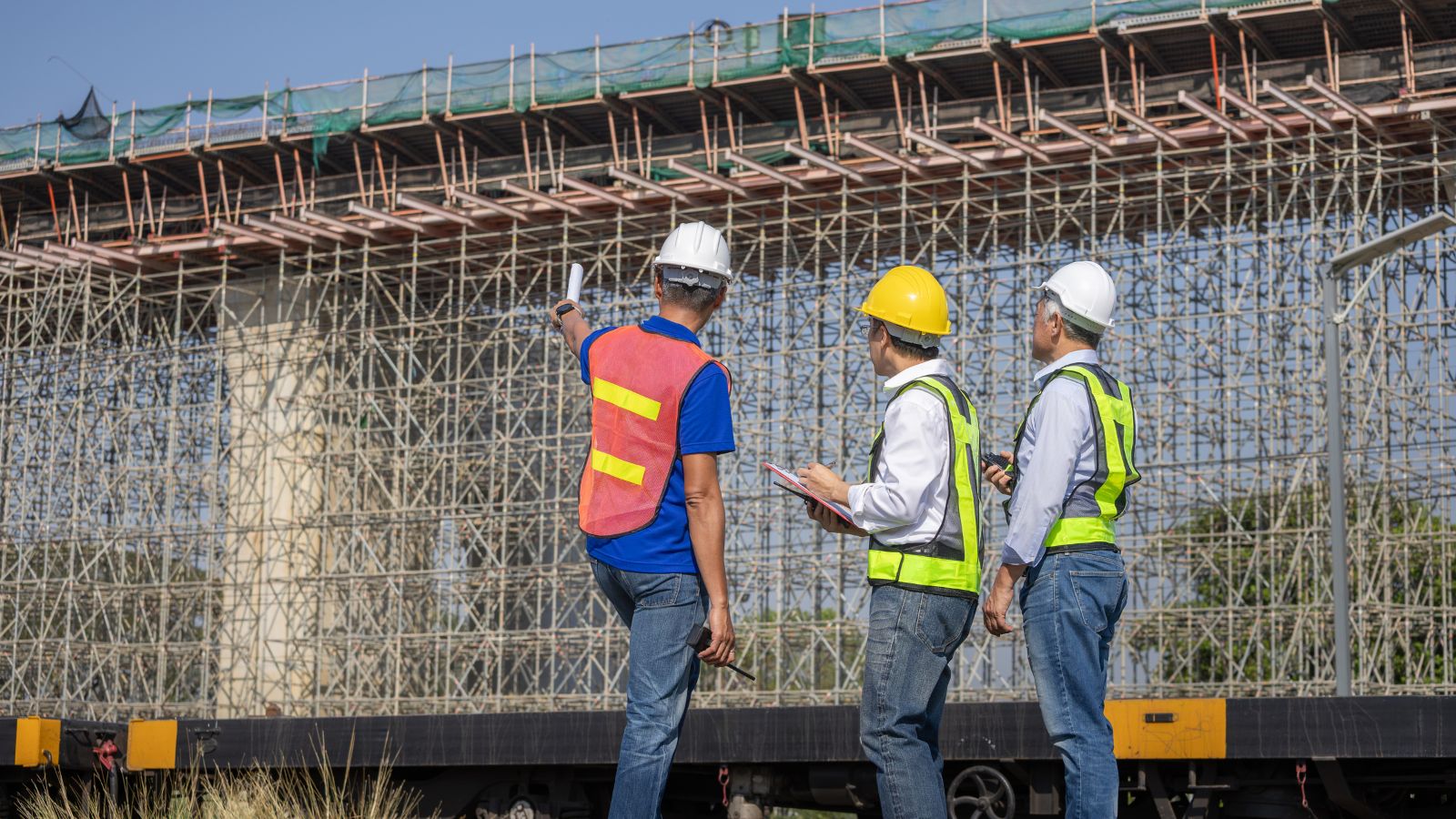
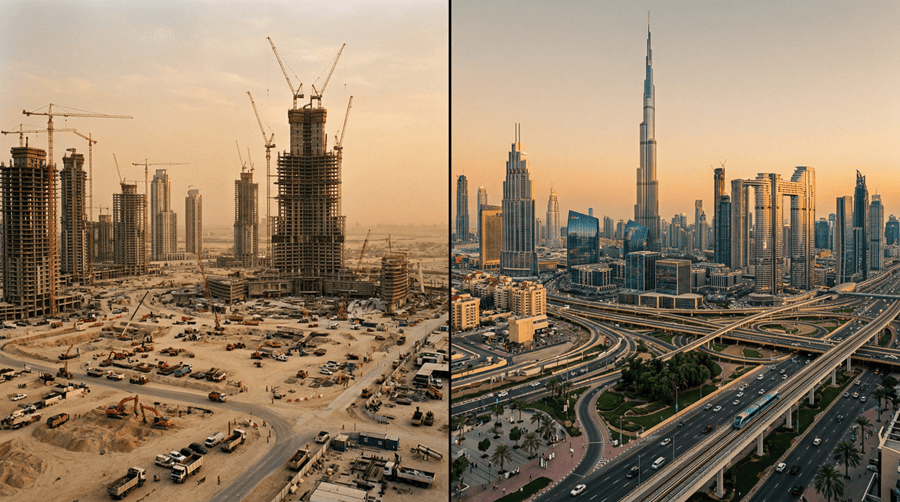
The UAE construction sector is becoming increasingly driven by government-led infrastructure projects rather than private-sector real estate development.
Innovo Group, which currently has a project backlog of approximately AED 30 billion (USD 8.2 billion), reported no cancellations across its 30-plus active sites.
The strength of the public-sector pipeline helps explain why. Abu Dhabi has launched AED 55 billion of PPP projects across 24 transport and infrastructure schemes, DIFC's expansion programme is valued at AED 100 billion, Dubai Silicon Oasis has announced AED 12.8 billion of expansion works, and Dubai's Tasreef stormwater programme has already awarded AED 2.5 billion in initial contracts across 30 areas.
For property investors, this provides an important source of stability. Government infrastructure spending continues irrespective of fluctuations in off-plan launch activity, supporting contractor workloads, employment levels, and ultimately the long-term value of land located within established and future serviced corridors.
Final View for Dubai Property Investors
Taken together, the data paints a more nuanced picture than either the headline GDP forecasts or the property statistics suggest on their own. 2025 closed at +6.2% with the AA- rating reaffirmed, and Fitch is projecting a -4.8% UAE contraction for 2026 and around -7% for Dubai.
At the same time, Dubai Grade B office rents are up 23.4%, Abu Dhabi prime office vacancy stands at just 0.1%, April transactions rebounded to AED 68.6 billion, and villa values remain 80% above their 2014 peak. Government capital is also continuing to rotate into infrastructure rather than pulling back.
The base looks strong enough to absorb a softer year, and the sectors that delivered the strongest performance through 2025 remain among the market's most resilient.
Next step
Let’s Talk
If you’d like to unpack where the most resilient opportunities are emerging — in stabilised residential areas or income-generating commercial zones — I’d be happy to share a focused, data-driven shortlist based on your investment goals.
📞 No pressure, no sales pitch—just a focused, informed conversation about your investment goals.
Published 1 June 2026 by Stephen James Mitchell MBA. Market figures quoted reflect the data available at that date.