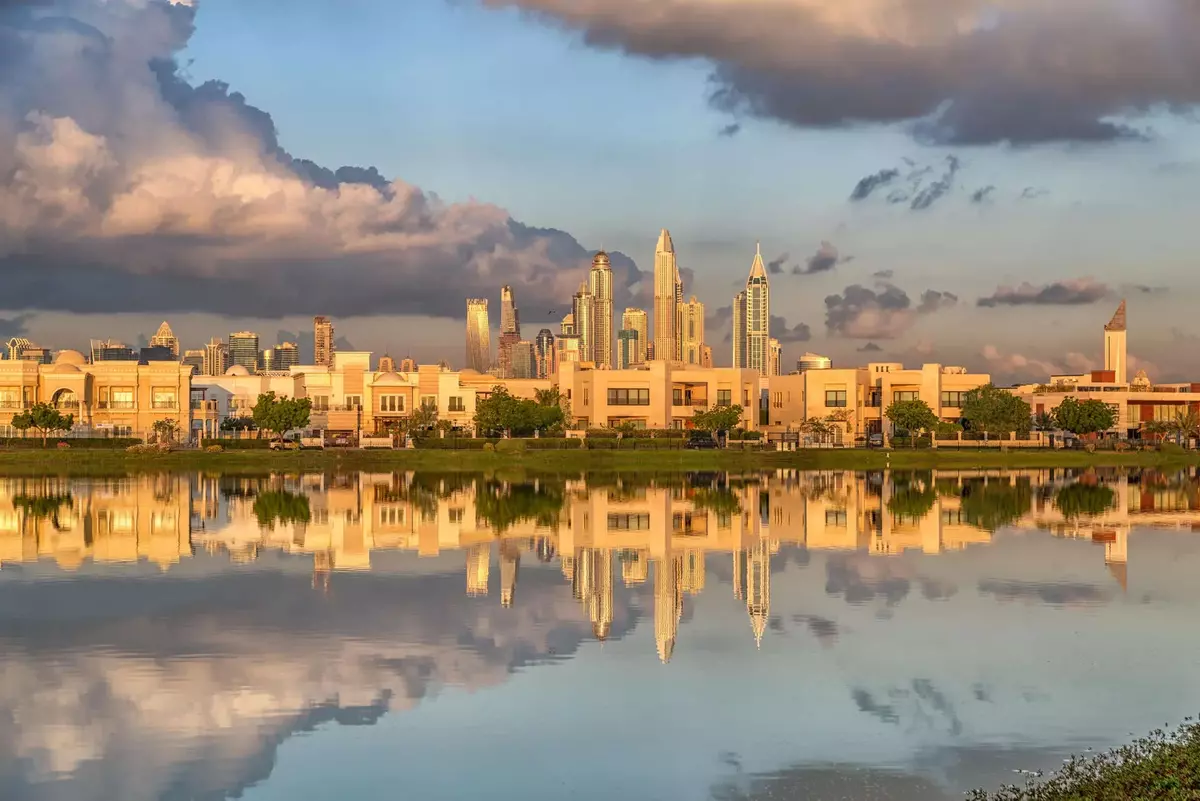
EMIRATES HILLS: DUBAI'S MOST EXCLUSIVE ULTRA-LUXURY VILLA ADDRESS
This is not a community that competes on price per square foot or rental yield. It competes on exclusivity, land rarity, and the kind of unquantifiable prestige that comes with decades of occupancy by some of the most influential individuals and families in the region. If Arabian Ranches set the standard for premium Dubai villa living, Emirates Hills sits an entire tier above — a place apart, in every sense of the word.
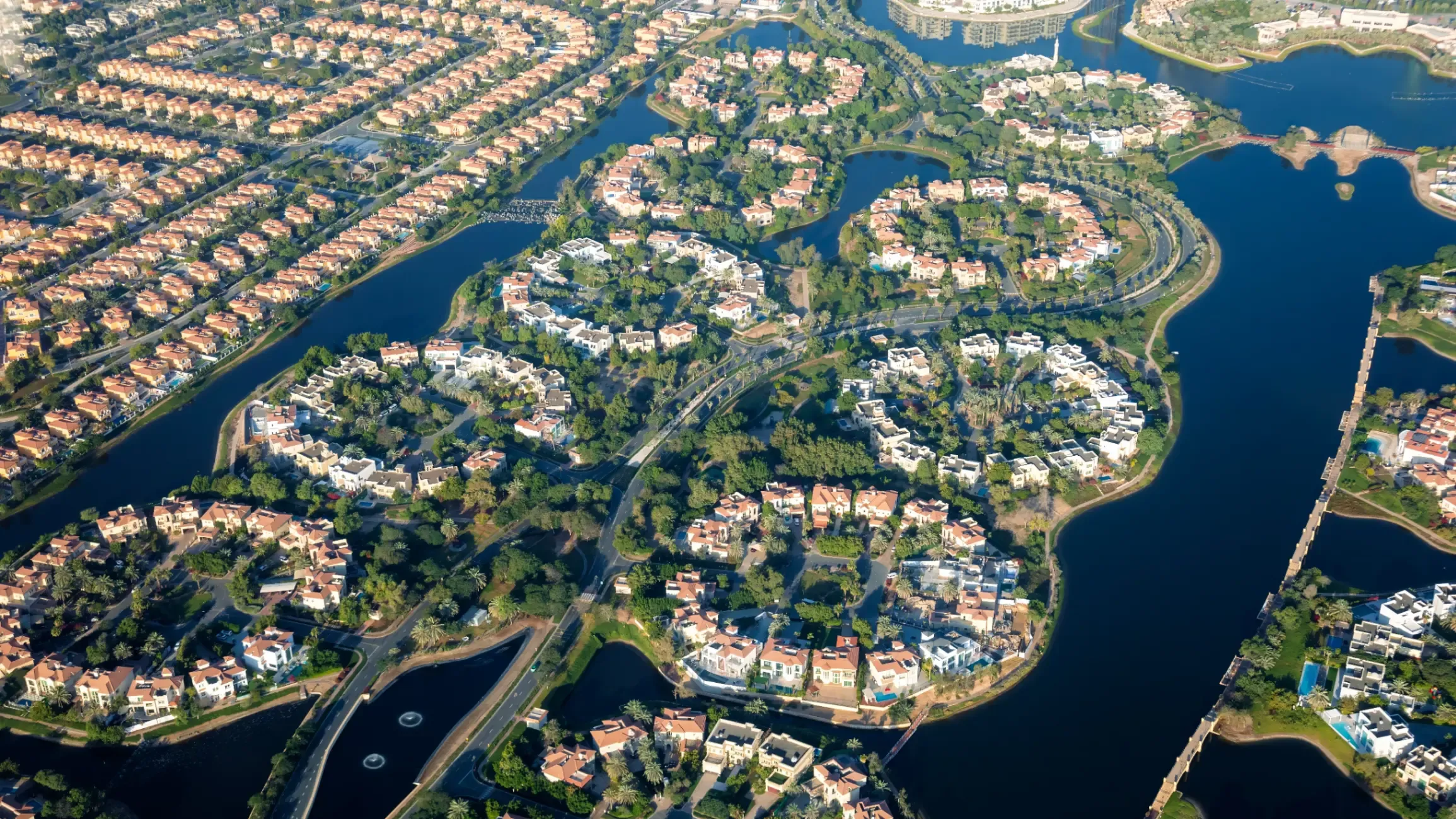
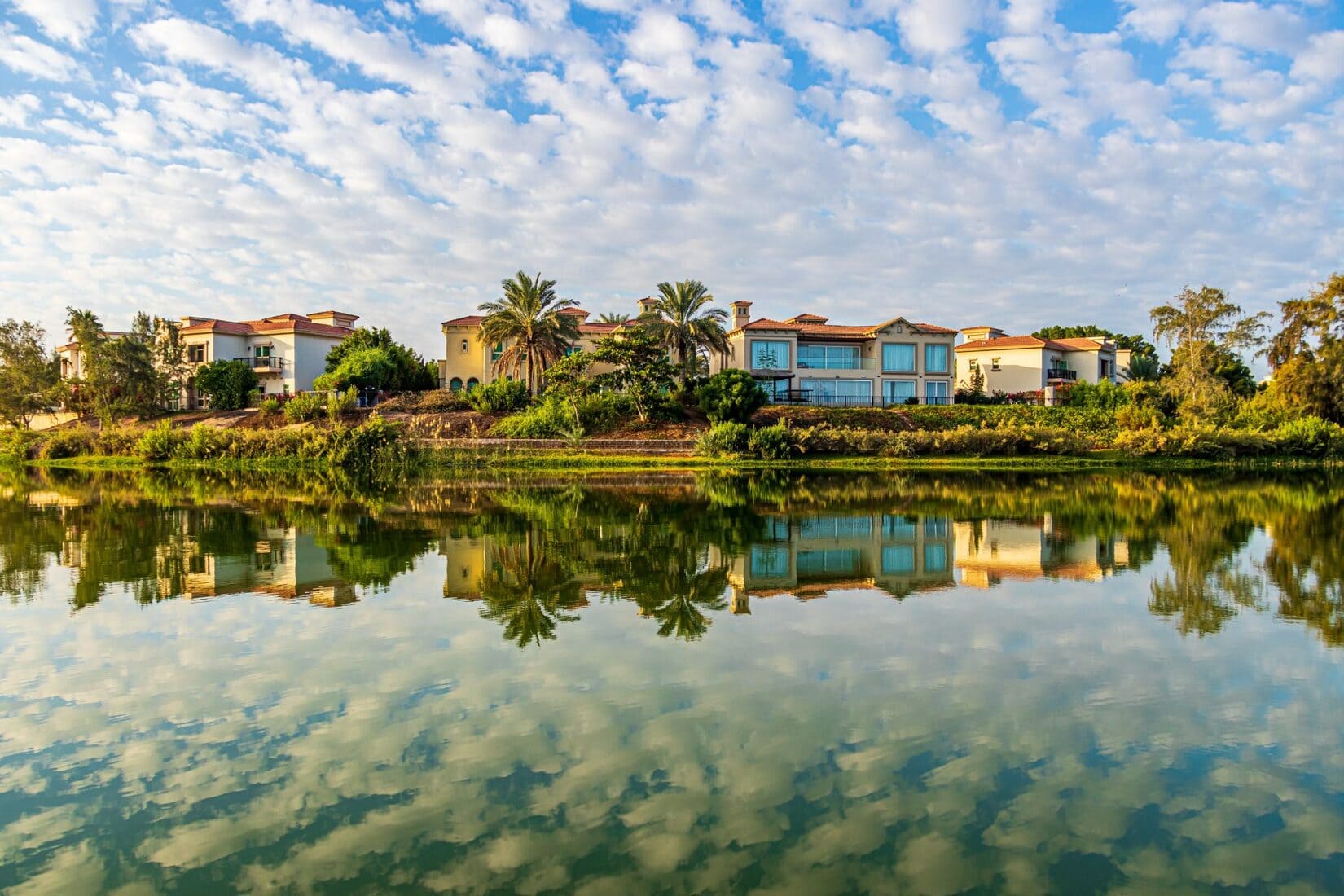
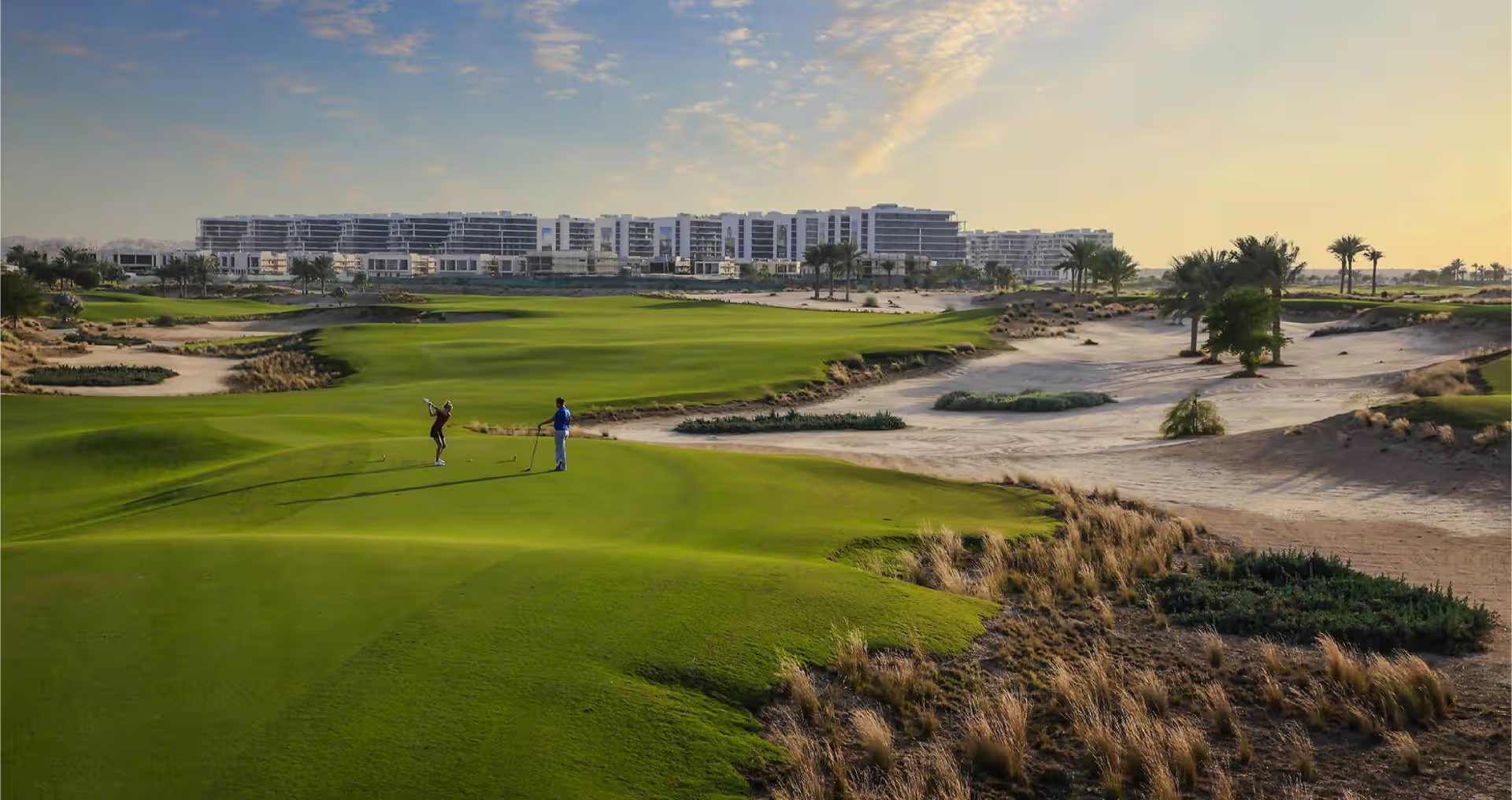
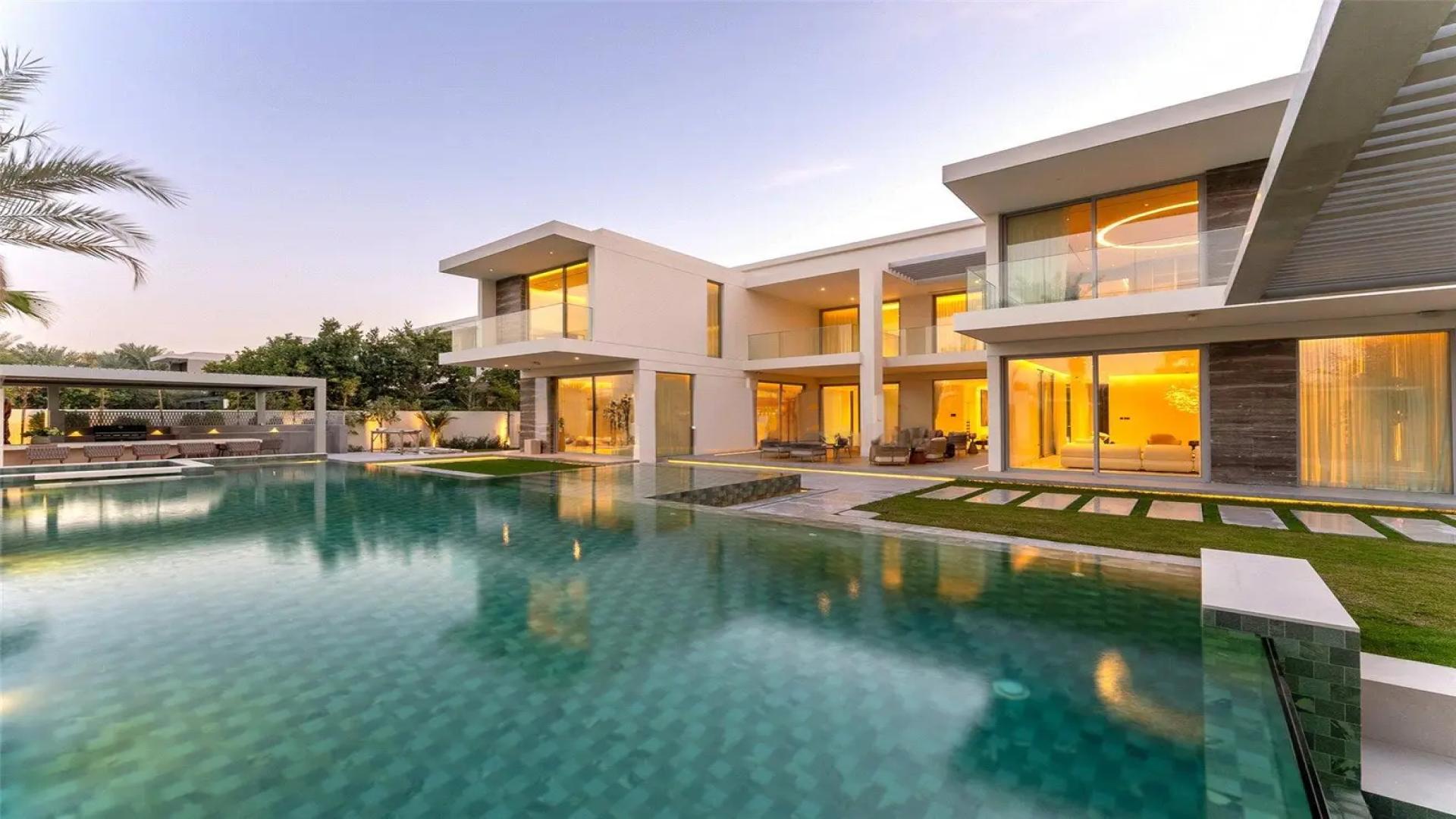
Emirates Hills was developed by Emaar as a freehold enclave of custom-built ultra-luxury villas surrounding the Montgomerie Golf Club, with plots ranging from around 8,000 to over 50,000 square feet. The community was designed from the outset for maximum privacy and minimum density, with Emaar controlling the planning parameters strictly enough to ensure that no two villas look identical and that the overall community character remains cohesive despite individual custom builds. The golf course frontage plots are among the most coveted addresses in Dubai, offering uninterrupted fairway views combined with complete privacy from the street. Access is gated, monitored, and managed to an institutional standard.
The product here is singular — individual villas built to the specification of their original owners, typically delivered over the period from the late 1990s through the early 2010s, with the majority of the original stock now trading on the secondary market. There is no standardised product, no tower of apartments, and no developer bulk discount. Each transaction is a negotiation between private parties for a unique, often bespoke asset. This is what makes Emirates Hills simultaneously one of the most fascinating and most challenging markets to navigate as an advisor. Pricing is opaque, comparable transactions are few, and value is ultimately determined by a combination of plot size, build quality, location within the community, and the motivations of specific buyers and sellers at a given moment.
The capital growth trajectory in Emirates Hills has been exceptional over the long term, with the 2020 to 2024 cycle delivering appreciation that surprised even the most optimistic long-term holders. The global ultra-high-net-worth migration trends that benefited Dubai during this period hit Emirates Hills with particular force, as the community's proximity to the International School, short travel to the Marina and JLT employment nodes, and absolute land scarcity created a demand-supply imbalance that drove values materially higher. Whether that momentum can be sustained at the same pace is a more cautious conversation, but the structural argument for Emirates Hills as a long-term capital store remains among the strongest in Dubai real estate.
In the sections that follow, I will examine Emirates Hills' infrastructure and location advantages, the nature of the ultra-luxury rental and ownership market that defines this community, the supply dynamics that make this one of the most supply-constrained addresses in the city, and the investment strategy framework I apply when working with clients considering the entry ticket that Emirates Hills demands. This is a guide for serious capital, and I have written it with that context in mind.
EMIRATES HILLS: MARKET ANALYSIS AND INVESTMENT DYNAMICS
INFRASTRUCTURE AND CONNECTIVITY
Emirates Hills sits within one of Dubai's most strategically connected ultra-luxury zones. The community borders the Montgomerie Golf Club — one of the UAE's most prestigious courses — and its residents enjoy immediate proximity to Sheikh Zayed Road, the primary arterial route linking Dubai's business districts. The nearby Mall of the Emirates, American School of Dubai, and Emirates International School place this community within one of the city's most self-sufficient premium corridors. Jumeirah Islands and The Lakes are adjacent, reinforcing the enclave's position as a well-established, institutional-grade residential precinct. Internal road infrastructure is maintained to a private estate standard, with 24-hour manned gating and access control that few communities in Dubai can match. For buyers who prioritise both exclusivity and practical urban access, Emirates Hills delivers both without compromise.
RENTAL MARKET AND TENANT PROFILE
The rental market in Emirates Hills operates at an entirely different register from the rest of Dubai. Tenants here are not renters in the conventional sense — they are typically UHNW individuals, senior corporate executives, regional heads of multinationals, diplomats, and members of GCC royal families who require privacy, space, and prestige that no apartment building or townhouse community can provide. Lease terms are commonly two to three years, and void rates are exceptionally low given the scarcity of available villas. Annual rents for large lakeside villas have historically ranged from AED 800,000 to over AED 2 million depending on plot size, build quality, and lake frontage. Rental yield for investors is modest — typically 2 to 4 per cent gross — but that is by design. Emirates Hills is not a yield play. It is a capital preservation and trophy-asset strategy, where the tenant calibre and lease stability provide confidence rather than cash flow.
SUPPLY DYNAMICS AND PORTFOLIO POSITIONING
Emirates Hills is fully delivered with no new supply possible. The community comprises approximately 600 individually designed villas across a fixed land area, and every plot has been sold and built upon. This absolute supply constraint is one of the most compelling structural arguments for the community as a long-term capital store. Unlike any new-build master-planned community, there is no developer releasing inventory, no off-plan competition, and no new launches diluting the secondary market. Every transaction is a private negotiation between a sophisticated seller and a motivated buyer — pricing is opaque, illiquid, and driven almost entirely by individual villa characteristics. This means that when demand recovers or expands, prices can move sharply upward with very limited supply to absorb that demand. For portfolio investors allocating capital to Dubai, Emirates Hills represents the scarcity component — a finite, irreplaceable asset class in a city that is otherwise characterised by high and growing supply.
EMIRATES HILLS: INVESTMENT STRATEGY AND ENTRY POINTS
When I advise clients on Emirates Hills, I frame it clearly: this is not a market you enter for yield optimisation or short-term flipping. The entry ticket is substantial — typically AED 15 million to AED 60 million or more for the most sought-after lakeside plots — and the holding period needs to align with the illiquid nature of the market. The best entry point is a villa that has been well-maintained or recently renovated, positioned on a golf or lake frontage plot, in a part of the community with strong internal demand. Buyers who try to purchase on a value basis — acquiring distressed or poorly built stock — often find that the exit is harder than the entry. Quality, condition, and plot position are the decisive variables.
The capital growth story for Emirates Hills is driven entirely by scarcity and global wealth migration. As Dubai continues to attract ultra-high-net-worth families, business founders, and international executives seeking long-term residency, the pool of buyers for Emirates Hills product is expanding while supply remains fixed. Every new generation of UHNW wealth that relocates to Dubai encounters the same constraint: there are approximately 600 villas, very few are ever for sale at any given time, and the most desirable ones almost never come to market. That structural dynamic has historically produced strong capital appreciation over medium to long holding periods. The risk is that the illiquid nature of the market means periods of price softness can be extended — this is a market that rewards patience.
A complementary diversification strategy is to pair an Emirates Hills position with Tier 2 Yield & Volume income assets in The Springs, The Meadows or Jumeirah Park, and a Tier 3 Growth apartment in Dubai South, Dubai Creek Harbour or Expo City. Emirates Hills provides the trophy-capital Tier 1 leg of a three-tier Dubai portfolio, with the Tier 2 villa supplementing cashflow from the same Emirates Living corridor and the Tier 3 leg providing long-duration growth upside. For investors seeking alternative ultra-premium Tier 1 exposure, Palm Jumeirah Frond villas and District One Mansions offer different lifestyle characters at similar capital commitment scale.
If you are considering Emirates Hills, the key is not deciding whether the area works — it clearly does, for the right buyer. The question is whether it works for your specific capital objectives, timeline, and risk tolerance. Emirates Hills demands patient capital, sophisticated market knowledge, and access to the right advisory network. Transactions here are rarely advertised publicly; the best opportunities move through trusted relationships. If your objective is capital preservation with selective long-term appreciation, and you have the liquidity to hold through market cycles, there are very few addresses in the UAE that compare, typically suiting portfolios at the AED 15,000,000–60,000,000 capital commitment level.
SUPPLY DYNAMICS
Emaar single developer, ~600 custom villas fully delivered, zero new supply, extremely scarce resale
TENANT PROFILE
UHNW individuals, senior executives, GCC royalty, diplomats on 2-3 year trophy leases
KEY RISK FACTORS
Illiquid market, opaque pricing, very high entry capital, low yield, extended holding required
KEY INFRASTRUCTURE
Emirates Hills sits along Sheikh Zayed Road (E11) within the broader Emirates Living corridor, with arterial access to Dubai Marina, JLT, DIFC, Downtown Dubai and Al Barsha via Hessa Street (D61) and Al Khail Road (E44). The community is internally anchored by the Montgomerie Golf Club (one of the UAE's most prestigious 18-hole courses), Address Montgomerie hotel, landscaped lakes and fairway frontage plots, 24-hour manned gated security, private estate-grade internal road network, landscaped green corridors and individual custom villa architecture across approximately 600 plots. Nearby external anchors include Emirates Golf Club, Montgomerie Golf Club, Mall of the Emirates, Dubai Internet City, Dubai Marina Mall, American School of Dubai and Emirates International School. Adjacent communities include The Meadows, The Lakes, The Springs and Jumeirah Islands, reinforcing Emirates Hills' positioning as Dubai's flagship ultra-luxury villa enclave within Emirates Living. No direct metro; nearest station DMCC on the Red Line.
Area fundamentals
- ASSET PROFILE
- Emaar ultra-luxury trophy enclave; capital store
- INVESTOR PROFILE
- UHNW trophy asset buyer + capital preservation
- TIER
- Tier 1 – Core Capital
- MARKET TYPE
- Ultra-luxury, gated villas, custom-built estate
- EST. POPULATION
- ~3,000–4,000
- LAND SIZE
- ~64.6m sq ft
Next step
Request a briefing
You will get Emirates Hills as a brief: the buildings on this page, the register readings behind them, and our view on each.