Palm Jumeirah AED 3,559/sqftDubai Maritime City AED 3,152/sqftDowntown Dubai AED 2,883/sqftDubai Islands AED 2,774/sqftDubai Creek Harbour AED 2,563/sqftBusiness Bay AED 2,500/sqftDubai Marina AED 2,481/sqftDubai Hills Estate AED 2,459/sqftJumeirah Lakes Towers AED 2,321/sqftMohammed Bin Rashid City AED 2,098/sqftAl Jaddaf AED 2,051/sqftJumeirah Village Triangle AED 1,658/sqftDubai South AED 1,652/sqftArjan AED 1,584/sqftJumeirah Village Circle AED 1,487/sqftDubai Sports City AED 1,328/sqftALL DLD SALES · OFF-PLAN + EXISTINGPalm Jumeirah AED 3,559/sqftDubai Maritime City AED 3,152/sqftDowntown Dubai AED 2,883/sqftDubai Islands AED 2,774/sqftDubai Creek Harbour AED 2,563/sqftBusiness Bay AED 2,500/sqftDubai Marina AED 2,481/sqftDubai Hills Estate AED 2,459/sqftJumeirah Lakes Towers AED 2,321/sqftMohammed Bin Rashid City AED 2,098/sqftAl Jaddaf AED 2,051/sqftJumeirah Village Triangle AED 1,658/sqftDubai South AED 1,652/sqftArjan AED 1,584/sqftJumeirah Village Circle AED 1,487/sqftDubai Sports City AED 1,328/sqftALL DLD SALES · OFF-PLAN + EXISTING
DLD · MEDIAN 12M TO OCT 2026
Area guide · Dubai
Downtown Dubai Investment Guide
When I sit down with investors who are evaluating Downtown Dubai for the first time, the conversation usually begins with an acknowledgment that this is not an affordable entry point.
8 min read3,200 views
I want to
Budget
Answer the two questions and this page reorders itself around them. Nothing is sent until you ask for something.
Sales prices
2,883AED/sqft
Median price, whole register
DLD register — median of 2,517 sales in the twelve months to 25 October 2026. Pools off-plan registrations with sales of completed property, every property type. Across the register 69.1% of those rows are off-plan registrations and 30.9% sales of completed property.
1,200–2,000AED/sqft, 2004
Launch price
Developer launch pricing when the community came to market, from this guide. Historic — not a current valuation.
A building can sit well under the area figure. Tell us which one you have in mind and we will read its own register history back to you.
Rental rates
AED 147,000a year
Median annual rent
Ejari — 16,986 registered contracts in the 24 months to 1 October 2026. the Burj Khalifa sector.
AED 135.4per sq ft a year
Median rent per sq ft
Same contracts, same window.
~4–6%
Gross yield band
Mitchell’s own range for Downtown Dubai, from this guide — an assessment, not a register figure.
The register gives one rent figure for the area. What a specific building lets for, and how quickly, is the question worth asking before you buy for income.
Ready buildings with recent sales
Median registered price per bedroom type. Hotel rooms and serviced units are left out where the register marks them.
Il PRIMO Emaar Development P.J.S.C. · completed 2022 · 14 registered sales
Studio
AED 2.25m
553
4,066
1
4 bed
AED 29.25m
5,300
5,583
10
5 bed
AED 54.5m
11,333
4,809
3
DLD register — sales of units registered 28 April 2025 to 24 October 2026, duplicates removed. The sale count is the building’s registered sales of completed property.
How this table is built
Buildings with ten or more registered sales of completed property in the window are listed by default; the rest are behind “Show all buildings”. Hotel rooms and serviced units are left out where the register marks them. “Completed property” is the register’s own registration type, which does not separate an owner’s resale from a developer’s first sale of a finished unit, so neither do we. Bedroom medians are over the building’s registered sales in the window and are shown only where at least five sales of that type. AED/sqft on a row is the register’s median rate for that type, or median price over median size where it publishes none.
Two towers in the same block can sit points apart on net yield once service charges and occupancy are counted. Name the buildings and we will tell you which side of that line each one sits.
Under construction now
Projects the register records as under construction here, with the registered sales behind each figure; a project with fewer than ten is marked as a small sample. Hotel rooms and serviced units are left out where the register marks them.
Project
Complete
Median AED/sqft
Sales
Median price by unit
Binghatti Skyblade Binghatti Developers FZE · register end date Nov 2027
17.1% at 21 Apr 2026
3,835
387
Studio AED 1.8m · 1 bed AED 3.73m · 2 bed AED 4.88m · 3 bed AED 13.2m (4 sales) +1.1% Q4 2025 → Q1 2026
DLD project register (completion percentage as read on the date shown) and transaction register — sales of units registered 28 April 2025 to 24 October 2026, duplicates removed.
How this table is built
Completion percentage is the register’s own, read on the date shown against each project. The median is over the project’s registered sales in the window and is published only from ten sales; quarterly movement only where each quarter holds twenty or more. Hotel rooms and serviced units are left out where the register marks them.
Completion percentage and the register’s own median are the two numbers a payment plan should be read against.
Developments here
Emaar · ~15,000+ units · launched 2004
Downtown Dubai
The developer, the launch date and the unit count are this guide’s own, as captured.
What a development here is worth today is a register question, and we will read it back to you building by building.
Mitchell’s deal pages, as published. Asking prices and the discount are stated on each deal’s own page with their basis; we act for the buyer on every one.
Each of these can be read against the register history of its own building before you commit.
Mitchell's project briefs, written from the developer's own material.
DOWNTOWN DUBAI: EMAAR'S ICONIC URBAN CORE
The area commands among the highest per square foot prices in the entire emirate. But the follow-up question I always ask is: what exactly are you measuring against? If you are benchmarking Downtown Dubai against mid-market communities on yield alone, you will always be disappointed. If you are measuring it against global prime urban districts — London's Mayfair, Singapore's Orchard, Manhattan's Midtown — then the valuation looks very different.
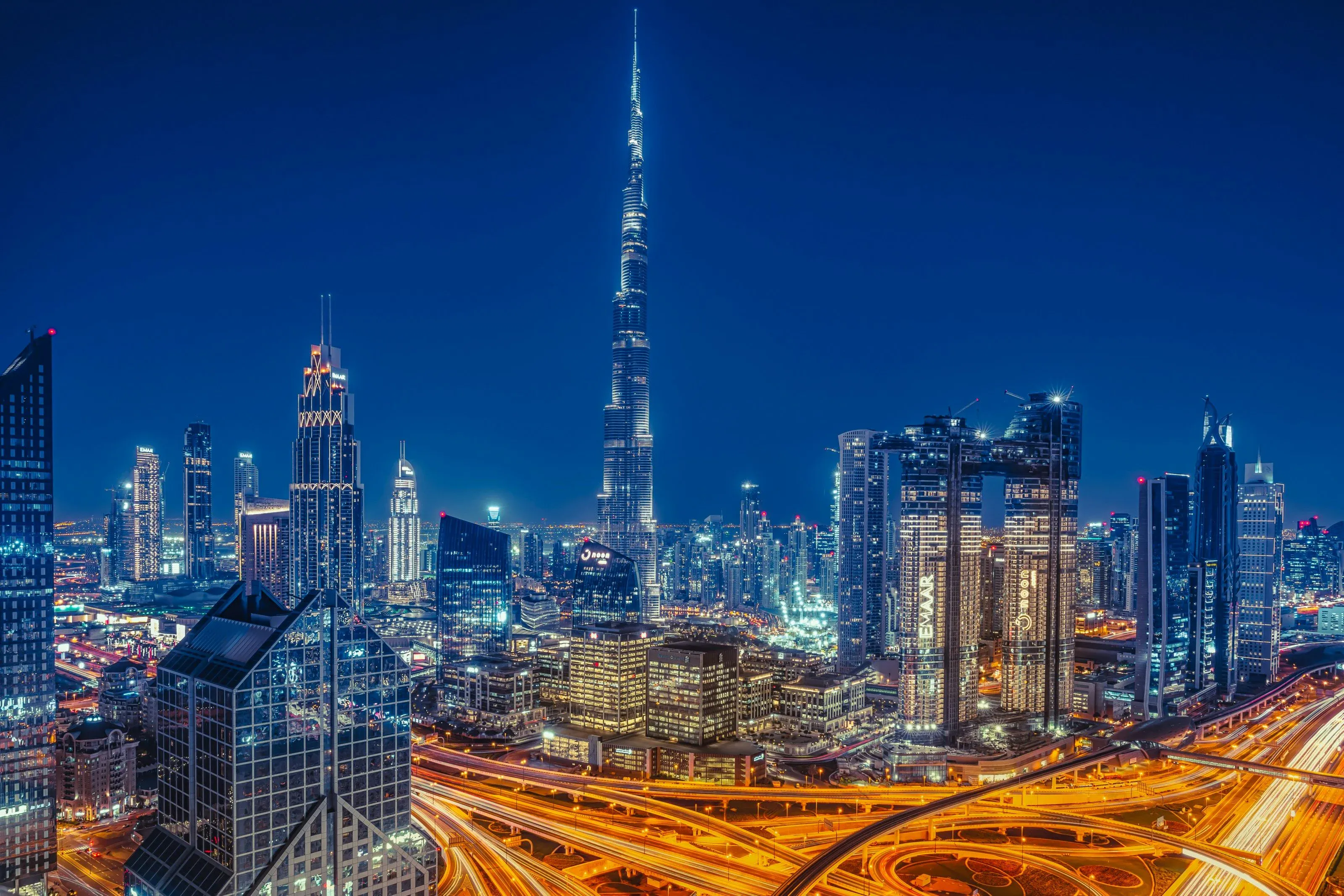
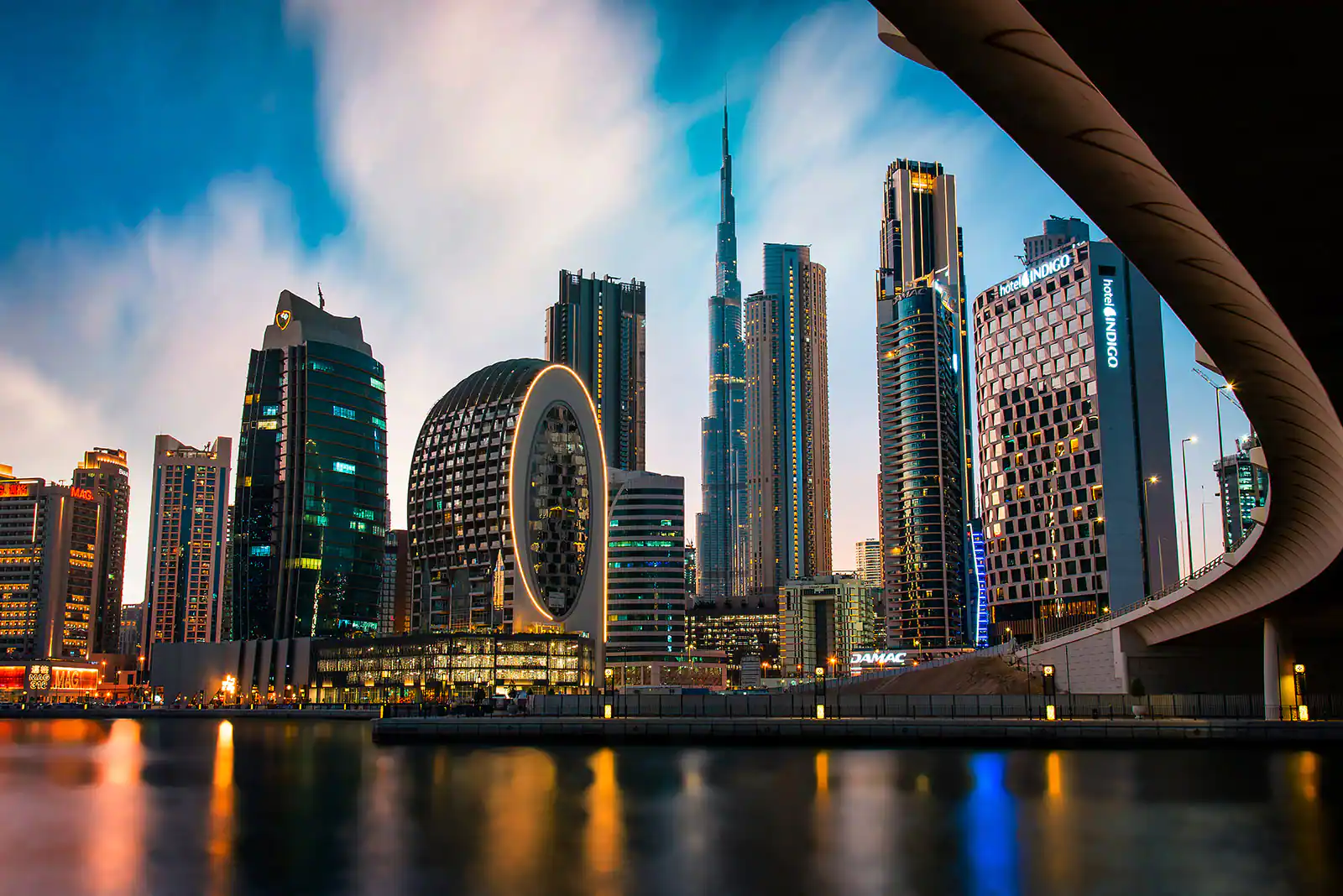
Downtown Dubai is Emaar's original urban vision — a 2.5 square kilometre district built around the Burj Khalifa, the world's tallest building, and the Dubai Mall, one of the world's largest retail destinations. The district launched in the early-to-mid 2000s and became the defining image of modern Dubai. Every international visitor recognises the skyline. Every global tenant understands the address. That brand recognition is not incidental — it is the primary asset underpinning the entire investment thesis in this area.
The residential product in Downtown Dubai spans everything from studio apartments in towers like Act One and Act Two, to 2 and 3-bedroom apartments in Boulevard Point and Burj Royale, to ultra-premium residences within Burj Khalifa itself. The unit sizes tend to be smaller than equivalent community-style apartments in areas like Dubai Hills Estate or Arabian Ranches, and the service charges are high. These are facts that buyers must account for in their yield calculations, because net yields in Downtown Dubai are consistently compressed relative to gross.
Pricing in Downtown Dubai has experienced several cycles. The original launch prices for Burj Khalifa residences and early Boulevard towers ranged widely, but as the district matured and global demand consolidated around this address, values have held firm through market downturns better than many comparable Dubai locations. This is a characteristic of trophy assets globally — they do not always deliver the highest yields or the fastest capital growth, but they tend to preserve value in a downturn because the demand base is diverse and deep.
The Address Residences segment deserves specific mention. These branded hotel-residence hybrids — at Address Downtown, Address Boulevard, Address Fountain Views and the newer Address Residences The Bay — carry a material price premium over standard Emaar product but pair that premium with professional management, concierge services, pool and gym access and direct hotel booking integration for short-stay rental. For investors who want passive income from a trophy address without operational complexity, the Address product line has become one of Downtown Dubai's most active segments in recent years.
In the sections that follow, I will walk through the infrastructure and lifestyle context, the rental market dynamics and tenant profile, and then the strategic positioning questions that determine whether Downtown Dubai belongs in your portfolio and, if so, at what entry price and product type.
DOWNTOWN DUBAI: MARKET ANALYSIS AND INVESTMENT DYNAMICS
INFRASTRUCTURE AND CONNECTIVITY
Downtown Dubai is served by two Dubai Metro stations — Burj Khalifa / Dubai Mall on the Red Line and Dubai Opera / Business Bay adjacent — making it one of the best-connected areas in the city for residents who do not drive. Sheikh Zayed Road and Financial Centre Road provide primary vehicular access. The district sits at the intersection of Old Dubai and the expanding Business Bay corridor, giving it centrality that few other communities can match. Burj Khalifa, Dubai Mall, Dubai Opera and the Dubai Fountain are all within walking distance of each residential tower in the district. The Address Hotels provide a hospitality anchor that reinforces the premium positioning, while Souk Al Bahar and the Boulevard promenade deliver lifestyle and retail infrastructure that functions as an extension of residents' living environment rather than a separate destination.
RENTAL MARKET AND TENANT PROFILE
The rental market in Downtown Dubai is dominated by high-income professionals and corporate tenants who prioritise the address and the lifestyle proximity over value for money. Senior finance and legal professionals, consultants on short-term engagements and international executives on assignment make up a large portion of the renter base. This translates to lower tenant turnover than many other Dubai communities, but also a higher expectation in terms of building management and service quality. Gross yields typically range from 4 to 6 per cent depending on unit type and tower, with smaller units generating higher percentage returns. The short-stay rental market adds another dimension — units with Fountain or Burj Khalifa views command significant premiums on holiday platforms, though regulatory changes and building-level restrictions on short-term lettings mean this strategy requires careful due diligence on a tower-by-tower basis.
SUPPLY DYNAMICS AND PORTFOLIO POSITIONING
The supply picture in Downtown Dubai is relatively constrained compared to many other Dubai communities. Emaar controls the masterplan and has been measured in releasing new residential phases. The most recent completions include Address Residences and a small number of Emaar premium product releases, but there is no large-scale wave of new supply that would materially disrupt existing values. The resale market tends to be more liquid than many believe because the buyer base is genuinely international and not dependent on one source market. This is a meaningful distinction in a city where some communities are heavily concentrated by one buyer nationality. For portfolio positioning, Downtown Dubai functions as a core capital anchor — the asset you hold for brand recognition, resale liquidity and capital preservation rather than for yield maximisation. It belongs in the Tier 1 sleeve of any diversified Dubai portfolio alongside Palm Jumeirah, Emirates Hills and Dubai Hills Estate.
DOWNTOWN DUBAI: INVESTMENT STRATEGY AND ENTRY POINTS
The entry point strategy in Downtown Dubai is primarily a question of product type. For investors seeking the most liquid and highest-yielding segment within the area, smaller units in well-managed towers such as Boulevard Heights, Act One and Act Two, or Burj Royale offer the best balance of yield, resale liquidity and tenant demand. Studios and 1-bedroom apartments with Fountain or Burj Khalifa views command a rent premium that partially offsets the higher purchase price. Service charges in these buildings are significant, and a thorough net yield calculation is essential before committing.
For capital preservation rather than yield maximisation, the upper tier of the Downtown Dubai market — large 2 and 3-bedroom apartments in Boulevard Point, Address Residences or Burj Khalifa itself — functions less like a yield investment and more like a global prime real estate holding. These units appreciate slowly but they maintain their value during downturns, attract repeat international buyers and do not suffer the same rental market volatility as newer communities. Buyers in this segment are typically holding for the medium to long term with capital preservation as their primary objective.
A complementary diversification strategy is to pair a Downtown Dubai position with a Tier 2 Yield & Volume income asset in Jumeirah Lake Towers or The Greens, and a Tier 3 Growth position in Dubai South, Dubai Creek Harbour or Expo City. Downtown Dubai provides the trophy-urban Tier 1 capital-and-brand leg of a three-tier Dubai portfolio, with the Tier 2 apartment supplementing cashflow and the Tier 3 leg providing long-duration growth upside. For investors seeking alternative Tier 1 exposure with different character, Palm Jumeirah offers beachfront lifestyle and Emirates Hills delivers ultra-luxury villa enclave at similar or higher capital commitment levels.
If you are considering Downtown Dubai, the key is not deciding whether the area works — it has proven itself across multiple market cycles and continues to attract international capital. The question is whether your investment objective aligns with what Downtown Dubai actually delivers: a prestigious address, moderate gross yields, compressed net yields, strong resale liquidity for the right product type, and capital preservation over capital growth. Get those parameters right, choose your specific product carefully, and Downtown Dubai can be one of the most stable holdings in a Dubai portfolio.
The investor profile who does well here is patient and brand-anchored rather than yield-maximising. Downtown Dubai is not a market for value-hunters or flippers — it rewards buyers who understand that the premium is paid for global brand recognition, address resilience through market cycles, and an international buyer pool that transacts in USD-equivalent terms regardless of local market sentiment. Viewed through that lens, Downtown Dubai is one of the few Dubai districts that genuinely competes on the global trophy asset stage, typically suiting portfolios at the AED 1,500,000–30,000,000 capital commitment level depending on product segment.
SUPPLY DYNAMICS
Emaar master developer, constrained new supply, liquid global resale market, trophy demand base
TENANT PROFILE
HNW professionals, senior executives, international short-stay tenants, diplomatic and corporate
KEY RISK FACTORS
High service charges compress net yield, premium PSF, small units, short-let restrictions
KEY INFRASTRUCTURE
Downtown Dubai sits at the junction of Sheikh Zayed Road (E11) and Financial Centre Road in central Dubai, with Red Line metro access via Burj Khalifa / Dubai Mall station directly connecting the district to DIFC, Business Bay, Dubai Marina and the broader network. The district is internally anchored by Burj Khalifa (the world's tallest building at 828m), Dubai Mall (one of the world's largest retail destinations with 1,200+ stores), Dubai Fountain, Dubai Opera, Souk Al Bahar, The Address Downtown, Address Residences, Address Boulevard, Dubai Opera District, Boulevard Point, Burj Khalifa residences, Act One and Act Two, Burj Royale, and an extensive landscaped pedestrian boulevard with 500+ F&B and retail outlets. Nearby external anchors include DIFC, Business Bay, Dubai Canal and the Za'abeel district. Adjacent communities include Business Bay, DIFC, Za'abeel and Dubai Canal, reinforcing Downtown Dubai's positioning as the city's flagship iconic capital and lifestyle district.
Area fundamentals
ASSET PROFILE
Global trophy urban district; capital preservation anchor
INVESTOR PROFILE
Global HNW + trophy asset buyer + capital preservation
TIER
Tier 1 – Core Capital
MARKET TYPE
Iconic, branded apartments and ultra-premium residences
EST. POPULATION
~20,000–30,000
LAND SIZE
~21.5m sq ft
Next step
Request a briefing
You will get Downtown Dubai as a brief: the buildings on this page, the register readings behind them, and our view on each.
Sent with your enquiry:Downtown Dubaipurpose not statedbudget not statedno buildings on screenasked from: the brief
Model the gross and net return on a Dubai buy-to-let purchase. It covers service charges, void periods and acquisition costs.
5.3%Net rental yield
Moderate yield
Gross yield7.00%Gross yield: 7.00%
Net annual incomeAED 84,750Net annual income: AED 84,750
Monthly net incomeAED 7,063Monthly net income: AED 7,063
Total cash investedAED 1,605,000Total cash invested: AED 1,605,000
Against your 6% hurdle
Short of itNet yield (vertical) against the price you pay (horizontal), on the rent, charges and costs entered. The gold dot is your deal; the line across is your hurdle.
Price that clears it
AED 1,320,093AED 179,907 below your price — a 12.0% discount.
Rent that clears it
AED 117,158AED 12,158 a year more than you have entered, at this price.
Estimates for guidance only, assuming full-year occupancy net of the vacancy allowance above. Actual returns depend on financing, unit condition and market timing — speak to an advisor for a deal-specific model.
Email my results
We’ll send this summary — your figures and the results — to your inbox.
Next step
We'll hunt deals that meet or beat this yield hurdle
Send us this scenario and we'll go into the market against it — on-market and off — qualify what we find, and only come back with what clears your number.