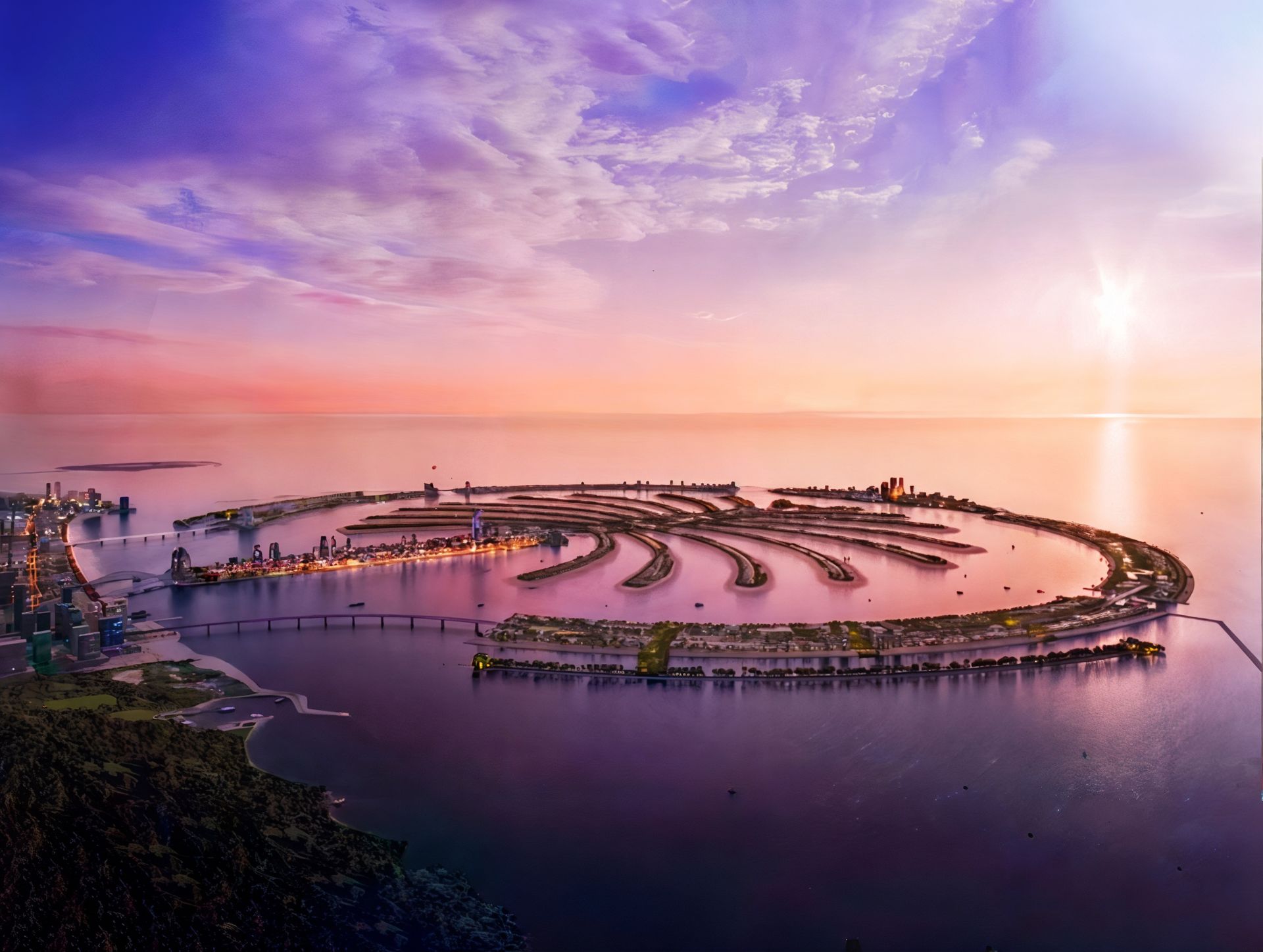
PALM JEBEL ALI: NAKHEEL'S REVIVED ULTRA-LUXURY ARCHIPELAGO TWICE THE SIZE OF PALM JUMEIRAH
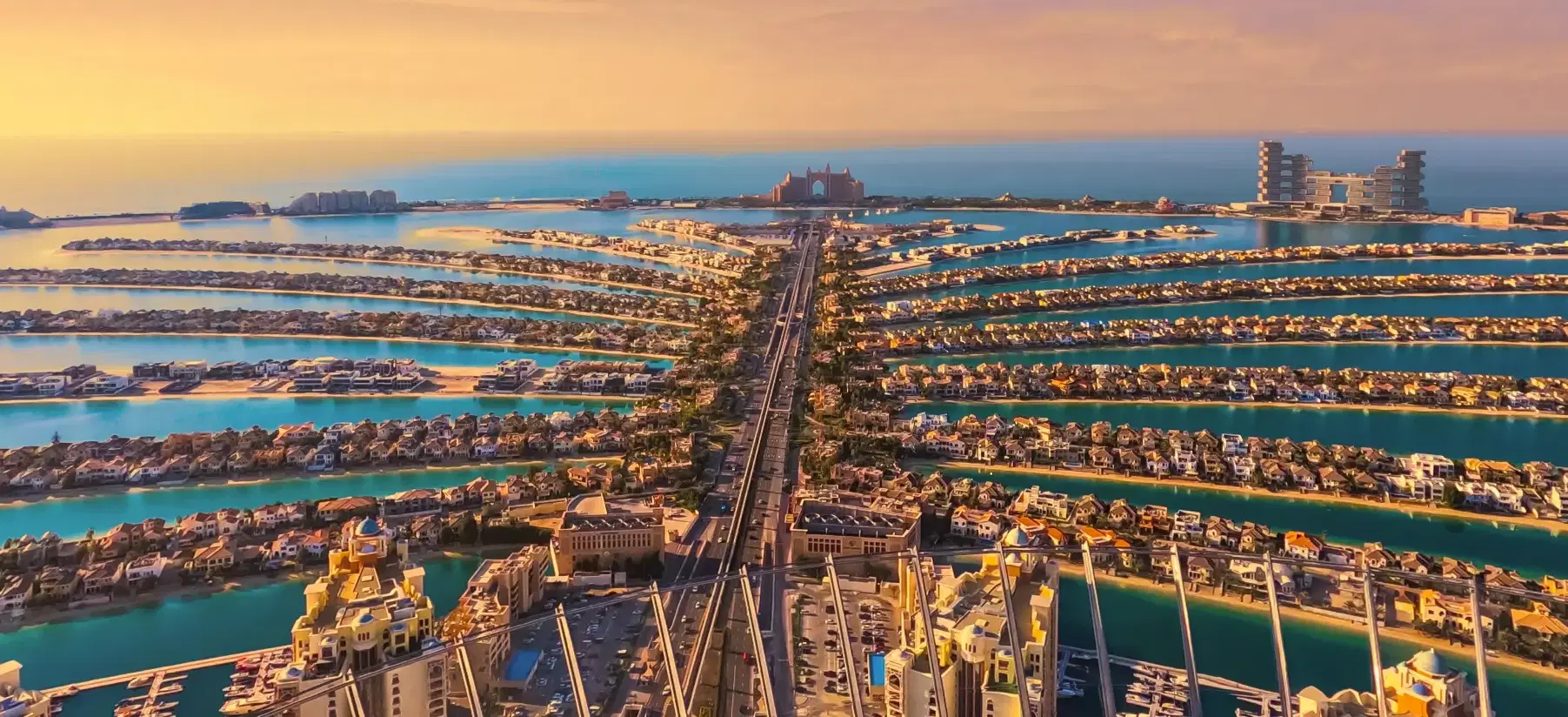
The original Palm Jebel Ali project broke ground in July 2008 with an estimated July 2011 handover before being mothballed during the global financial crisis; in May 2023 Sheikh Mohammed approved a new "futuristic" masterplan and Nakheel launched sales in October 2023, restarting one of the largest reclamation projects in Dubai's history. The masterplan covers 13.4 square kilometres — approximately 144 million square feet, twice the size of Palm Jumeirah — and adds 110 kilometres of new coastline to Dubai, with capacity for 35,000 luxury beachside families and over 80 hotels and resorts.
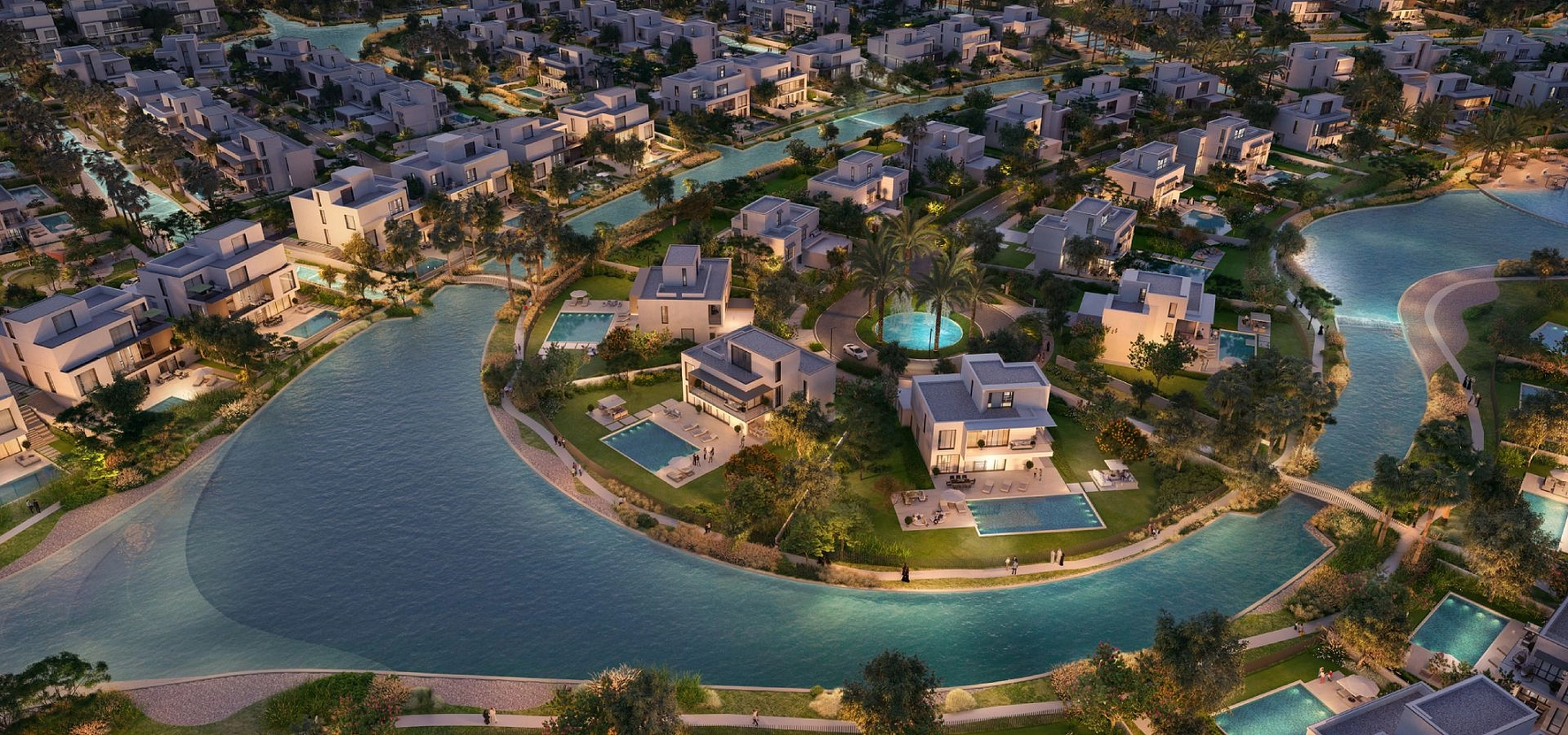
Nakheel's launched product spans five-, six- and seven-bedroom beach villas at entry pricing from AED 18.5 million for five-bedroom stock through AED 22 million for six-bedroom and AED 21.5 million for seven-bedroom configurations, with launch per-square-foot multiples around AED 2,600 on the headline villa segments. The Dubai Land Department has registered 1,619 villas and 1,263 residential units across five active towers and 28 commercial units to date, with the broader 35,000-unit footprint scheduled for phased delivery over the coming decade. The October 2025 launch of Palm Central Private Residences extended the product line into the central spine apartment and branded-residence segment.
The investment thesis here is exposure to Nakheel's revived ultra-luxury beachside positioning at off-plan launch pricing. Sales performance through 2025 has been exceptional: Palm Jebel Ali recorded 1,632 transactions generating AED 35.1 billion in total sales volume since the October 2023 launch, and overtook Palm Jumeirah in 2025 as Dubai's top destination for properties priced above AED 20 million with 517 ultra-luxury transactions generating AED 12.4 billion in that segment alone. The structural advantages are obvious: 110 kilometres of new beachfront, 80-plus hotels and resorts, an integrated mosque designed by Skidmore Owings & Merrill, and renewable energy targets aiming at 30 per cent of total demand at completion.
The trade-offs are real and worth pricing in. The original 2008 launch was mothballed for fifteen years before the 2023 revival, and the project carried legacy investor disputes through 2022 with the cancellation of original units in RERA. The 2023 revival has reset legal and operational status, but the multi-decade build-out horizon means handover, infrastructure delivery and amenity operation across the 35,000-villa masterplan stretch through the 2030s. Single-developer concentration through Nakheel concentrates risk on the master developer's continuing operational performance.
This guide covers the relative-value case for Palm Jebel Ali against Palm Jumeirah (the proven sister product at smaller scale), Emirates Hills and Al Barari for diversified Tier 1 ultra-luxury exposure, and District One and Sobha Hartland 2 for the wider luxury-product comparator set; the supply outlook in a multi-decade phased delivery sequence; and the entry strategy at AED 18.5 million-plus tickets on Nakheel's 80/20 payment plan structure. Expect a clear-eyed view of the structural ultra-luxury tailwind and the genuine pre-construction and project-history risk profile.
PALM JEBEL ALI: MARKET ANALYSIS AND INVESTMENT DYNAMICS
INFRASTRUCTURE AND CONNECTIVITY
Palm Jebel Ali sits adjacent to Jebel Ali container port, with arterial connection to Sheikh Zayed Road via the Jebel Ali corridor. The masterplan is internally anchored by a central spine running the length of the archipelago, with a Skidmore Owings & Merrill-designed mosque positioned along the spine, 80-plus hotels and resorts planned across the trunk and fronds, and walkable mixed-use neighbourhoods incorporating smart-city technology and sustainability practices. Adjacent existing communities and infrastructure include Jebel Ali Free Zone (the Middle East's largest free zone), Al Maktoum International Airport (positioning to scale toward becoming Dubai's primary international gateway through the late 2020s), Discovery Gardens, The Gardens, and the wider Jebel Ali corridor reaching into Jumeirah Golf Estates and Dubai Investments Park. Renewable energy targets at 30 per cent of total demand at full operational stage are part of the futuristic 2023 masterplan, distinguishing Palm Jebel Ali from the legacy Palm Jumeirah configuration.
RENTAL MARKET AND TENANT PROFILE
There is no rental market in Palm Jebel Ali at present because the entire stock is off-plan and pre-handover. The future tenant profile, when handover begins from the late 2020s onwards, will mirror Palm Jumeirah's ultra-luxury beach-villa segment: UHNW expatriate families, senior corporate executives at Dubai-headquartered firms, family offices, hospitality and aviation sector leadership at the Al Maktoum corridor, and lifestyle tenants drawn to the beachside positioning. Investors should expect gross yields broadly in line with Palm Jumeirah's 3 to 4 per cent on the villa segment, with the actual achieved yield depending heavily on the absorption rate of competing supply at Palm Jumeirah, Emirates Hills and Al Barari and the broader Dubai luxury market cycle. Pre-handover liquidity is genuinely thin: secondary trading on pre-registration inventory carries premium and discount cycles tied to construction milestones.
SUPPLY DYNAMICS AND PORTFOLIO POSITIONING
Supply is defined by Nakheel's multi-decade phased delivery sequence with 35,000 villas planned across the trunk, fronds and crescent. Current Dubai Land Department registrations show 1,619 villas, 1,263 residential units and 28 commercial units across five active buildings — the early-phase footprint relative to the full masterplan. Sales performance through 2025 has been exceptional: 1,632 transactions generating AED 35.1 billion in cumulative volume, with 517 ultra-luxury transactions in 2025 alone generating AED 12.4 billion (overtaking Palm Jumeirah in the AED 20 million-plus segment). The October 2025 Palm Central Private Residences launch and the December 2025 Skidmore Owings & Merrill mosque design release signal continuing pipeline momentum. For a Dubai luxury portfolio, Palm Jebel Ali pairs naturally with positions in Palm Jumeirah Signature villas (the proven sister product), Emirates Hills (the established ultra-luxury mainland comparator), Al Barari (the boutique luxury alternative) or Fairway Vistas at Dubai Hills Estate for diversified Tier 1 capital-preservation exposure.
PALM JEBEL ALI: INVESTMENT STRATEGY AND ENTRY POINTS
The cleanest entry strategy in Palm Jebel Ali is the five-bedroom beach villa at the AED 18.5 million launch entry on Nakheel's 80/20 payment plan, which delivers exposure to the headline beachfront product at the lowest absolute capital outlay within the launched inventory. The 80/20 payment plan structure (20 per cent booking, 80 per cent across construction with final payment at handover) reduces upfront capital requirements relative to DAMAC's 75/25 or traditional 50/50 plans. Recent sales performance confirms genuine market depth at the launch pricing: 1,632 transactions through 2025 at an average of AED 21.5 million per ticket. The thesis is straightforward: secure five-bedroom beachfront stock at first-launch pricing, hold through the multi-decade build-out as the central spine, mosque, hotels and beach amenity come online, and benefit from the ongoing absorption pulse as Palm Jebel Ali continues to overtake Palm Jumeirah in the ultra-luxury segment.
A differentiated second strategy targets the six- and seven-bedroom segment at AED 22 million-plus tickets for buyers comfortable with larger format villa exposure. The structural scarcity of large-format beachfront stock at this pricing tier (relative to Palm Jumeirah where comparable configurations trade at AED 50 million-plus) provides genuine relative-value at the entry stage. The October 2025 Palm Central Private Residences launch in the central spine precinct provides a third entry path at apartment-and-branded-residence pricing for investors comfortable with the central-spine positioning rather than direct beachfront stock.
The risks are structural and material. The original 2008 project was mothballed for fifteen years before the 2023 revival, with cancelled units, RERA disputes and DIAC arbitration cases through 2022 — investors should ensure their counterparty contracts reference the 2023 revived masterplan rather than the 2008 legacy structure. Pre-construction status means there is no resale, no rental and no operational track record on the revived masterplan; all forward-looking thesis. The multi-decade build-out horizon means investors must be comfortable with extended pre-handover cost-of-carry and the possibility of phasing changes through 2035. Single-developer concentration through Nakheel and 30-per-cent renewable energy targets that have not yet been operationally tested at this scale add execution-risk dimensions that mainland Tier 1 alternatives do not carry.
Within a Dubai residential portfolio, Palm Jebel Ali plays the Tier 1 Core Capital role at the ultra-luxury beachfront level, with capital appreciation and trophy-asset positioning as the headline objectives and yield as a post-handover consideration emerging only from the late 2020s. It is not a yield grab and it is not a flip play. It is a long-horizon ultra-luxury allocation for an investor deploying between AED 18 million and AED 50 million in a single beach villa position, alongside complementary Tier 1 anchors in Palm Jumeirah Signature, Emirates Hills, Al Barari or District One for diversified ultra-luxury exposure across operational and pre-construction product.
SUPPLY DYNAMICS
Off-plan only; 1,619 villas + 1,263 residential units registered of 35,000 total planned.
TENANT PROFILE
UHNW beach-villa buyers, family-office investors, branded-product investors, future luxury renters.
KEY RISK FACTORS
Project history (2008 mothballing), pre-construction risk, decade-plus build-out horizon.
KEY INFRASTRUCTURE
Palm Jebel Ali sits on the Dubai coast adjacent to Jebel Ali container port and 110 kilometres of new coastline created by the masterplan, with arterial connection to Sheikh Zayed Road via the Jebel Ali corridor. The masterplan is internally anchored by the central spine and a Skidmore, Owings & Merrill-designed mosque, with 80-plus hotels and resorts, integrated retail, schools and healthcare planned across the futuristic 2023 redesign. Adjacent existing communities and infrastructure include Jebel Ali Free Zone, Al Maktoum International Airport, the Jebel Ali container port, Discovery Gardens, The Gardens, Jumeirah Golf Estates and the wider Jebel Ali corridor — placing Palm Jebel Ali at the structural intersection of Dubai's southern aviation, logistics and emerging-luxury cluster. Renewable energy targets aim at 30 per cent of total demand at full operational stage.
Area fundamentals
- ASSET PROFILE
- Revived Nakheel ultra-luxury artificial archipelago
- INVESTOR PROFILE
- UHNW beach-villa buyers + capital-preservation investors
- TIER
- Tier 1 – Core Capital
- MARKET TYPE
- Off-plan ultra-luxury beach villas, mansions, hotels
- EST. POPULATION
- ~200,000-250,000 (projected)
- LAND SIZE
- ~144m sq ft
Next step
Request a briefing
You will get Palm Jebel Ali as a brief: the buildings on this page, the register readings behind them, and our view on each.