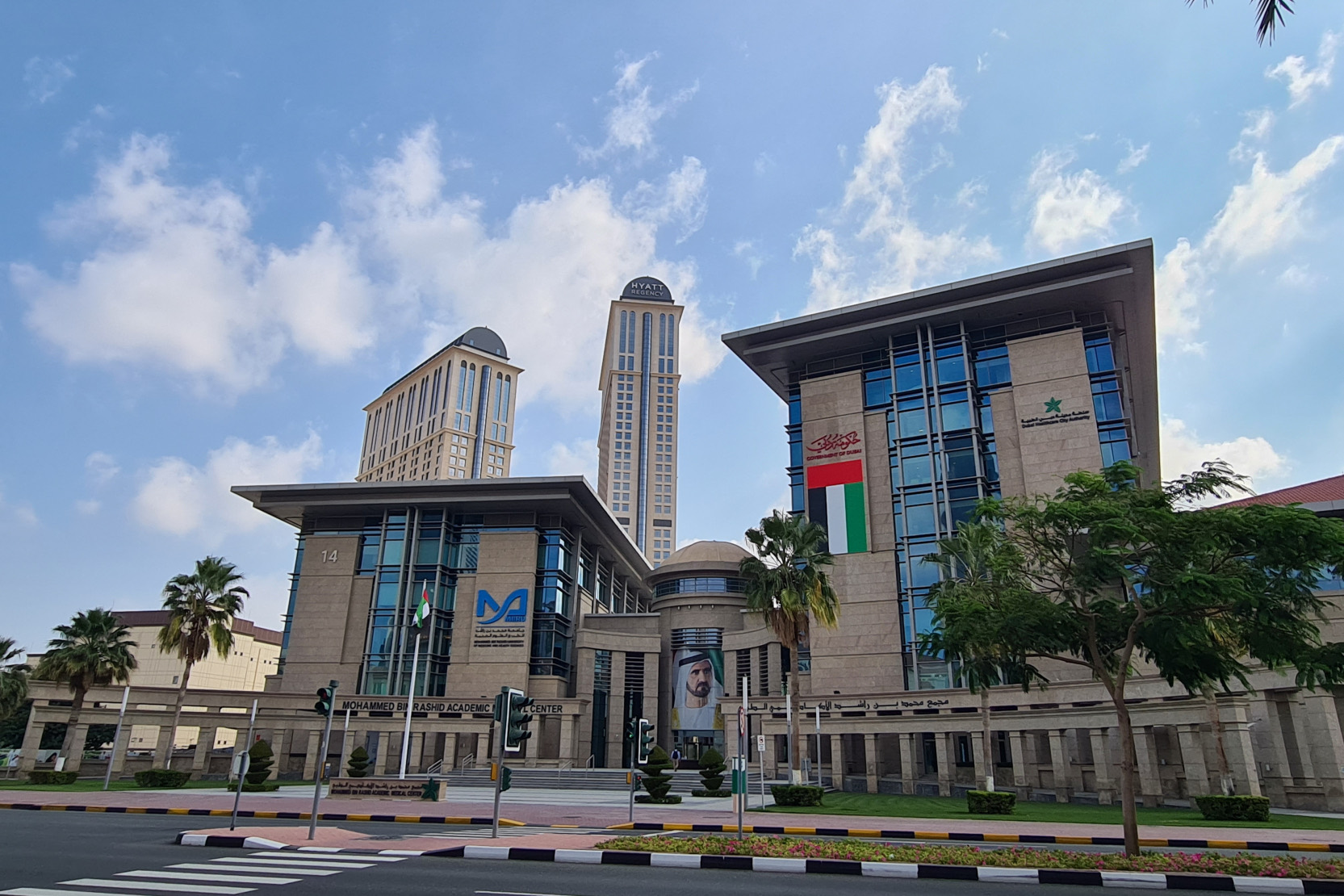
DUBAI HEALTHCARE CITY: THE WORLD'S LARGEST HEALTHCARE FREE ZONE
The zone was established by the Dubai Government to provide a free-zone economic framework to quality healthcare institutes and to position Dubai as an integrated centre of excellence for clinical and wellness services, medical education and research. Today the cluster hosts 160-plus clinical partners including hospitals, outpatient medical centres, diagnostic laboratories and pharmacies, with medical and healthcare professionals from more than 90 countries working in the zone.
From an investment perspective, DHCC is a specialist hybrid — the dominant land use is clinical, hospitality and office, with the residential apartment pocket serving healthcare staff and medical tourists rather than mainstream Dubai expatriate or family demographic. The integration of the DHCC Authority operational model means investors entering DHCC are taking exposure to a healthcare-tenant ecosystem rather than a conventional residential community, with all the differentiated absorption profile that implies. The DHCC Authority has positioned the cluster as the medical-tourism gateway for the wider Gulf region, with patients arriving from Saudi Arabia, Iran, Africa and Asia for specialist treatments not always available locally — this medical-tourism inflow drives meaningful short-stay and extended-stay residential demand alongside the resident healthcare-staff base.
Recent transaction records confirm the specialist nature of the market. February 2026 records show a Lumina Ultralasik Amico Center 1,797 square foot office at AED 3.44 million on pre-registration sale, and a separate AED 84 million transaction on a 18,519 square foot building (AED 4,536 per square foot) on mortgage registration. The commercial pricing tier reflects the specialised tenant base and the high-specification fit-out requirements for clinical and laboratory product. The residential apartment segment runs separately at lower per-square-foot multiples reflecting the staff-and-medical-tourism tenant profile.
The investment thesis here is exposure to Dubai's medical tourism and healthcare-economy growth, with structural advantages in the specialist tenant lock-in (160-plus clinical partners are unlikely to relocate operations elsewhere), the proximity to Dubai Creek and Bur Dubai's historical heritage, and the mature operational status of the zone since 2002. The trade-off is the niche residential demand profile, the dependence on medical-tourism cycles for retail and hospitality tenant economics, and the relatively low-volume residential transaction depth compared to the wider Dubai market.
This guide covers the relative-value case for DHCC against Dubai Healthcare City Phase 2 (the wider extension), Al Jaddaf (the adjacent residential comparator) and Culture Village for the broader creek-side hospitality alternative; the supply outlook in a mature specialist free zone with selective new commercial product; and the entry strategy across the residential apartment, healthcare office and medical-fit-out pricing tiers. Expect a clear-eyed view of the medical-tourism tailwind and the niche-tenant exit liquidity profile.
DUBAI HEALTHCARE CITY: MARKET ANALYSIS AND INVESTMENT DYNAMICS
INFRASTRUCTURE AND CONNECTIVITY
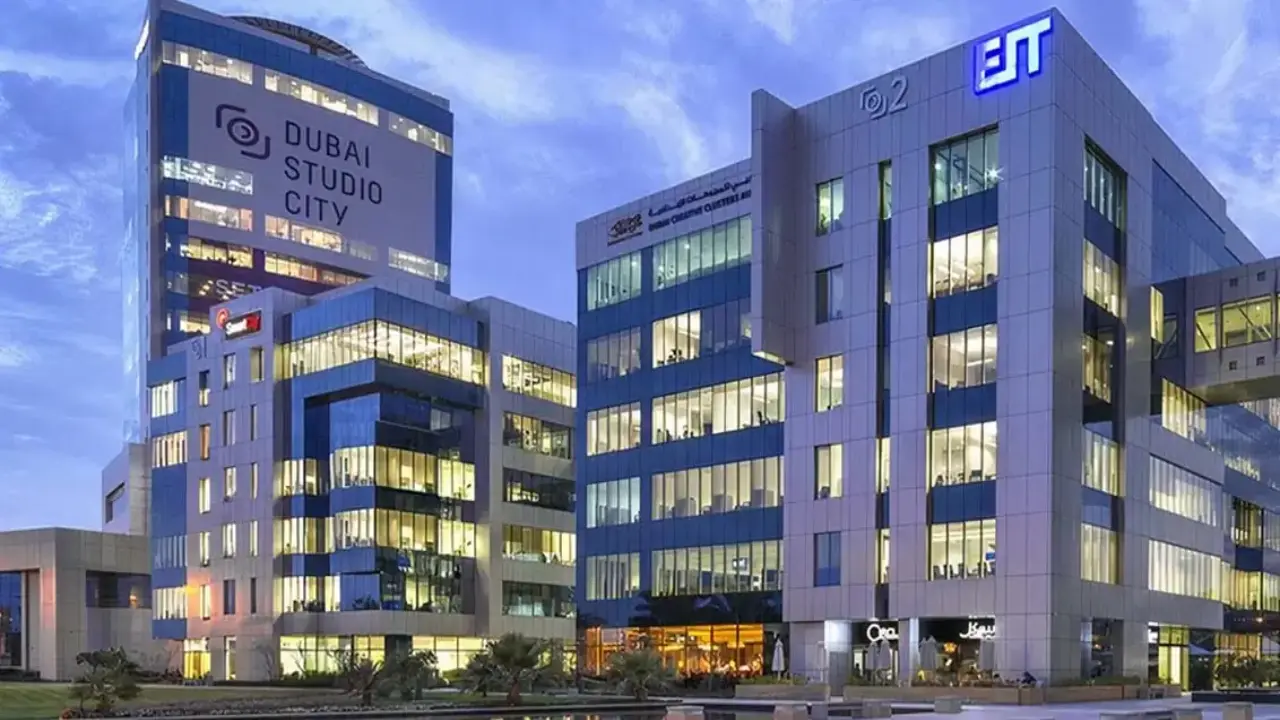
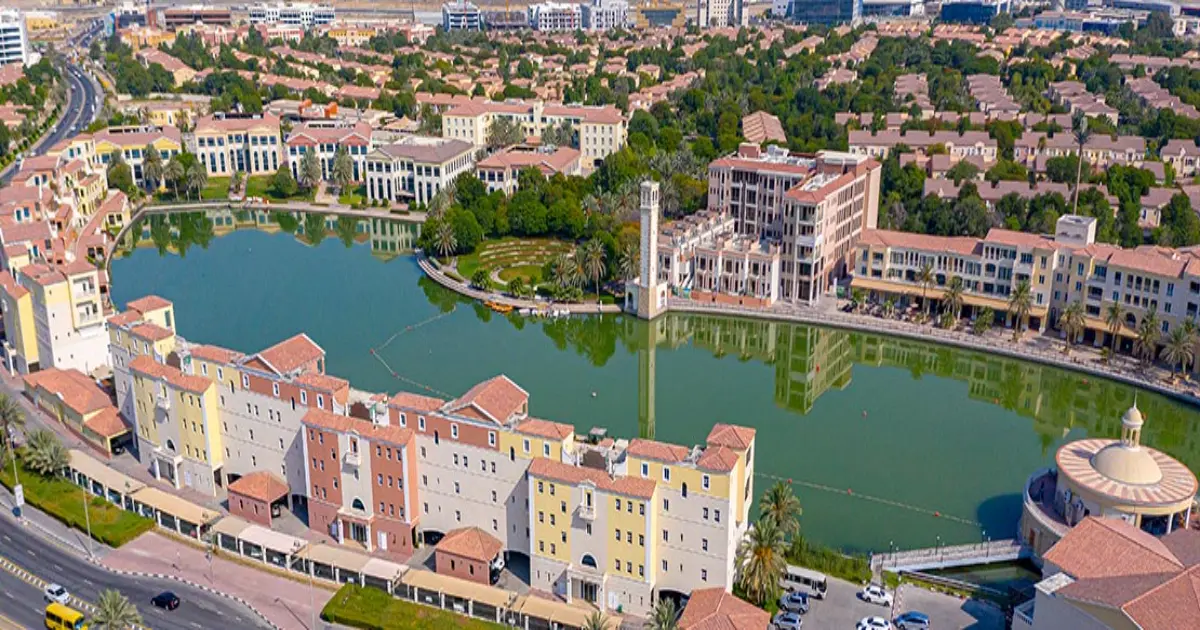
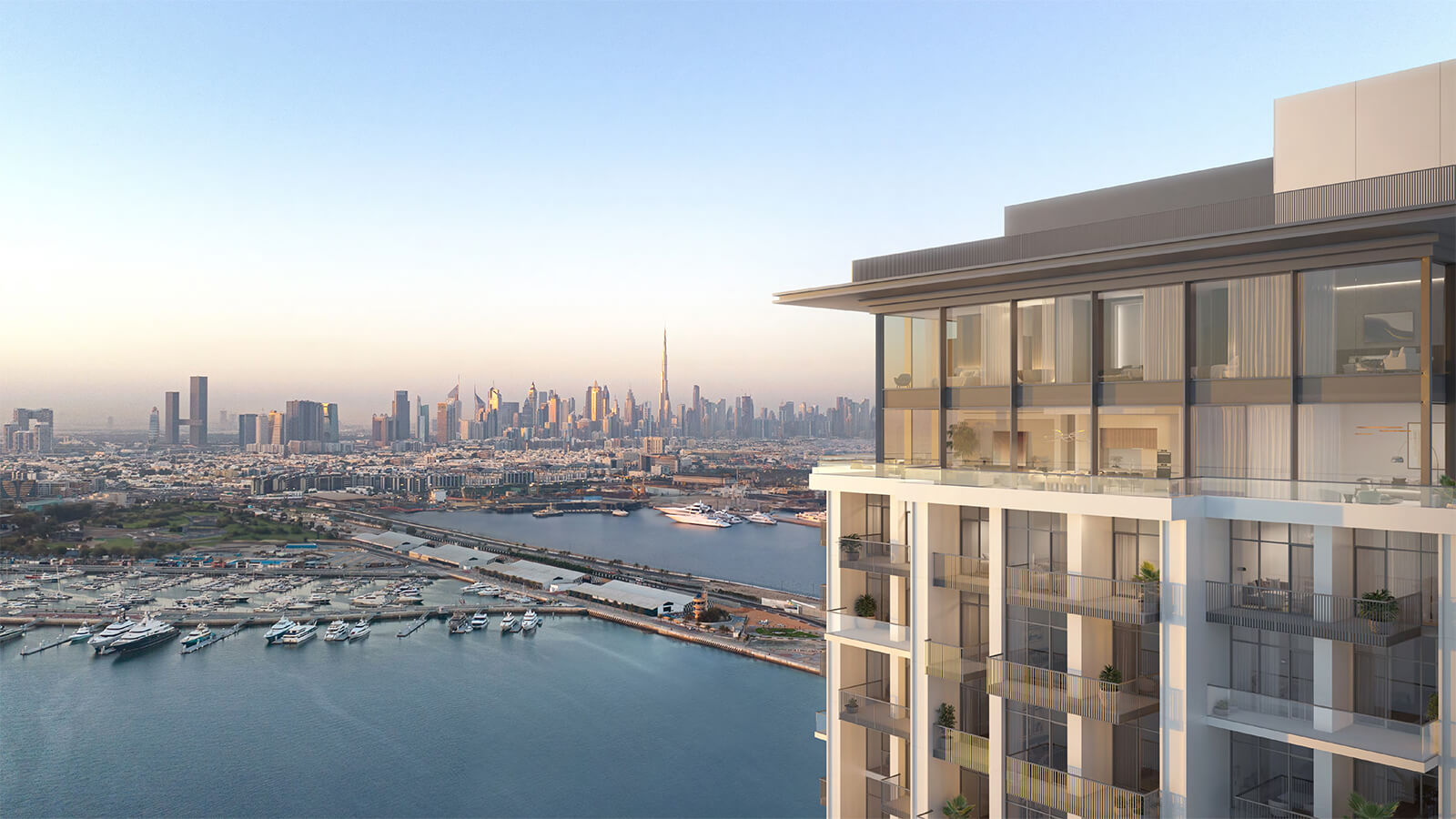
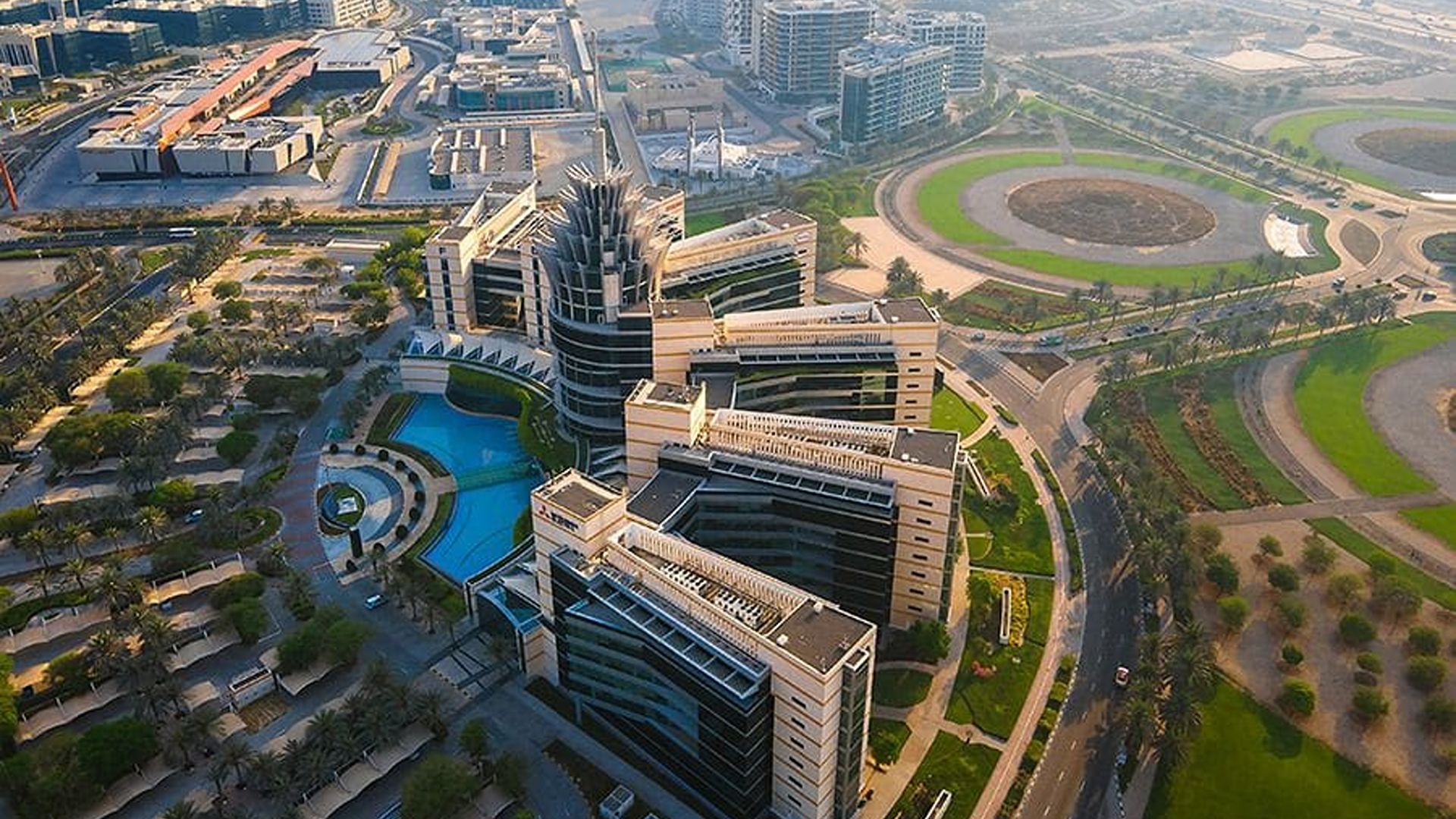
Dubai Healthcare City sits in Umm Hurair 2 in Bur Dubai, a 38-hectare specialist precinct bordered by the Dubai Creek and connected to Sheikh Zayed Road via the Bur Dubai corridor. The zone integrates 160-plus clinical partners across hospitals, outpatient medical centres, diagnostic laboratories, pharmacies, residential apartment buildings serving healthcare staff and medical tourists, and supporting retail and hospitality. Internal infrastructure is purpose-built for clinical operations: ambulance access, medical waste disposal, specialist HVAC, and 24-hour facility management. Adjacent communities include Culture Village at 1.5 kilometres, Al Jaddaf at 1.7 kilometres, Dubai Healthcare City Phase 2 at 2.4 kilometres (the wellness-focused extension), Bur Dubai at 2.7 kilometres, Al Kifaf at 2.8 kilometres and Dubai Festival City at 3.3 kilometres — placing the cluster at the structural intersection of Bur Dubai's heritage core, the Dubai Creek waterfront and the wider creek-side healthcare and hospitality precinct. Dubai International Airport sits inside ten minutes by road.
RENTAL MARKET AND TENANT PROFILE
The rental market in DHCC is a specialist segment dominated by healthcare-related demand: medical professionals working at the 160-plus clinical partners (doctors, nurses, medical-technical staff), medical tourists in extended-stay lodging during treatment cycles, hospital administrators and operations staff, and clinical research personnel at the medical education and research institutes. Investors should expect gross yields broadly in the 6 to 8 per cent range on apartment stock that is properly positioned for the healthcare tenant base, with the actual achieved yield depending heavily on the proximity to active clinical partners and the specific apartment specification (extended-stay-friendly, accessible bathrooms, ambient lighting). The apartment market depth is shallow compared to Bur Dubai or Al Jaddaf alternatives, and tenant turnover is structurally higher given the medical-tourism component.
SUPPLY DYNAMICS AND PORTFOLIO POSITIONING
Supply in DHCC is mature and specialist. The 38-hectare zone is fully built out across the clinical, commercial, hospitality and residential components, with selective new product launches such as Lumina (the recent Ultralasik Amico Center transaction confirmed a 1,797 square foot office at AED 3.44 million pre-registration in February 2026). The AED 84 million 18,519 square foot building transaction (AED 4,536 per square foot) on mortgage registration confirms the commercial-product valuation tier on the established stock. Residential apartment supply is genuinely thin and resale-only on most product. For a Dubai growth portfolio, DHCC pairs naturally with positions in Al Jaddaf (the adjacent residential comparator), Culture Village (the creek-side luxury alternative), or Dubai Healthcare City Phase 2 for diversified medical-and-wellness corridor exposure.
DUBAI HEALTHCARE CITY: INVESTMENT STRATEGY AND ENTRY POINTS
The cleanest entry strategy in Dubai Healthcare City for residential investors is the apartment segment positioned within walking distance of the largest clinical partners. The healthcare-tenant base is genuinely captive given the proximity-led tenant search behaviour of medical staff and medical tourists, and apartments within five-to-ten-minute walk of the major hospital anchors typically achieve gross yields in the 6 to 8 per cent range. The thesis is straightforward: secure DHCC apartment stock at established secondary-market pricing, position for the healthcare-staff and medical-tourism tenant pool, and benefit from the structural proximity premium that mainstream Bur Dubai or Al Jaddaf alternatives cannot match.
A differentiated second strategy targets the commercial-and-clinical product segment for investors with healthcare-operator counterparties or specialist commercial-real-estate underwriting capability. Recent February 2026 records show offices at Lumina (Ultralasik Amico Center) at AED 3.44 million on 1,797 square feet (AED 1,914 per square foot) on pre-registration, and a 18,519 square foot building at AED 84 million (AED 4,536 per square foot) on mortgage registration — the commercial-product spectrum spans modest fit-out specialist offices through to large purpose-built clinical buildings. Commercial yields in the specialist healthcare segment can run higher than residential alternatives but require operational expertise that most residential investors will not have.
The risks are structural and worth pricing in. Specialist tenant base means the residential market is shallow compared to mainstream Dubai alternatives, and exit cycles can extend in soft healthcare-economy periods. Niche residential demand means the apartment segment depends heavily on the continuing presence of the 160-plus clinical partners; any meaningful relocation or downsizing of major hospital tenants would compress residential demand materially. Medical-tourism cycle dependency adds a macro-economic risk dimension that mainstream residential alternatives do not carry; investors should monitor Dubai medical-tourism volumes alongside the broader real estate cycle. The DHCC Authority master-developer model means service charges, infrastructure refresh and zone operational performance depend on a single counterparty.
Within a Dubai residential portfolio, Dubai Healthcare City plays the Tier 3 Growth & Emerging role at the specialist healthcare-tenant level, with niche yield as the headline objective and limited capital appreciation as the secondary consideration. It is not a Tier 1 capital-preservation anchor and it is not a mainstream yield grab. It is a specialist allocation for investors familiar with healthcare-tenant dynamics deploying between AED 1.5 million and AED 4 million in apartment exposure, alongside complementary positions in Al Jaddaf (the adjacent residential comparator), Culture Village (the creek-side luxury alternative) or Bur Dubai for diversified Bur Dubai-corridor portfolio balance.
SUPPLY DYNAMICS
Mature healthcare zone since 2002; mixed clinical, commercial and residential apartment product.
TENANT PROFILE
Healthcare professionals, medical tourists, hospital staff residents, short-stay patient lodging.
KEY RISK FACTORS
Specialist tenant base, niche residential demand, medical-tourism cycle dependency.
KEY INFRASTRUCTURE
Dubai Healthcare City sits in Umm Hurair 2, Bur Dubai, a 38-hectare specialist healthcare free zone bordered by the Dubai Creek and connected to Sheikh Zayed Road via the Bur Dubai corridor. The zone hosts 160-plus clinical partners including hospitals, outpatient medical centres, diagnostic laboratories and pharmacies, with medical and healthcare professionals from over 90 countries working at the integrated cluster. The DHCC residential pocket integrates apartment buildings serving healthcare staff, medical tourists and short-stay patients. Adjacent communities include Culture Village at 1.5 kilometres, Al Jaddaf at 1.7 kilometres, Dubai Healthcare City Phase 2 at 2.4 kilometres, Bur Dubai at 2.7 kilometres, Al Kifaf at 2.8 kilometres and Dubai Festival City at 3.3 kilometres — placing the cluster at the structural intersection of Bur Dubai's heritage core, the Dubai Creek waterfront and the wider creek-side healthcare and hospitality precinct.
Area fundamentals
- ASSET PROFILE
- Specialist healthcare free zone with residential pocket
- INVESTOR PROFILE
- Healthcare-tenant landlords + medical-tourism investors
- TIER
- Tier 3 – Growth & Emerging
- MARKET TYPE
- Mixed-use clinical, commercial and residential apartments
- EST. POPULATION
- ~10,000
- LAND SIZE
- ~4.09m sq ft
Next step
Request a briefing
You will get Dubai Healthcare City as a brief: the buildings on this page, the register readings behind them, and our view on each.