
Office Park Dubai Internet City is a low-rise commercial campus within the Dubai Internet City (DIC) free zone, comprising approximately five buildings of six to eight storeys each. The campus provides managed office accommodation to the technology and knowledge-sector businesses that constitute DIC's core occupier base, with a reported concentration of over 400 distinct companies across its total floor space. The low-rise multi-building format distinguishes the campus from the strata high-rise towers prevalent elsewhere in DIC, offering ground-level access and a campus working environment suited to occupiers with different spatial and operational requirements. The campus operates under centralised management within the TECOM free zone framework.
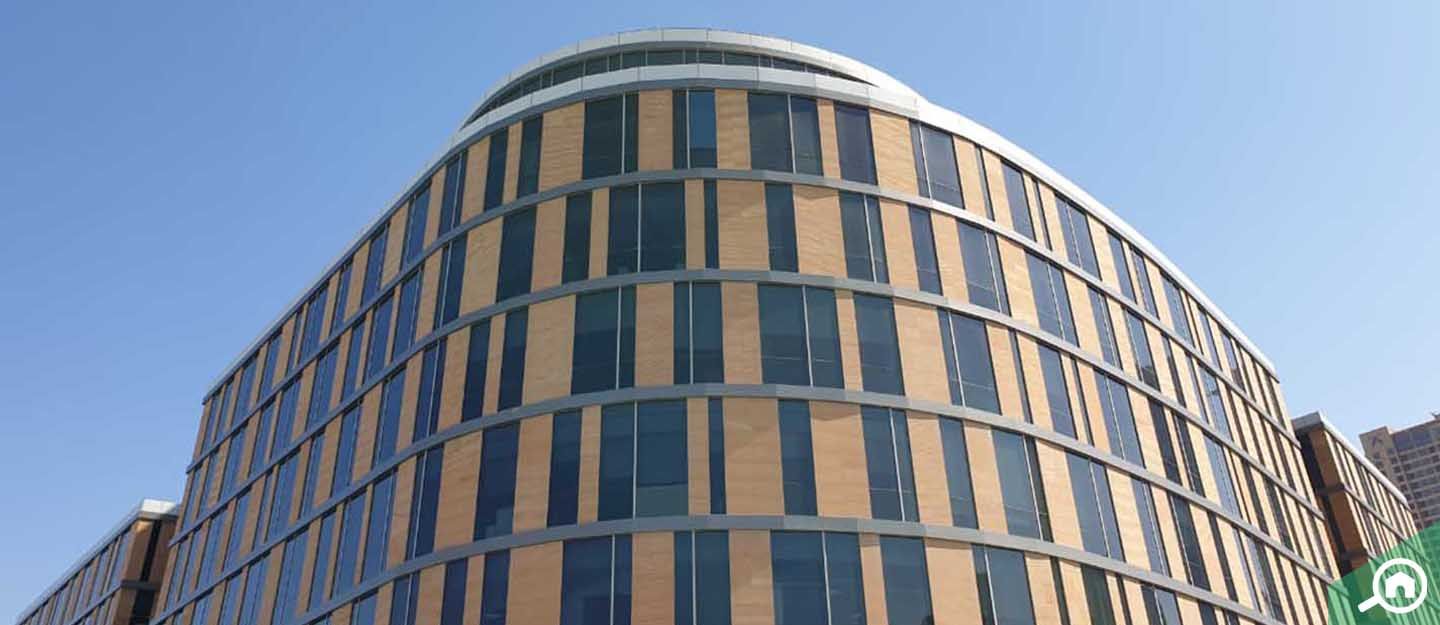
Commercial Building
Office Park Dubai Internet City
Commercial Building
OVERVIEW
OFFICE STOCK AND TENANT PROFILE
Office Park DIC provides flexible office space across multiple low-rise buildings, with floor plate configurations suited to small and mid-size occupiers including startups, SMEs, and regional offices of international technology companies. The campus format supports a high density of distinct tenants, with the reported occupier count of over 400 companies reflecting the prevalence of smaller unit configurations and subdivided floors. Tenants operate across technology, IT services, software development, and digital media sectors consistent with the DIC licensing remit. Centralised building management provides a level of service consistency unusual in strata product, while the campus environment supports occupier community and peer collaboration within the TECOM cluster.
RENTAL MARKET
Rental rates at Office Park DIC are expected to sit at the more cost-competitive end of the DIC free zone spectrum, consistent with the campus's low-rise typology and building generation relative to newer, higher-specification strata towers within the submarket. Occupiers benefit from the DIC licensing framework and cluster proximity, which have historically supported stable occupancy levels. Lease terms are generally flexible, reflecting the accommodation of a high number of smaller occupiers. Service charges are administered centrally, offering greater cost transparency than the variable recovery structures typical of strata buildings. Occupiers should confirm whether service charges are included in quoted rent and clarify fit-out obligations at lease execution.
SALES MARKET
Office Park DIC is understood to operate under single or institutional ownership within the TECOM framework, with individual buildings or floors not typically available for purchase as discrete strata units on the open market. The investment profile is accordingly institutional, representing a managed commercial campus rather than disaggregated strata product. For occupiers, the complex presents a leasehold proposition only, without a strata purchase option. The asset's value is underpinned by its long-term occupier concentration, established position within the DIC free zone, and TECOM's institutional stewardship of the district. Prospective occupiers should obtain lease terms, pricing, and service charge details directly from the managing entity.
LOCATION AND ACCESS
Office Park Dubai Internet City benefits from DIC's dual highway access via Sheikh Zayed Road and Al Khail Road, providing connectivity to central Dubai, Dubai Marina, and the wider emirate. The Dubai Internet City Metro Station on the Red Line is within the free zone footprint, supporting commuter access for staff and visitors. The campus is flanked by the TECOM districts of Dubai Media City and Al Barsha Heights, forming part of the contiguous technology, media, and knowledge corridor along the western fringe of the city. Ground-level campus access and dedicated car parking provide a practical advantage over high-rise tower product for occupiers with frequent logistics or visitor access requirements.
RISKS AND WATCHPOINTS
Office Park DIC's low-rise multi-building format may present limitations for larger occupiers requiring contiguous floor plates beyond the six-to-eight-storey building height of the campus. Building specifications are of an earlier generation, and ongoing investment in building services, energy efficiency, and common area presentation will be required to maintain competitiveness against newer, more highly specified product within DIC and the broader TECOM cluster. Occupiers dependent on TECOM licensing should confirm current DIC free zone eligibility requirements applicable to their activity. Lease flexibility and early exit provisions should be assessed carefully given the campus-wide management structure, which may constrain break options relative to individually owned buildings.
STRATEGIC PERSPECTIVE
Office Park Dubai Internet City addresses a durable market segment: cost-sensitive technology and knowledge-sector businesses requiring a recognised DIC free zone address within a managed campus environment. The campus format and high occupier concentration create a community working environment that differentiates it from standalone strata tower product, making it particularly suited to startups, growing SMEs, and regional subsidiaries with modest space requirements. The managed single-ownership structure provides service consistency and operational simplicity for occupiers relative to multi-owner strata alternatives. The campus is unlikely to suit larger single-occupier requirements, but its accessible price point and established cluster position sustain its medium-term relevance within the DIC submarket.
Location
Office Park Dubai Internet City — Dubai Internet City, Dubai